TO)pot Festival: Walking-with Silences
23–27 September 2026
Cukrarna and public spaces
PAST EVENTS


Opening, 23 September, Cukrarna, foyer
19.00
Boštjan Perovšek: Inaudible – Audible, among the Bats
19.30
Salomé Voegelin: no signal
Bojana Šaljić Podešva, Matjaž Porovne, Tilen Udovič, Alja Mandič Faganel: Blood is Water (flavoured)
Lecture Series, 24 September, Cukrarna / BAZA, Center mladih Ljubljana
11.00 | Cukrarna, classroom
Gregor Pompe: The Slovenian Reception of John Cage – Meaningful Silence
Katja Hrobat Virloget: Ethnography of Silence(s)
Janez Križaj: The Culture of Listening
14.30 | BAZA, Ljubljana Youth Centre
Rajko Muršič: Sounding in Silence: Non-verbal Sound Games in the Rhythm of Opposites and Contradictions
Concert Evening, 24 September, Cukrarna, foyer
19.30
OR poiesis [Petra Kapš]: Spell of Silence
beepblip [Ida Hiršenfelder]: Angstmachine: The Calm Before the Storm
Brane Zorman: Orchestrated Attack – Subliminal Version
Opening, 23 September, Cukrarna, foyer
19.00
Boštjan Perovšek: Inaudible – Audible, among the Bats
19.30
Salomé Voegelin: no signal
Bojana Šaljić Podešva, Matjaž Porovne, Tilen Udovič, Alja Mandič Faganel: Blood is Water (flavoured)
Lecture Series, 24 September, Cukrarna / BAZA, Center mladih Ljubljana
11.00 | Cukrarna, classroom
Gregor Pompe: The Slovenian Reception of John Cage – Meaningful Silence
Katja Hrobat Virloget: Ethnography of Silence(s)
Janez Križaj: The Culture of Listening
14.30 | BAZA, Ljubljana Youth Centre
Rajko Muršič: Sounding in Silence: Non-verbal Sound Games in the Rhythm of Opposites and Contradictions
Concert Evening, 24 September, Cukrarna, foyer
19.30
OR poiesis [Petra Kapš]: Spell of Silence
beepblip [Ida Hiršenfelder]: Angstmachine: The Calm Before the Storm
Brane Zorman: Orchestrated Attack – Subliminal Version
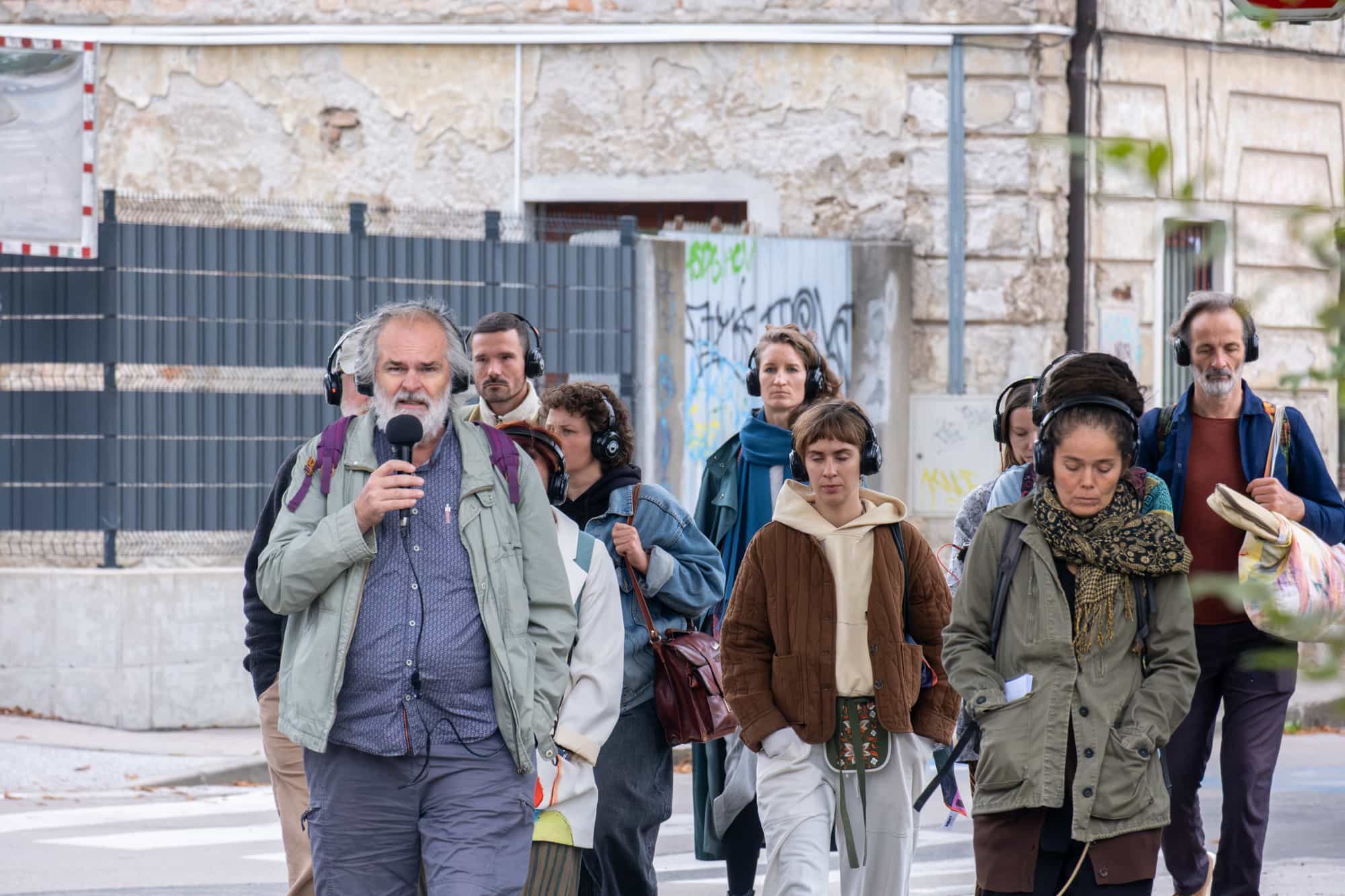
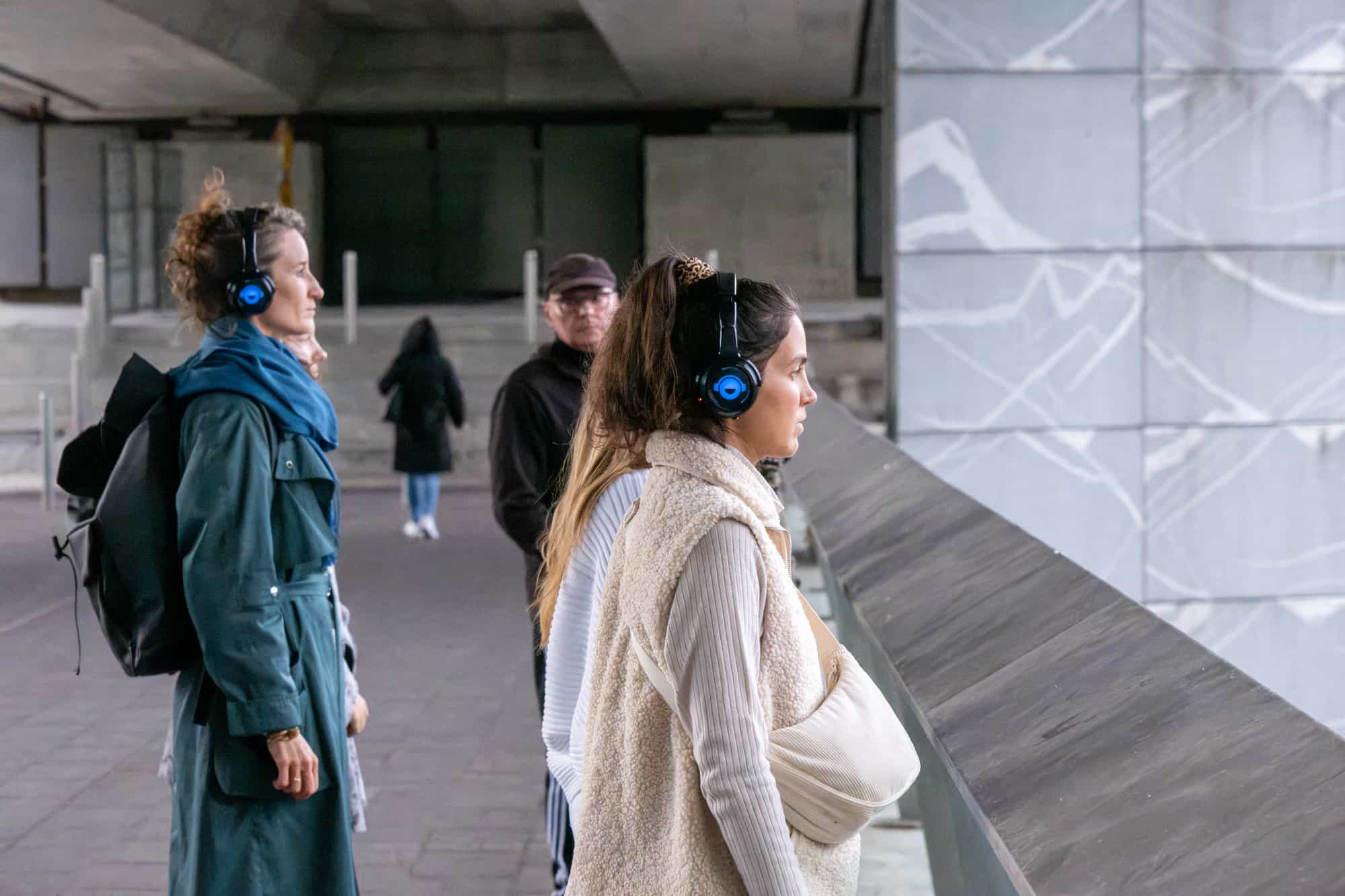
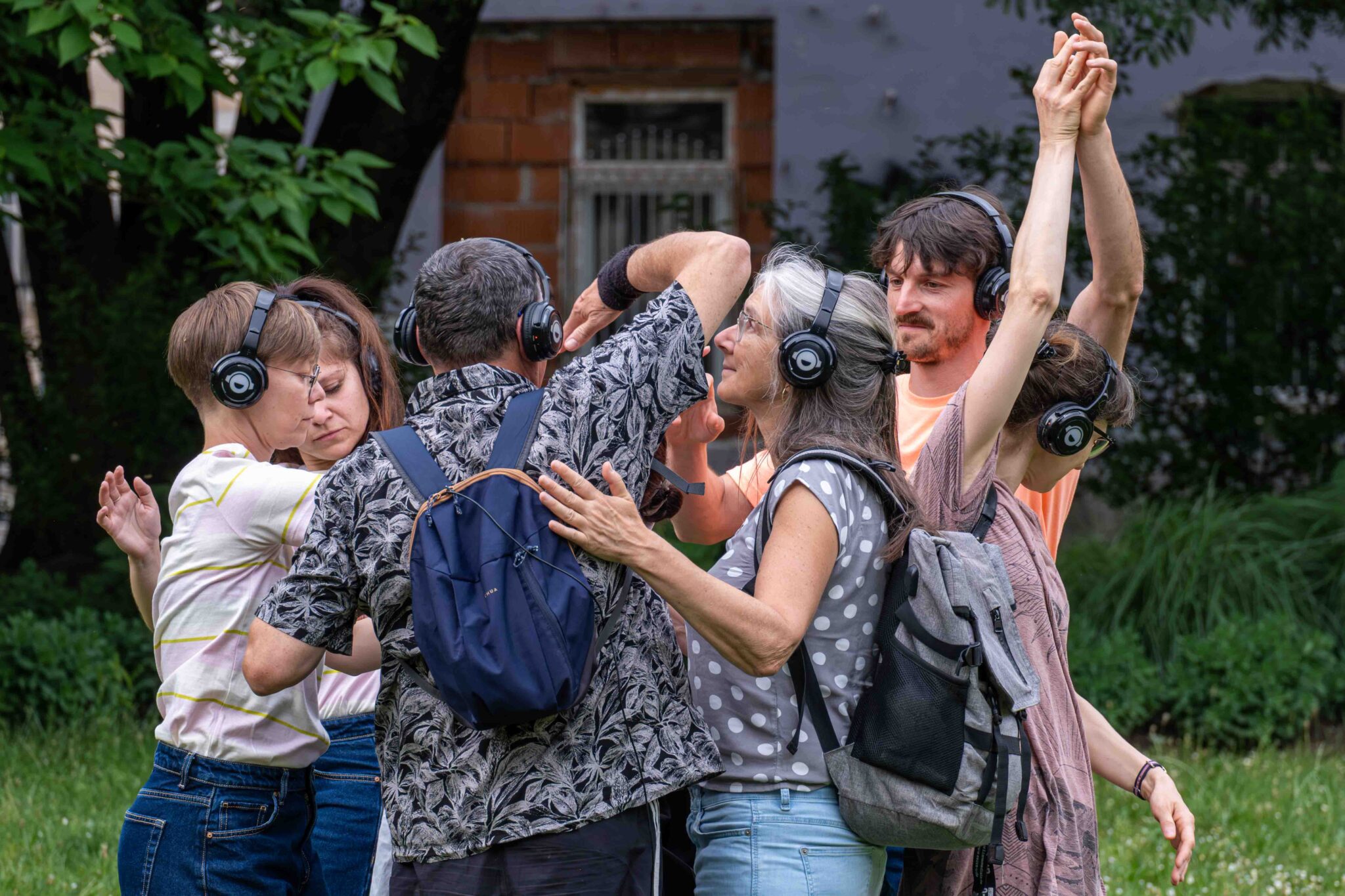
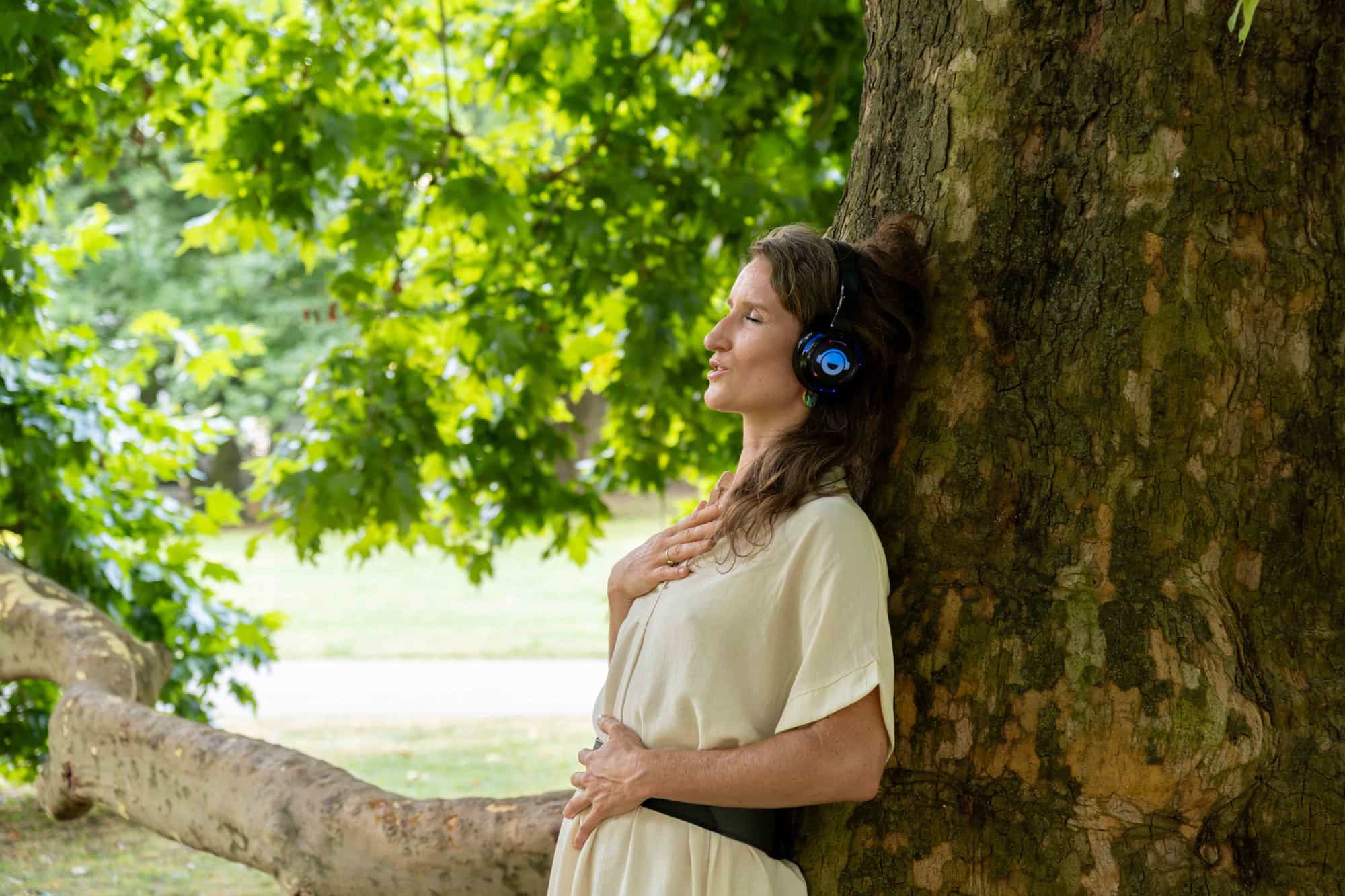
The sixth edition of the festival connects artists, theorists and walkers and invites them to share their listening experiences of spaces, voices and silences. The subtitle of the festival Walking-with1 Silences, inspired by the title of the lecture series, offers an insight into the potential of walking as a way of listening – a practice that deepens the understanding of different registers of silence: the silence of a place, the silence of society, listening to art. This broad and layered field forms the focus of this year’s festival, although the festival cannot fully encompass it.
In addition to the selected soundwalks and a sound exhibition, the festival also includes a lecture series and two concert evenings with four solo performances. The thematic sections broaden the horizon of understanding the central theme and enable collective thinking about its contents. The TO)pot festival should be perceived as a space for meeting, intertwining and connecting various arts, as well as addressing a scope of social and scientific topics.
Silence, this complex and broad theme, can be understood through different approaches. One of them places it in contemplative spaces. Silence can be a property of places and a framework that allows the relationship between thought, body, spaces and listening to be re-articulated.
The silence and focus that we associate with sacred or artistic spaces can also be transferred to abandoned industrial zones, urban fringes, or natural environments. The contemplativeness in these spaces is not a given property, but arises through our focus, experience, and use of space. Such spaces become contemplative only when we retreat from the dominant logic of signals, information, and functional movement, which is why art forms such as soundwalks can temporarily transform the environment into a space of attention and deeper perception.
The introductory, performative lecture Salomé Voegelin’s no signal, linked to the concert evenings, announces the lecture series and reflects on the absence of signal as the beginning of listening to silence.
In the selection of soundwalks, several works address abandoned urban fringes. In the work Pod(hod), the artist Kalu [Luka Uršič] listens to the spontaneous use of partially abandoned underpasses occupied by people on the fringes of society. Sava šumi’s [Urška Savič] work Odjek strela refers to the symbol of the demolished graffiti of a pink gun and raises questions about the histories of the Rog building. The work of the artists Karmen Ponikvar and Nika van Berkel The Green Atrium of the City listens to an abandoned stadium. Silence accumulates the silent potential of the new uses of architectural heritage.
Contemplativeness is often associated with relationships, in which the everyday pace of the overly tense time can be overturned by a different point of observation. Allja Petric’s work GLASnaPOT gradually takes us from the noise of urban locations to inner landscapes, which she compares with natural landscapes and encourages the understanding of the body as an instrument of the voice. This work is part of a common series – consisting of three walks within the festival – which builds a relationship to space in a physical, bodily way. In the Backwalk by the choreographic tandem Mathilde Vrignaud and DISKOlektiv and Tu, čisto blizu by Urša Sekirnik and Aja Zupanec, we experience space by eavesdropping to movements. Both works, each in its own way, introduce the audience to an active choreographic sequence, in which the landscape becomes a relationship of physical placement. The perception of the relationship to space transforms the established spatial experience.
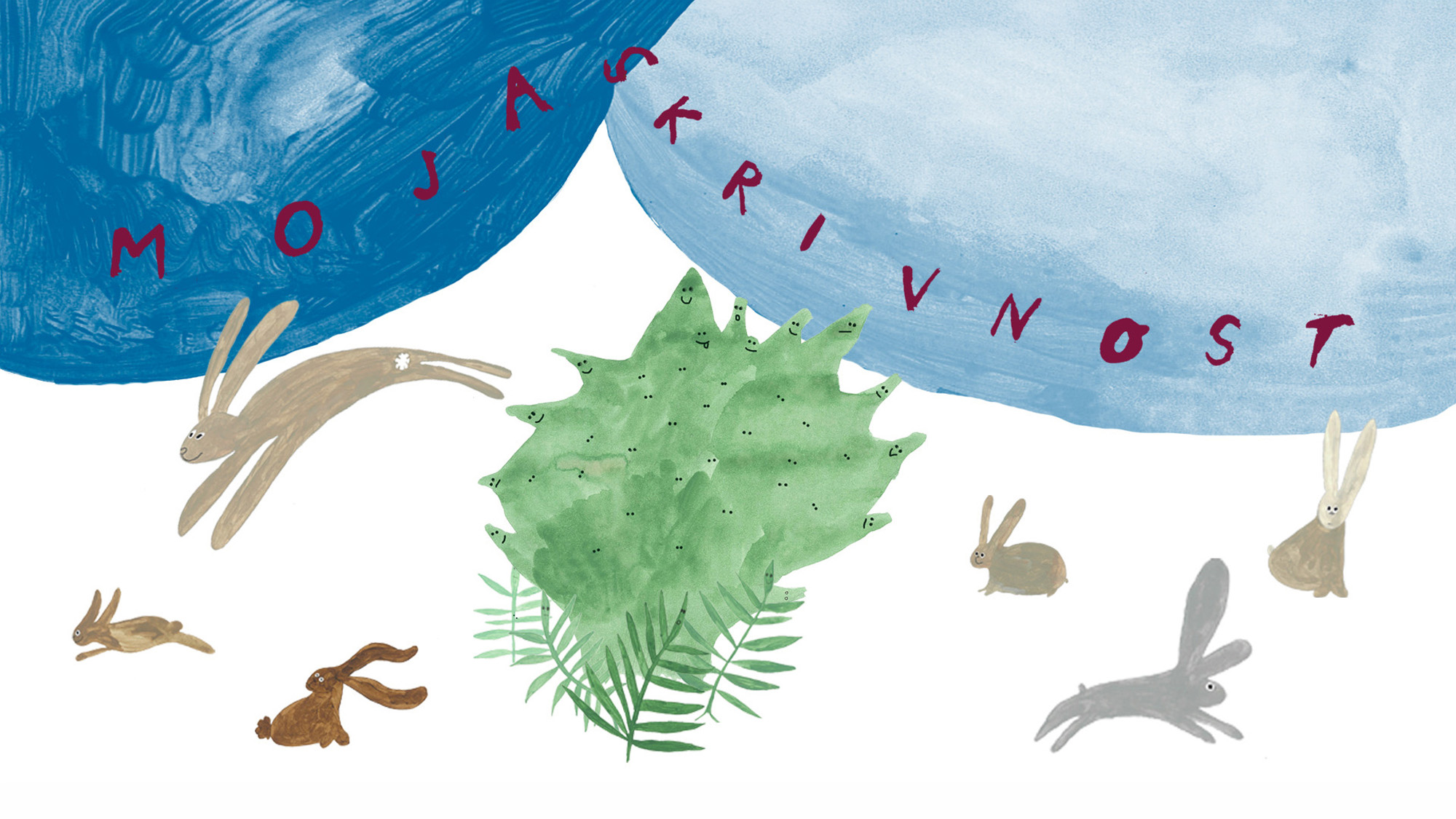
The soundwalk My Secret takes place in the city forest that becomes a possible environment for a fragile dialogue with children, which uncertainly outlines the boundaries of listening to the other. Ad somnum, a work by the young artists Lucija Trobec, Lucija Lorenzutti and Luna Pentek, subtly rounds off the contemplative nature of landscapes. The traumatic story of the protagonist, intertwined with silence and the murmur of water, is placed on the Mother’s Bridge – once called the Bridge of the Dead. The space becomes a scene for listening to a story that carries the beauty and tragedy of the final silence. The final act of silence with a demonstrative jump into the water, along with the dramatization of the main character’s life story, is also addressed by the walk Ivan Hribar, the Mayor of Ljubljana.
The artistic practices and lectures presented at the festival open new ways of understanding, savouring, sharing and co-creating silences. They do not provide answers, but rather conditions for listening, establishing situations. This leads to an experience that is not necessarily comfortable but can be transformative: Walking-with Silences allows space to address us through various situations.
Irena Pivka
[1] The expression walking-with stems from the idea of living-with, which addresses the turn of human existence from control to living with, relations.
While thinking about the different topics we could address in the theoretical discussions that would further support TO)pot in our reflections, we recognized silence as one of the broadest and most ample. Its understanding cannot be unambiguous, it has no opposite, and it often carries within itself the duality of infinite possibility and suffocating impossibility. Some of us may explore it as a hospitable space of intersubjectivity that allows for the emergence of authentic expressions and connections, while others may focus on its weight, when it appears as silence, interrupted expression, interrupted connection. The series of discussions thus consists of various theoretical and practical approaches to understanding and studying silence and its manifestations.
In our search for researchers who could present the various aspects of silence, we had the great fortune that prof. dr. Salomé Voegelin accepted our invitation. She addressed silence in her first monographic publication Listening to Noise and Silence: Towards a Philosophy of Sound Art, in which she wrote: “Silence is about listening, listening to small sounds, tiny sounds, quiet and loud sounds out of any context, musical, visual or otherwise.“ On this occasion she will address silence in no signal, a performative lecture or curated performance, in which she will present the sound signal “without a signal“ as the silence that offers the possibility of a different interpretation of the sound signal, which allows for a different manner of hearing and listening.
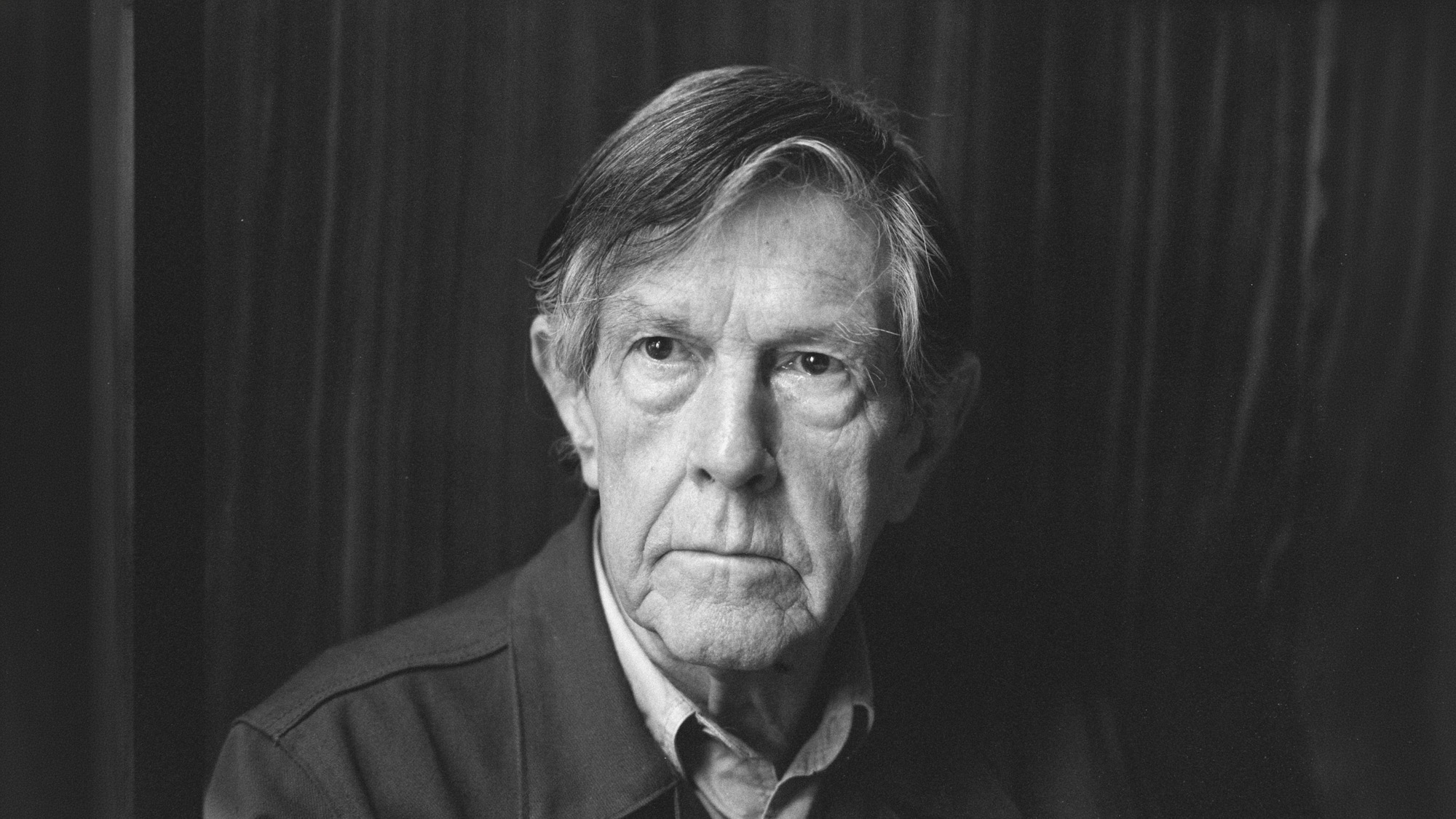
The theoretical discussion on silence will continue with two scientific and one expert lectures, which will represent diverse fields of research and practice, but will nevertheless be connected by the common point of discussing various silences. In her acclaimed book V tišini spomina (In the Silence of Memory, 2021), prof. dr. Katja Hrobat Virloget discussed the collective memory of communities involved in the Istrian “exodus“ in the previous century. She wrote that silence “occurs when memory cannot rely on collective memory because it is intentionally adapted or unrecognized, censored.“ In the lecture Ethnography of Silence(s), she will talk about the various reasons for silence and not speaking, such as socio-political power relations, relations between the memories of dominant and marginalized social groups, social tensions, and repression. Janez Križaj will talk about the “right to silence“. In his interactive lecture The Culture of Listening, this master of acoustics and a professional in the field of sound design for over 40 years, will – in addition to certain topics from sound ecology – provide us with insights into the activities of the Music is Born from Silence initiative. Silence in avant-garde musical art and the work of its pioneering advocate John Cage will be introduced into the theoretical cycle by prof. dr. Gregor Pompe in his lecture The Slovenian Reception of John Cage – Meaningful Silence. We recently received a valuable translation of Cage’s work Silence: Lectures and Writings into Slovenian (2025), and the author remains primarily a “reference for alternative and interdisciplinary practices“ of sound and musical arts in Slovenia.
The series of discussions will conclude with the peripatetic lecture Sounding in Silence: Non-verbal Sound Games in the Rhythm of Opposites and Contradictions by prof. dr. Rajko Muršič, a professor, thinker and performer who has been researching sonority and music for more than three decades. During the peripatetic lecture, “we will walk from silence to resonation“, noise, tone, sound, and thus determine whether humans can even think or experience silence. Along the way, we will encounter intentionality and rhythm, and in the end, we will conclude with a “singular experience of soundsilence“.
The silences we will encounter at the TO)pot series of discussions will thus not only be silent, but also loud, they will not only be present, but also absent, always unique in their silent multiplicities, which enable expansive listening and eavesdropping, attention and reflection, both auditory and experiential.
Maja Bjelica,
ZRS Koper, Institute for Philosophical and Religious Studies
This year’s music menu of TO)pot festival will present one sound exhibition and – for the first time – two concert evenings at which all five members of the bioacoustic group Jata C will present their latest compositions. The selection emerged spontaneously, as a response to the festival theme, which addressed the artists within the process of preparing the programme.
The artists use various methods, layering and personal approaches in their compositions. In the process of creating the dramaturgy of multi-meaning compositions, they react to challenges, traumatic and liberating points and affinities, and respond through personal sound poetics.
In their research ideas, analyses, expressions, micro and macro nuances of sound and forces develop, pass and expand through the landscapes of time, space, intuition, and feelings. The paths lead them through areas of silence, a pulsating world of frequencies that are inaudible to humans, to the worst noise that humans create in their (fatal) destruction. It reveals how artists think, feel, and respond to radical situations in the world that arises beyond human and more-than-human communities.
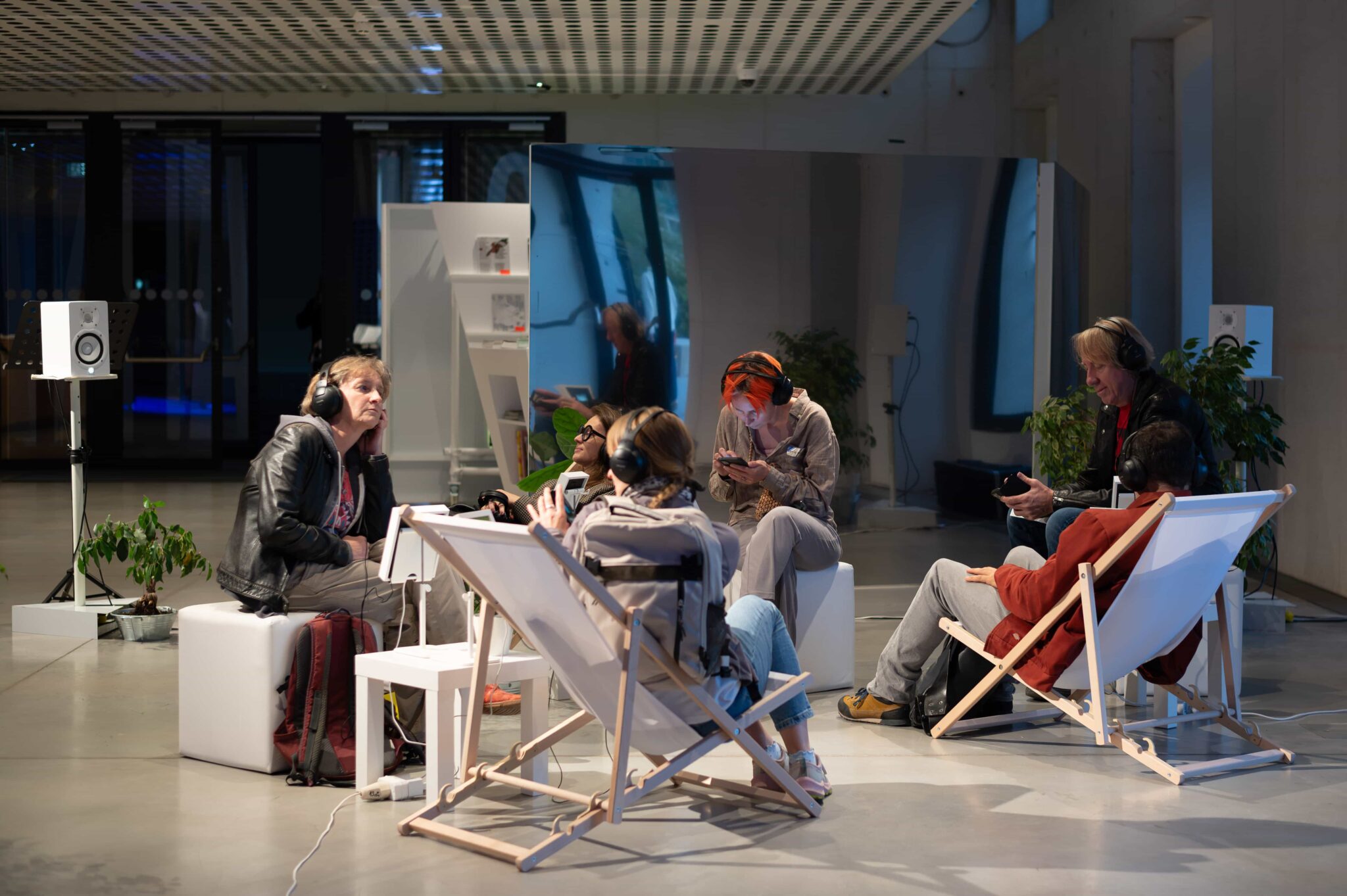
The musical part of the festival will be opened by Boštjan Perovšek’s composition Inaudible – Audible, among the Bats. This sound exhibition that will last throughout the festival will present a composition that explores an environment that usually does not exist for people, as it is inaudible. The opening concert evening will be introduced by a performative lecture by Salomé Voegelin, which will be followed by a performance of Bojana Šaljić Podešva’s composition Blood is Water (flavoured), in which she explores the intersection of the sound spectra of water and strings on a palette between tone and noise.
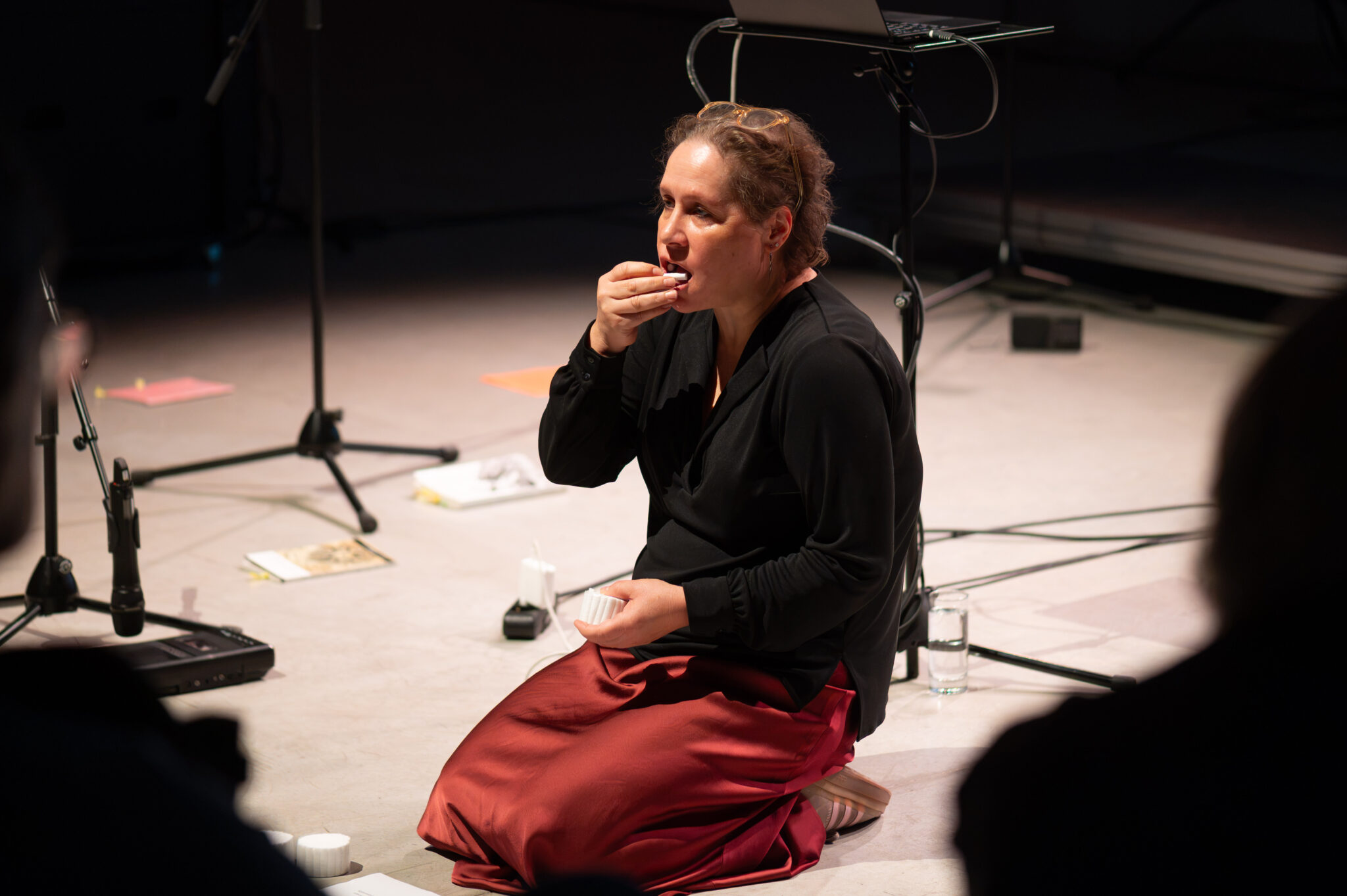
The second concert evening will be opened by OR poiesis [Petra Kapš] with her composition Spell of Silence, in which musical structures emerge as modalities of movements performed by the artist on geomantic instruments. This will be followed by beepblip [Ida Hiršenfelder] and her composition Angstmachine, which develops as sound layering, in which performative gestures are transferred to the instrument and create feelings of unrest, tension and a premonition of an impending collapse. Brane Zorman will conclude the evening with his work Orchestrated Attack – Subliminal Version, a utopian reflection of informational, financial, social and moral-ethical chaos. The work thematizes the disintegration of civilizational values, which do not collapse explosively, but quietly, in the background, under the influence of invisible flows of interests and power.
OR poiesis will explore deep listening and expanded perception through poetic scores in her workshop Molecular psalterion.
Brane Zorman


Matej Tomažin
Production team: Irena Pivka, Allja Petric, Karmen Ponikvar, Matej Tomažin, Brane Zorman, Maja Bjelica (ZRS Koper)
Coordinator for Cukrarna Gallery: Alenka Trebušak
Technical support: Brane Zorman and Cona’s team, Martin Lovšin and Cukrarna’s team
Festival visual identity: Matej Tomažin
Public relations: Matej Tomažin (Cona), Mojca Podlesek (Cukrarna Gallery)
Soundwalk partners: AGRFT, Cukrarna Gallery, Cona, Društvo UHO, MGML, ŠKUC, Skladišče 172, KUD NUM
Festival co-producer: Cukrarna Gallery
Organiser of the lecture series: Science and Research Centre Koper, Institute for Philosophical and Religious Studies
Co-producer of the accompanying programme and concert presentation: City of Women
Partner of the accompanying programme and sound walk presentation: BAZA, Ljubljana Youth Centre
Festival producer: Cona
The programme of the Cona Institute is supported by the Ministry of Culture of the Republic of Slovenia and the Municipality of Ljubljana, Department of Culture.
The lecture series Thinking-with Silences, prepared by dr. Maja Bjelica, is part of the activities of the research programme Philosophy and the Arts (P6-0279), implemented at ZRS Koper and financially supported by the Slovenian Research and Innovation Agency (ARIS).

Programme
- Prikaži vse
- Community-building programme
- Soundwalk
- Concert
- Sound exhibition
- Lecture
- Workshop