Spell of Silence
PAST EVENTS


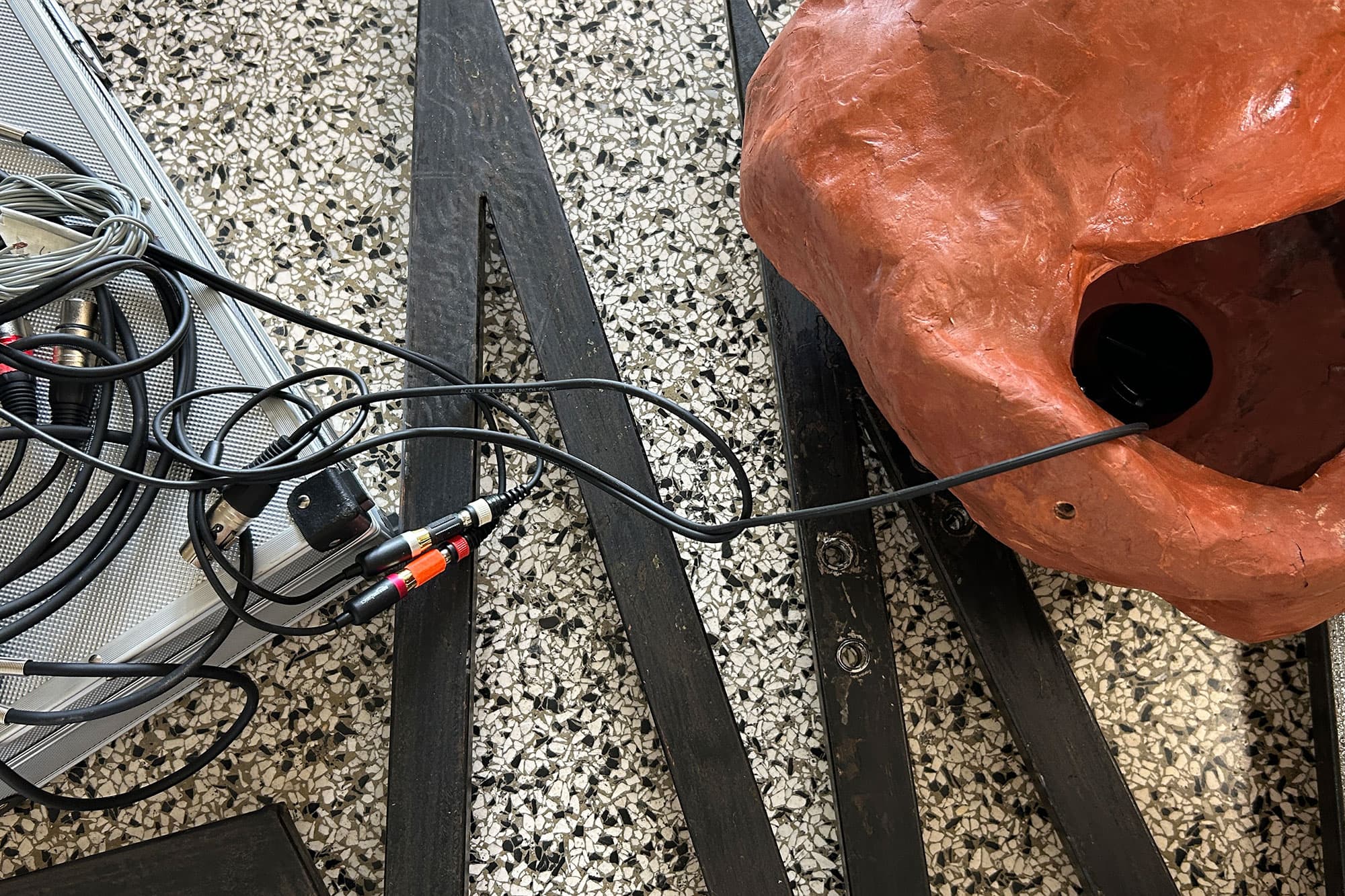
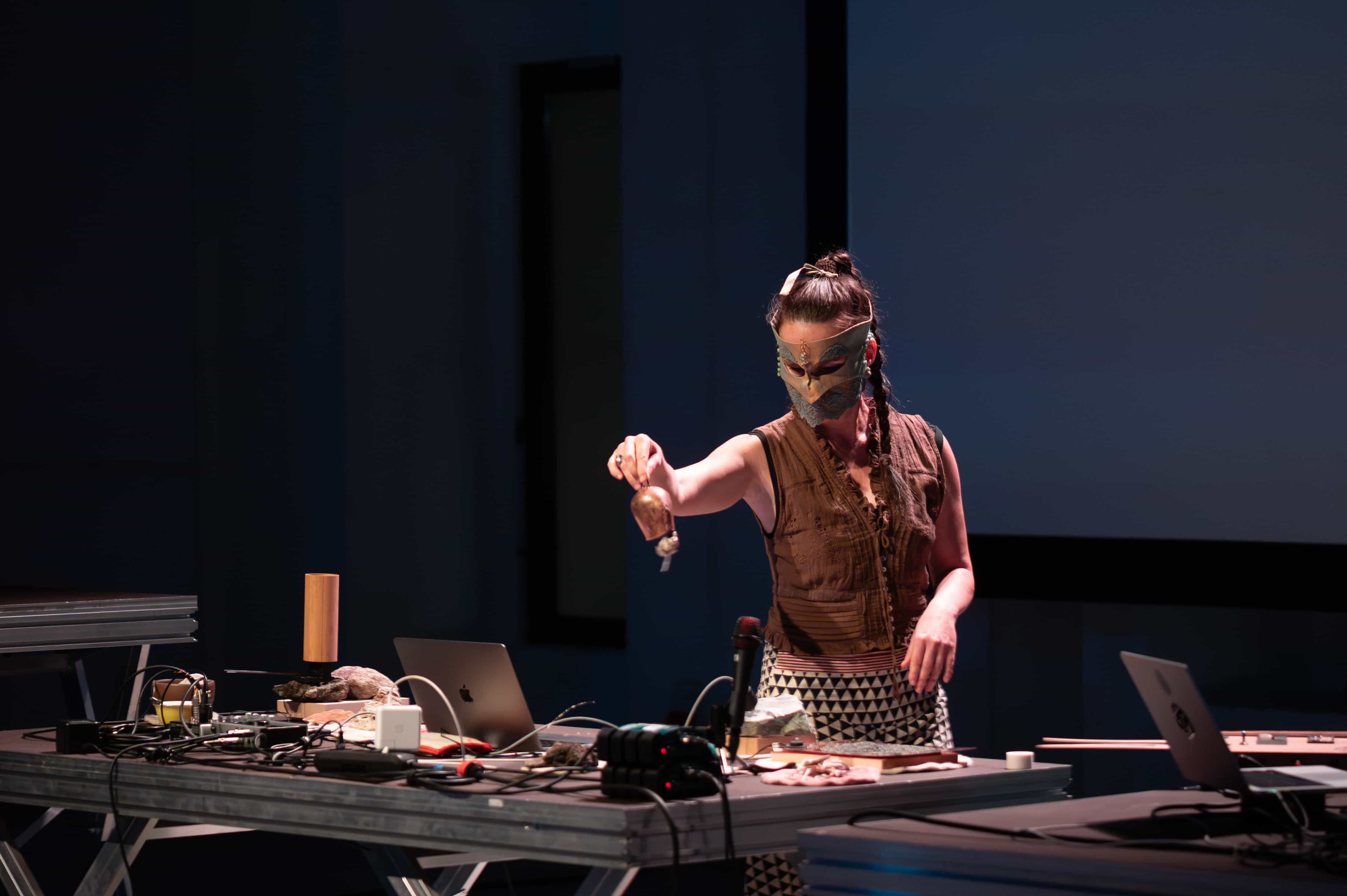
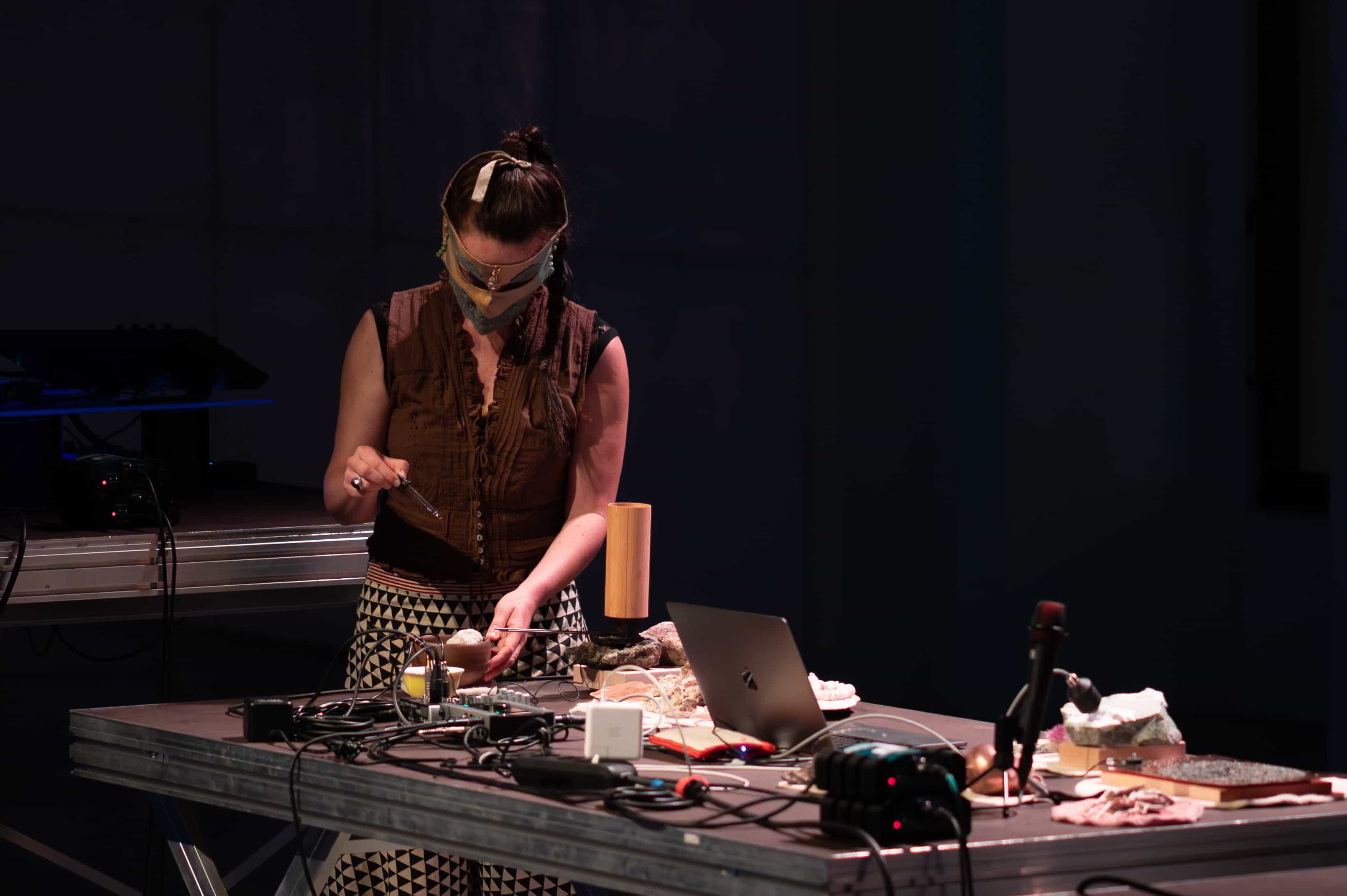
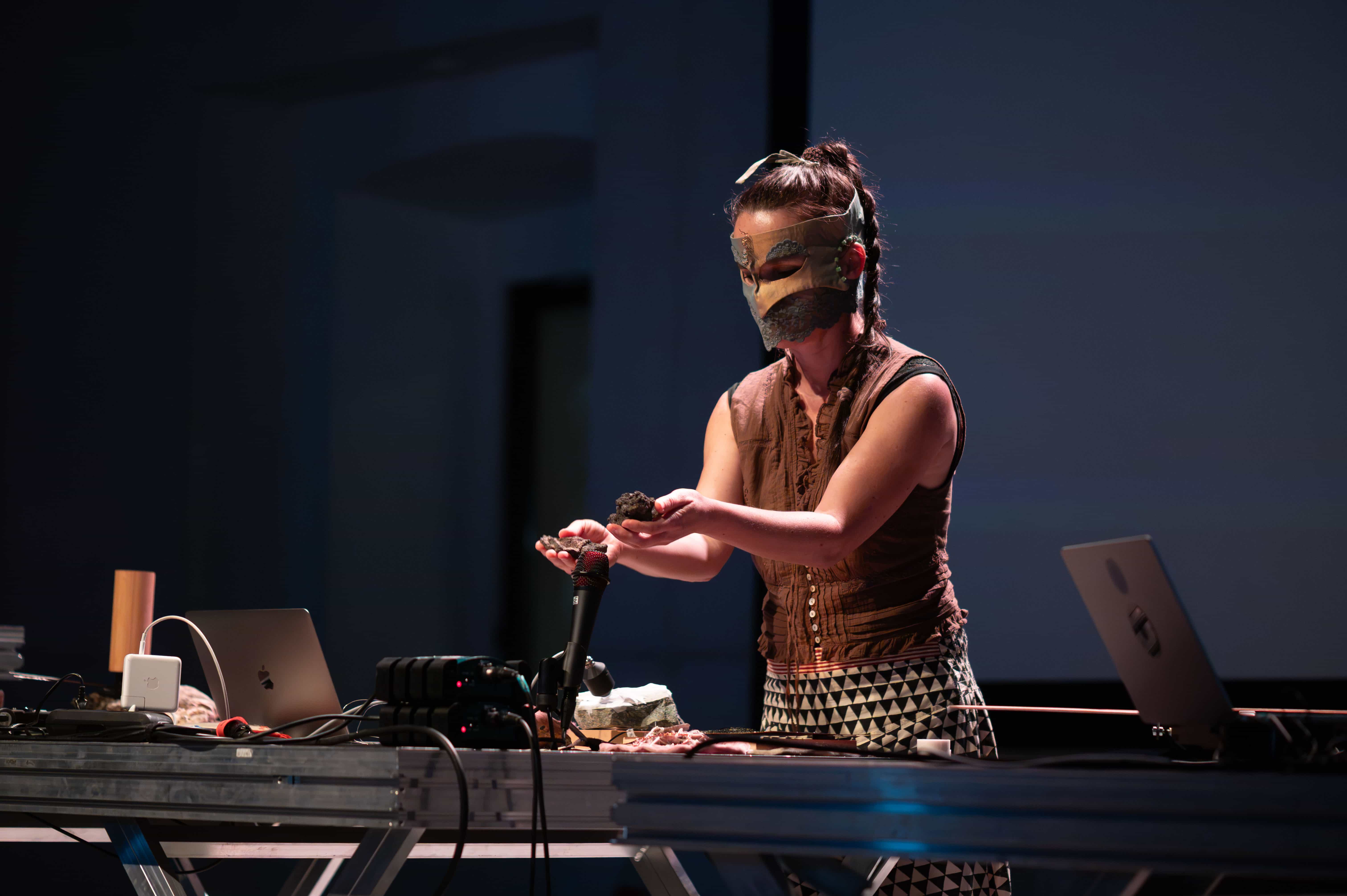
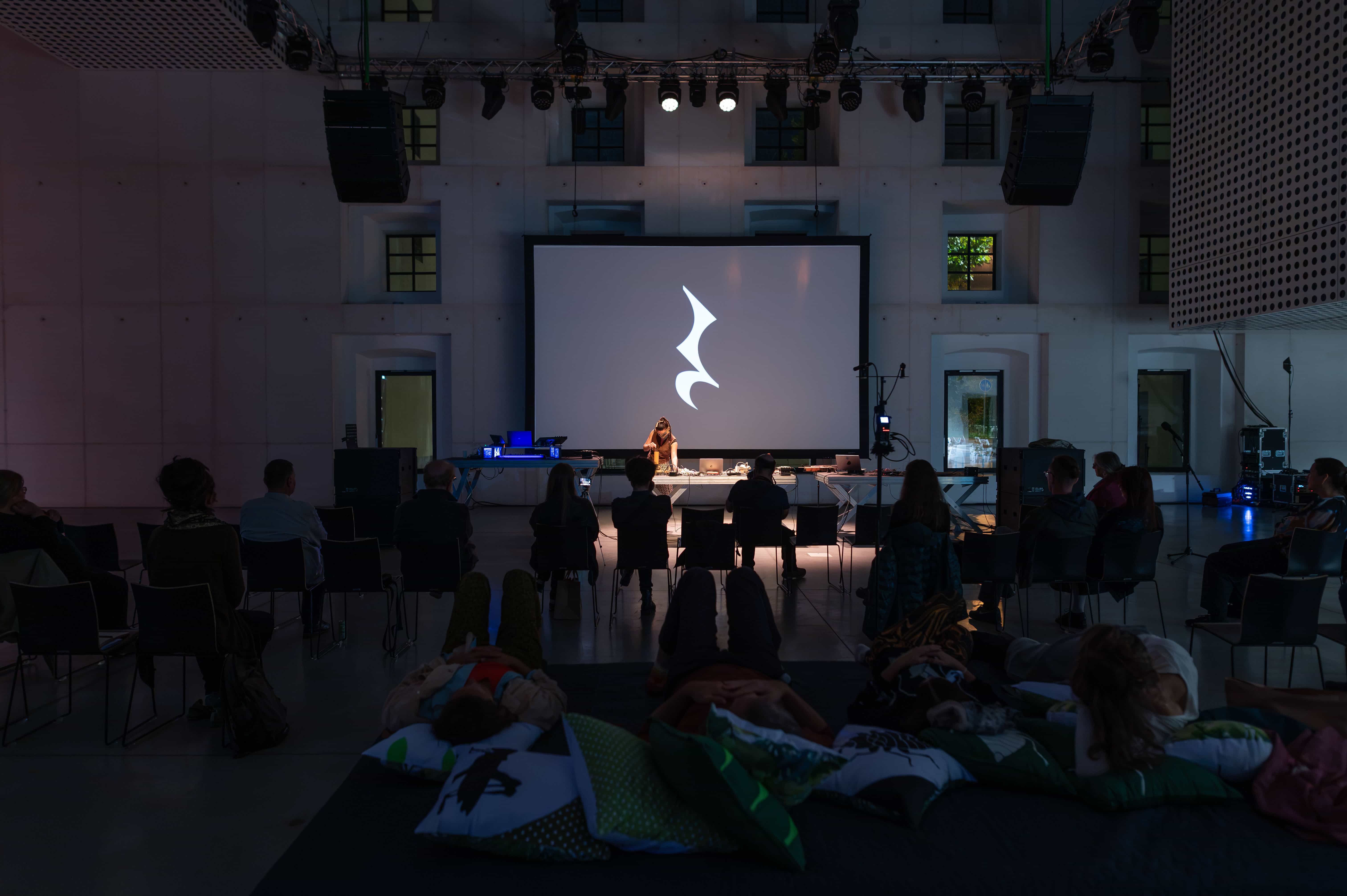
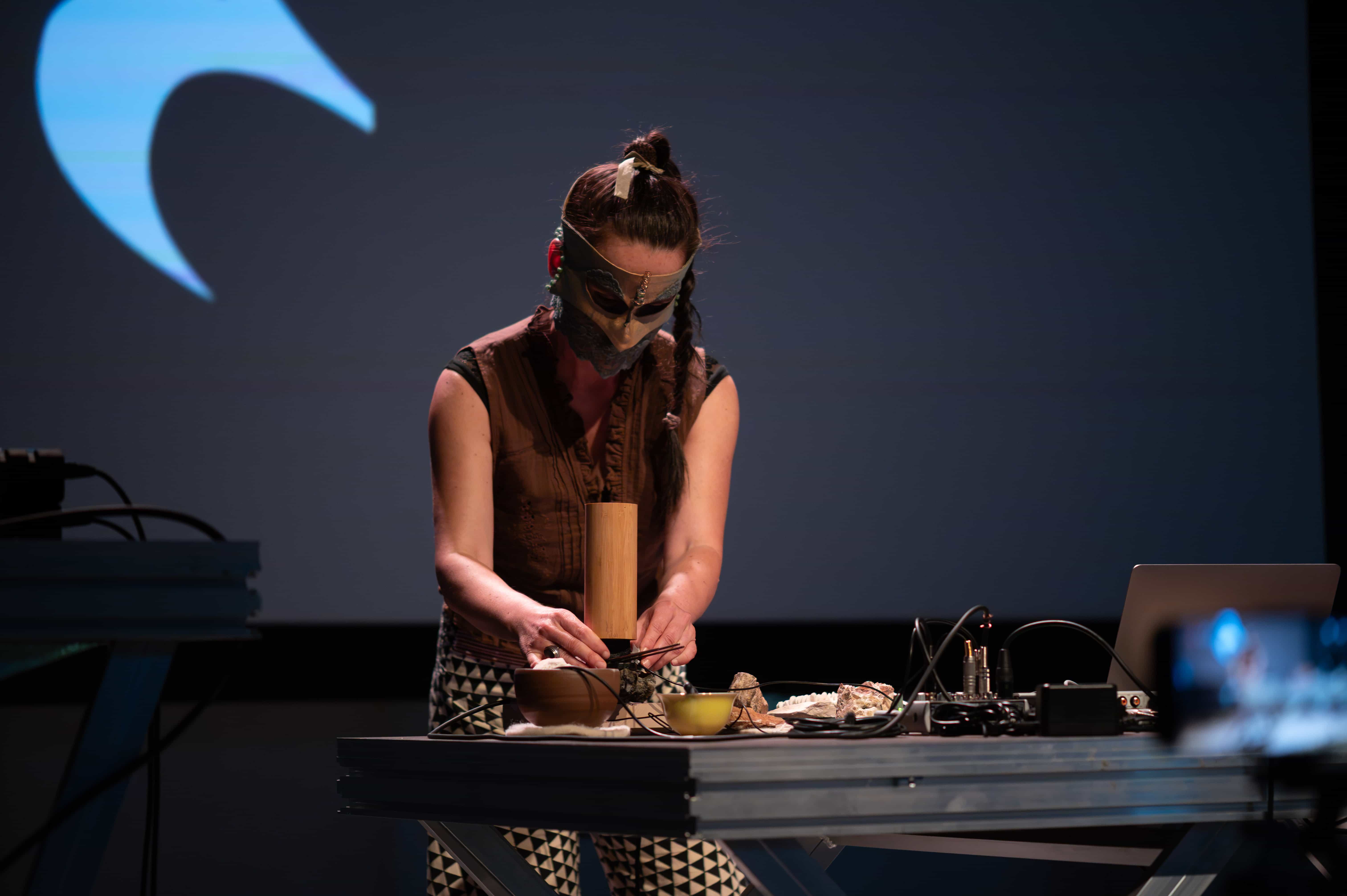
Concert for geomantic instruments, sound-bearing stones, archaeological artifacts, field sound recordings, a feedback loop, a sound synthesizer, movement/voice.
The composition is based on the question of how to play space, on sonic autochthonism (; from the earth itself) and on the sonic research of prehistoric spaces and sanctuaries in the Pohorje primeval forest, northern Greece (the Greek island of Samothrace and the Pangaion hills) and Vesuvius. The performative composition synthesizes the sensuality of movement and the archetypal musicality of concrete littoral materiality. It is based on cyclicity, circulation, rubbing, oscillation, the creation of geomantic instruments and sequences of performative field recordings (tied to specific spaces, elemental and archaeological artifacts).
Shrines create, receive, and emit a subtle field that carries profound transformative meaning throughout human culture. The mycelium of the territory is intertwined with natural and manmade shrines, in which the ancient ways of connecting, worshiping, and harmonizing human existence with nature and the transcendent continue resonating even today.
The central parameters of the musical structure are the modalities of movements performed by the artist with geomantic instruments. By circulating the sound signal through the vibration-magnetic circuit of geomantic instruments, microphones and analogue-digital environment, the artist controls the microtonal sound field, elemental melody, fragments of the archetypal rhythm and the axes of asynchronous harmony. The process pursues the psychoacoustics of matter and form.
Littoral matter is not a solitary silent substance, but a networked, crystalline resonance – a musical field full of movement and cosmic connections.

Blaž Gutman (MGML)
Concert for geomantic instruments, sound-bearing stones, archaeological artifacts, field sound recordings, a feedback loop, a sound synthesizer, movement/voice.
The composition is based on the question of how to play space, on sonic autochthonism (; from the earth itself) and on the sonic research of prehistoric spaces and sanctuaries in the Pohorje primeval forest, northern Greece (the Greek island of Samothrace and the Pangaion hills) and Vesuvius. The performative composition synthesizes the sensuality of movement and the archetypal musicality of concrete littoral materiality. It is based on cyclicity, circulation, rubbing, oscillation, the creation of geomantic instruments and sequences of performative field recordings (tied to specific spaces, elemental and archaeological artifacts).
Shrines create, receive, and emit a subtle field that carries profound transformative meaning throughout human culture. The mycelium of the territory is intertwined with natural and manmade shrines, in which the ancient ways of connecting, worshiping, and harmonizing human existence with nature and the transcendent continue resonating even today.
The central parameters of the musical structure are the modalities of movements performed by the artist with geomantic instruments. By circulating the sound signal through the vibration-magnetic circuit of geomantic instruments, microphones and analogue-digital environment, the artist controls the microtonal sound field, elemental melody, fragments of the archetypal rhythm and the axes of asynchronous harmony. The process pursues the psychoacoustics of matter and form.
Littoral matter is not a solitary silent substance, but a networked, crystalline resonance – a musical field full of movement and cosmic connections.
An artist, composer and researcher in the fields of bio-, geo- and hydroacoustics. Her work combines experimental music, visual-performative practices, sound sculptures and research into the elements and secrets of the Earth. She is a co-founder of Biom Editions, a founding member of the CENSE association and a member of the bioacoustic group Jata C. She works in performances and installations in Slovenia and beyond.
Photo: Petra Kapš