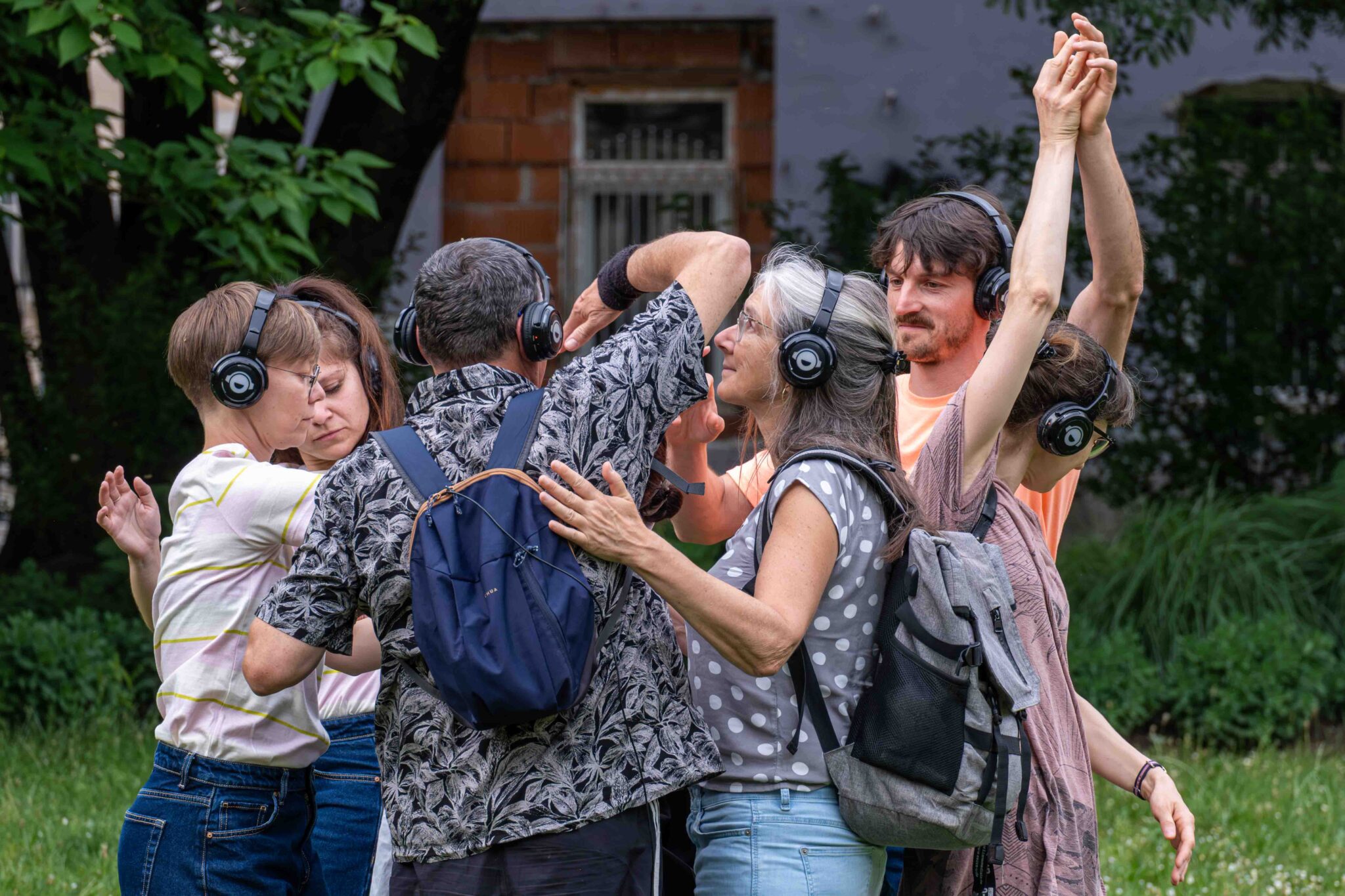
AnimotMUZIK: Ecological concerts with birds
25–31 May 2025
Triglav National Park and Arboretum Volčji Potok
PAST EVENTS
 31 May 2025
 Triglav National Park, meet point at Vorenčkojca
 Free31 May 2025Triglavski narodni park, zbor pri VorenčkojciFree25 May 2025Arboretum Volčji Potok, meet point at Boljkova galleryFree25 May 2025Arboretum Volčji Potok, meet point at Boljkova galleryFree
AnimotMUZIK is a cross-species sound cycle based on direct interspecies musical improvisation between humans and other non-human animal species. Our relationship with nature is marked by a pronounced human dominance and by the unavoidable consequences that such power relations produce.
The anthropocenic worldview treats non-human animals, plants, and entire environments in an extractive manner. Discrimination and abuse of natural habitats thus appear long before understanding, coexistence, or interspecies collaboration, despite decades of warnings from expert and environmentally conscious communities about the urgent need to respect ecological strategies for preserving biodiversity and interdependence among living beings.
Sound ecology, which studies the relationship between human sonic activity and the environment, represents an important redistribution of attention toward neglected areas of auditory perception. It encourages mindful listening, transforming what was once taken for granted as background sound into a complex, inclusive, and constantly evolving composition of equally significant protagonists.
The sounds produced by non-human animals are complex. While scientific research most often approaches them from an external analytical position, interspecies sound art focuses on entering the space as an equal participant and attempting to establish dialogue with all those present. The human thus becomes part of a choir of birds, responding in ways that respect harmony, balance, and the full sonic spectrum.
Such practices are grounded in inclusive co-creation between humans and non-human animals. Human participation consciously expresses respect and equality, refrains from domination, and leaves space for all involved. Through this process, a unique form of interspecies collaboration emerges, where sounds of different life forms intertwine into an authentic musical experience.
As an audience, we can fully engage with this kind of musical exploration only once we understand that nature is not a backdrop for performers, but a space of symbiotic and compassionate relationships between humans and their environment. This musical expression is based on improvisation, where encounters between participants are unpredictable and the interstitial spaces of meeting are shaped by chance.


Matej Tomažin
AnimotMUZIK is a cross-species sound cycle based on direct interspecies musical improvisation between humans and other non-human animal species. Our relationship with nature is marked by a pronounced human dominance and by the unavoidable consequences that such power relations produce.
The anthropocenic worldview treats non-human animals, plants, and entire environments in an extractive manner. Discrimination and abuse of natural habitats thus appear long before understanding, coexistence, or interspecies collaboration, despite decades of warnings from expert and environmentally conscious communities about the urgent need to respect ecological strategies for preserving biodiversity and interdependence among living beings.
Sound ecology, which studies the relationship between human sonic activity and the environment, represents an important redistribution of attention toward neglected areas of auditory perception. It encourages mindful listening, transforming what was once taken for granted as background sound into a complex, inclusive, and constantly evolving composition of equally significant protagonists.
The sounds produced by non-human animals are complex. While scientific research most often approaches them from an external analytical position, interspecies sound art focuses on entering the space as an equal participant and attempting to establish dialogue with all those present. The human thus becomes part of a choir of birds, responding in ways that respect harmony, balance, and the full sonic spectrum.
Such practices are grounded in inclusive co-creation between humans and non-human animals. Human participation consciously expresses respect and equality, refrains from domination, and leaves space for all involved. Through this process, a unique form of interspecies collaboration emerges, where sounds of different life forms intertwine into an authentic musical experience.
As an audience, we can fully engage with this kind of musical exploration only once we understand that nature is not a backdrop for performers, but a space of symbiotic and compassionate relationships between humans and their environment. This musical expression is based on improvisation, where encounters between participants are unpredictable and the interstitial spaces of meeting are shaped by chance.
Great Tit (Parus major) A distinctive songbird of Slovenian forests, gardens, and parks. Known for its adaptability, complex vocalizations, and high level of cognitive skill.
Blue Tit (Cyanistes caeruleus) A small tit with recognizable blue and yellow plumage. Noted for its foraging agility and remarkable vocal diversity.
Blackbird (Turdus merula) A vocal specialist with a distinctly melodic and individualized song. One of the most common birds in Slovenia’s cultural landscape.
Eurasian Nuthatch (Sitta europaea) The only European bird capable of climbing down tree trunks headfirst. Its call consists of metallic whistles, contributing a key element to the forest soundscape.
Eurasian Blackcap (Sylvia atricapilla) A singer with a rich vocal repertoire, known for its melodic and improvised phrases. Common in deciduous forests and shrublands.
House Sparrow (Passer domesticus) A highly social species closely associated with human settlements. Communicates through short, rhythmic calls during group interactions.
Chaffinch (Fringilla coelebs) A territorial singer with a characteristic, pulsating melody. A frequent inhabitant of forests and managed landscapes across Slovenia.
Self-employed cultural worker active as a pedagogue, performer, and vocalist. Her practice spans street and music theatre, vocal performance, and the creation of music for storytelling, puppet theatre, and contemporary dance.
A saxophonist and clarinettist of the younger generation, working between Ljubljana and Nova Gorica. He is primarily active in free jazz, experimental, and alternative music practices.
An intermedia artist, composer, sound manipulator, producer, and curator. He composes sound works for theatre, intermedia, and dance productions.
Concept of the original sound cycle: Katarina Radaljac
Ornithological guidance: Alenka Bradač, Aleksander Kozina (DOPPS)
Organisation: Irena Pivka (Cona), Urška Golob, Franciska Tan
Public relations, video and photography: Matej Tomažin, Anja Marinšek, Franciska Tan
Production: Cona, Institute for Processing Contemporary Art, 2025
Project partners: Arboretum Volčji Potok, Bohinj Tourism

Matej Tomažin