Darko Fritz

H2O Interface

Discussion

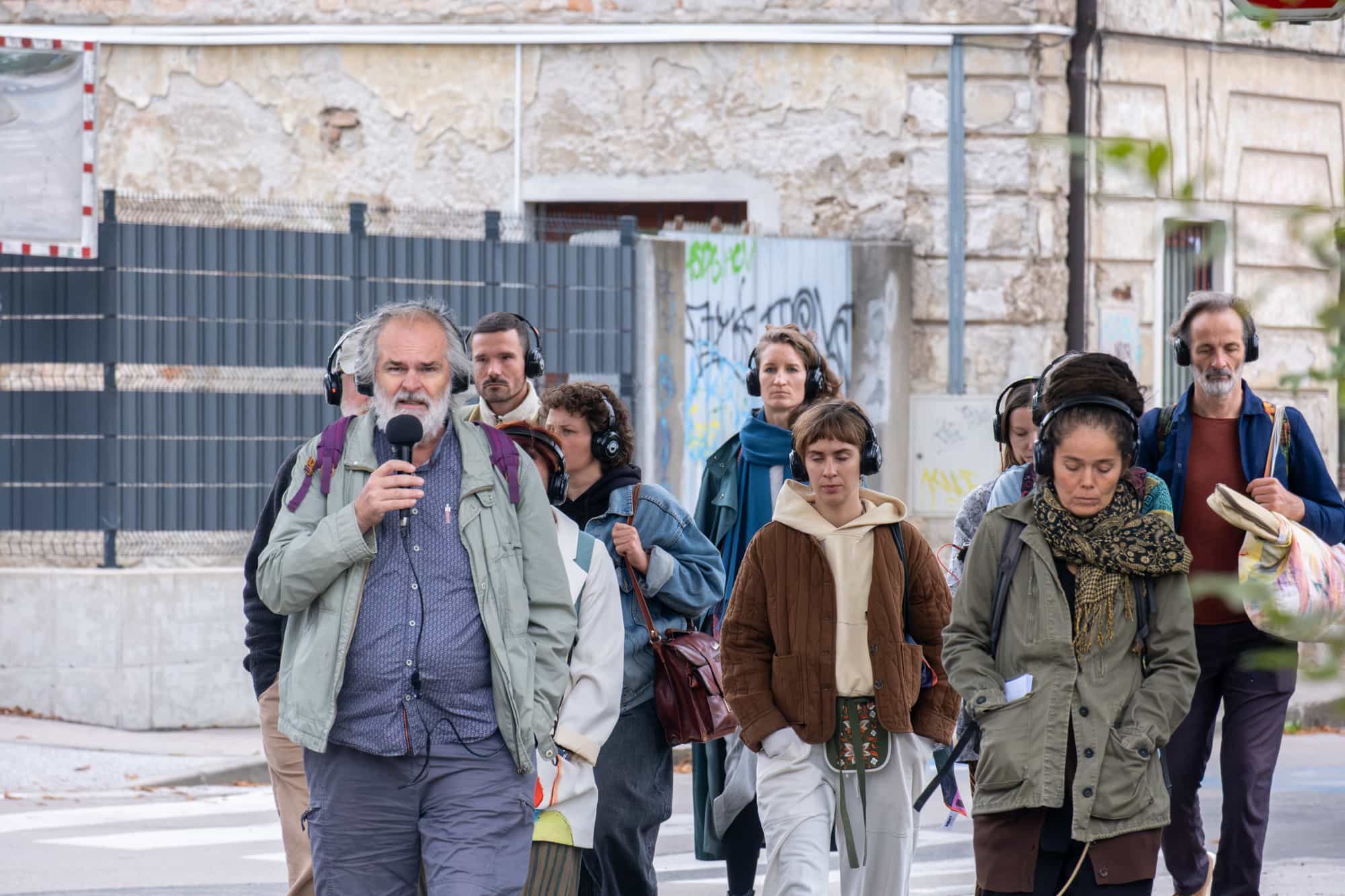
H2O Interface explores the role of water in the Anthropocene, highlighting its connections to both human and non-human entities. Inspired by Bruno Latour’s Parliament of Things, the project challenges conventional distinctions between natural and social phenomena and invites a reconsideration of human and non-human actors as part of larger hybrid networks.

Within this framework, water appears as an active participant in interconnected systems, while acoustic ecologies are foregrounded as a key means of understanding relationships between living organisms, water and objects. Sound art reveals complex interdependencies that shape our environment, presenting water as a dynamic force within intertwined ecosystems.

H2O Interface explores the role of water in the Anthropocene, highlighting its connections to both human and non-human entities. Inspired by Bruno Latour’s Parliament of Things, the project challenges conventional distinctions between natural and social phenomena and invites a reconsideration of human and non-human actors as part of larger hybrid networks.

Within this framework, water appears as an active participant in interconnected systems, while acoustic ecologies are foregrounded as a key means of understanding relationships between living organisms, water and objects. Sound art reveals complex interdependencies that shape our environment, presenting water as a dynamic force within intertwined ecosystems.

Darko Fritz

An artist, curator and researcher focusing on the New Tendencies movement and early digital art. He is the author of Digital Art in Croatia 1968–1984 and the founder and programme director of the contemporary and media art space grey) (area.

Author: Darko Fritz
Photo: Matej Tomažin

YOU MIGHT BE INTERESTED IN

Performative Lecture Keynote
no signal

no signal

A performative lecture uses sound, poetry and text-scores to rethink “no signal” as an opening for hearing silence and the silenced differently.

Discussion
Ethnography of Silence(s)

Ethnography of Silence(s)

Drawing on ethnographic research into exodus, memory and belief, the lecture examines silence through power, trauma, resistance and collective identity.

Discussion
The Culture of Listening

The Culture of Listening

A conceptual walk from physics and psychoacoustics to sound ecology addresses noise, the right to silence and the social responsibility of listening.

Discussion
The Slovenian Reception of John Cage – Meaningful Silence

The Slovenian Reception of John Cage – Meaningful Silence

The lecture traces the ambivalent reception of John Cage in post-war Slovenian music and his resonance in alternative and interdisciplinary practices.

Peripatetic lecture
Sounding in Silence: Non-verbal Sound Games in the Rhythm of Opposites and Contradictions

Sounding in Silence: Non-verbal Sound Games in the Rhythm of Opposites and Contradictions

A peripatetic lecture explores intentionality, rhythm and the paradox of experiencing sound and silence while walking.

Peripatetic lecture
The Bird Sounds of the Salines

The Bird Sounds of the Salines

A peripatetic lecture combining slow movement and listening to explore bird habitats and soundscapes of the Sečovlje Salina Nature Park.

Peripatetic lecture
The Dramaturgy of Time as a Factor in Creating Spaces of Relationality, Wonder and Attunement

The Dramaturgy of Time as a Factor in Creating Spaces of Relationality, Wonder and Attunement

A lecture exploring time as a dramaturgical tool for shaping spaces of perception, relationality and attunement.

Keynote speech
(De)coloniality of Sensing

(De)coloniality of Sensing

The coloniality of perception shapes the world, while artistic practices dismantle it through decolonial experience.

Lecture
Screaming Air

Screaming Air

A performative lecture exploring the sonic intrusion of cicadas as a signal of climatic, perceptual and cultural shifts.

Discussion
When the unspeakable is brought to light …

When the unspeakable is brought to light …

Dark soundscapes reveal overlooked urban relations, exclusions and ecopolitical tensions.