Cona events source

Schema version: 1.2; generated: ; total events: 326.

OR poieseis: YAMAMAYU Night Wandering

Cona Zavod za procesiranje sodobne umetnosti Ljubljana

Soundwalk, Performance, Music

Event registration

The night sound walk takes us on a search of silence and listening to the inaudible, during the time of the night moths yamamayu, which represent the syntropic bonds between distant and nearby territories. The night sound walk takes us into the magical world of nocturnal butterflies, which, as symbionts, represent the syntropic links between nature and culture in Tivoli Park. The series of listening scores aims to intervene in the dominant perceptual agenda and highlight the potentials of aural perception. Hearing is closely related to the capacity for a complex understanding of reality and compassion, the basis for inclusive resonance. How to listen to the invisible? How to perceive beings that do not want to be heard?

Listening to the seemingly inaudible and wandering in night landscapes (which can also be just a reduction of the visual field and listening to the tiny impulses of one’s own body and anima) addresses the sonority of the apparent silence and bioacoustics from the direction of the territory. Japanese silk moths (Antheraea yamamai) inhabit tall deciduous forests, living primarily high in the treetops. These nocturnal butterflies leave behind large light green silk cocoons. Dislocated nocturnal incomers, they managed to flee into the open canopy of the surrounding trees when the locals ventured into silk farming a century ago. Originating in the hills of Japan, they have spread across south-east Europe.

YAMAMAYU Night Wanderings drew on the artist’s ongoing poetic exploration of Japanese silk moths and moths in general, echolocation, the ability of nocturnal moths to absorb sound as protection against predators, silence, the modality of moving/not moving, and the sophistication of the personal aural field in terms of territory.

Cikli / Cycles

YAMAMAYU Night Wanderings

OR poiesis [Petra Kapš]

The night sound walk takes us on a search of silence and listening to the inaudible, during the time of the night moths yamamayu, which represent the syntropic bonds between distant and nearby territories. The night sound walk takes us into the magical world of nocturnal butterflies, which, as symbionts, represent the syntropic links between nature and culture in Tivoli Park. The series of listening scores aims to intervene in the dominant perceptual agenda and highlight the potentials of aural perception. Hearing is closely related to the capacity for a complex understanding of reality and compassion, the basis for inclusive resonance. How to listen to the invisible? How to perceive beings that do not want to be heard?

Listening to the seemingly inaudible and wandering in night landscapes (which can also be just a reduction of the visual field and listening to the tiny impulses of one’s own body and anima) addresses the sonority of the apparent silence and bioacoustics from the direction of the territory. Japanese silk moths (Antheraea yamamai) inhabit tall deciduous forests, living primarily high in the treetops. These nocturnal butterflies leave behind large light green silk cocoons. Dislocated nocturnal incomers, they managed to flee into the open canopy of the surrounding trees when the locals ventured into silk farming a century ago. Originating in the hills of Japan, they have spread across south-east Europe.

YAMAMAYU Night Wanderings drew on the artist’s ongoing poetic exploration of Japanese silk moths and moths in general, echolocation, the ability of nocturnal moths to absorb sound as protection against predators, silence, the modality of moving/not moving, and the sophistication of the personal aural field in terms of territory.

OR poiesis [Petra Kapš]

An artist and researcher in the field of bio- and geo-acoustics, hydroacoustics, auditory perception, interactive sound performance in concrete, acoustic space and digitally augmented reality, web transmission and art radio. Her work weaves between the art of sound, radio, space-time poetry, performance and photography. She extends the word, her primary medium, into the sonorous spheres of space-time poetry. She develops a performative practice of field recording, explores and enacts the possibilities of the author's radio space, and focuses on the aurality of spatialized memory and temporal wells. Alongside all digital dimensions, the physical presence of the body is central. Her sound works record _solitudes_. In recent years, she has made a significant contribution to the development of interactive, sonic and performative art practices. Her experimentation and development of location-based media in relation to the auditory sensory system and the development of topographic sound archives, articulating subtle interventions in public space, and exploring memory and remembering, highlighted through sound, sensation and perception, in the dynamic between the ancient and the contemporary, are important. She works in Slovenian and international environments. She is a founding member of CENSE (Central European Network for Sonic Ecologies) and a member of JATA C and the radio.earth collective.

Kolofon / Colophon

Concept, text, and design: Petra Kapš
Music and sound composition: Petra Kapš
Proofreading and English translation: Melita Silič
Portrait photography: Francesco Rosso
Event photography: Matej Tomažin

Fotografija / Image

Foto: Petra Kapš, Matej Tomažin

Elena Biserna: Walking from Scores

Cona Zavod za procesiranje sodobne umetnosti Ljubljana

Discussion, Education

Event registration

Walking from Scores is a collection of around one hundred non-site-specific scores created by artists, composers and collectives involving walking, listening and sound-making in urban space. The project explores the relationship between the aesthetic and the everyday, the dynamics of sound and listening in urban environments, and the porous boundaries between artist and audience.

It draws from two premises: (1) an interest in walking as a relational practice and a way to establish interaction with places and to read and reinterpret urban space, and (2) a focus on verbal notation and text scores as catalysts for action and open invitations addressed to everyone.

The title refers to Ken Friedman’s text Working from Scores (1990), which examined the notion of musicality in visual and intermedia art and questioned ideas of authenticity, intention and meaning. The project is based on the reproduction and redistribution of the collection and its reactivation in context-specific forms.

Cikli / Cycles

Walking from Scores

Elena Biserna

Walking from Scores is a collection of around one hundred non-site-specific scores created by artists, composers and collectives involving walking, listening and sound-making in urban space. The project explores the relationship between the aesthetic and the everyday, the dynamics of sound and listening in urban environments, and the porous boundaries between artist and audience.

It draws from two premises: (1) an interest in walking as a relational practice and a way to establish interaction with places and to read and reinterpret urban space, and (2) a focus on verbal notation and text scores as catalysts for action and open invitations addressed to everyone.

The title refers to Ken Friedman’s text Working from Scores (1990), which examined the notion of musicality in visual and intermedia art and questioned ideas of authenticity, intention and meaning. The project is based on the reproduction and redistribution of the collection and its reactivation in context-specific forms.

Elena Biserna

An independent scholar and occasional curator based in Marseille. She writes, talks, facilitates workshops and collective projects, curates and sometimes performs. Her interests focus on listening and contextual, time-based art practices related to urban dynamics, socio-cultural processes, and the public and political sphere. She has contributed to numerous international publications and is currently working on the books Walking from Scores and Walking, Listening, Sound-Making.

Kolofon / Colophon

Author: Elena Biserna
Photo: Matej Tomažin

Fotografija / Image

Foto: Matej Tomažin

Alisa Oleva: Listening for Change

Cona Zavod za procesiranje sodobne umetnosti Ljubljana

Soundwalk, Performance, Music

Event registration

The archaeology and choreography of Alisa Oleva’s urban sound studio are composed of surfaces, traces, borders, intervals, silences, passages and fissures. Through sound walks as an artistic form and a method of exploring contemporary social realities, she invites listeners and participants to reconsider their relationship with the urban environment, the treatment of disappearing nature, and the role of individuals and society in the process of sensory purification.

The foundations of her practice lie in the ability to think and create conditions for renaturalization and in developing sound walking as a ritual.

This is an invitation to walk together through the streets of Ljubljana, focusing on soundscapes and on sounds present and absent. The walk begins with a collective tuning-in exercise, followed by silent walking and focused listening, and concludes with a discussion.

Cikli / Cycles

Listening for Change

Alisa Oleva

The archaeology and choreography of Alisa Oleva’s urban sound studio are composed of surfaces, traces, borders, intervals, silences, passages and fissures. Through sound walks as an artistic form and a method of exploring contemporary social realities, she invites listeners and participants to reconsider their relationship with the urban environment, the treatment of disappearing nature, and the role of individuals and society in the process of sensory purification.

The foundations of her practice lie in the ability to think and create conditions for renaturalization and in developing sound walking as a ritual.

This is an invitation to walk together through the streets of Ljubljana, focusing on soundscapes and on sounds present and absent. The walk begins with a collective tuning-in exercise, followed by silent walking and focused listening, and concludes with a discussion.

Alisa Oleva

She treats the city as her studio and urban life as material for examining urban choreography and archaeology, traces and surfaces, borders and inventories, intervals and silences, passages and cracks. Her projects manifest as interactive situations, performances, movement scores, personal and intimate encounters, parkour, walkshops and sound walks.

Kolofon / Colophon

Artist: Alisa Oleva
Photo: Matej Tomažin

Fotografija / Image

Foto: Matej Tomažin

Boštjan Perovšek: Sounds from Ancient Place

Cona Zavod za procesiranje sodobne umetnosti Ljubljana

Exhibition, Visual arts

Event registration

Listening to nature’s sounds which accompany us daily, is rarely acknowledged as an environment from Ancient Place, showing nature, culture, and modern way of living’s complexity. Listening to such complexity enables the listener to reflect on the present moment as a past, present, and future entity of now.

The work has been created for the SoundCamp festival 2021, project Accoustic Commons. The artist has premiered live from location Debela Griža and has then said: »The recordings collected since 2014 confront the here-and-now sound at Debela griža in the vicinity of Volčji grad, Karst region. A geophone is also used. The composition combines selected archive sounds and live sound in electro-acoustic processing of ‘frequency slices’ and multi-stage sound granulation. The outcome is confronted with the sounds on the Locustream SoundMap. The project recorded in binaural format will be performed at the Right atrium Rotovž and accessible on mobile devices. The use of headphones is recommended. The sound event will start with live open microphones broadcast that will be joined by electro-acoustic composition. In the end, the sound will fuse in the Ancient Place Master Mix«.


Cikli / Cycles

Sounds from Ancient Place

Boštjan Perovšek

Listening to nature’s sounds which accompany us daily, is rarely acknowledged as an environment from Ancient Place, showing nature, culture, and modern way of living’s complexity. Listening to such complexity enables the listener to reflect on the present moment as a past, present, and future entity of now.

The work has been created for the SoundCamp festival 2021, project Accoustic Commons. The artist has premiered live from location Debela Griža and has then said: »The recordings collected since 2014 confront the here-and-now sound at Debela griža in the vicinity of Volčji grad, Karst region. A geophone is also used. The composition combines selected archive sounds and live sound in electro-acoustic processing of ‘frequency slices’ and multi-stage sound granulation. The outcome is confronted with the sounds on the Locustream SoundMap. The project recorded in binaural format will be performed at the Right atrium Rotovž and accessible on mobile devices. The use of headphones is recommended. The sound event will start with live open microphones broadcast that will be joined by electro-acoustic composition. In the end, the sound will fuse in the Ancient Place Master Mix«.


Boštjan Perovšek

A musician, composer and soundscape artist working in experimental, electro-acoustic and bioacoustic music. He performs solo and with various ensembles, including Jata C and SAETA. He is active in sound ecology through the organisation of sound safaris and has released several CDs and the vinyl LP Bio, Industrial Acoustica (green), featuring works from his bioacoustic and urban noise oeuvre.

Kolofon / Colophon

Author: Boštjan Perovšek
Photo: Matej Tomažin

Production: CONA institute for the Acoustic Commons project.

Fotografija / Image

Foto: Matej Tomažin

OR poiesis: YAMAMAYU Night Wanderings

Cona Zavod za procesiranje sodobne umetnosti Ljubljana

Soundwalk, Performance, Music

The night sound walk takes us on a search of silence and listening to the inaudible, during the time of the night moths yamamayu, which represent the syntropic bonds between distant and nearby territories. The night sound walk takes us into the magical world of nocturnal butterflies, which, as symbionts, represent the syntropic links between nature and culture in Tivoli Park. The series of listening scores aims to intervene in the dominant perceptual agenda and highlight the potentials of aural perception. Hearing is closely related to the capacity for a complex understanding of reality and compassion, the basis for inclusive resonance. How to listen to the invisible? How to perceive beings that do not want to be heard?

Listening to the seemingly inaudible and wandering in night landscapes (which can also be just a reduction of the visual field and listening to the tiny impulses of one’s own body and anima) addresses the sonority of the apparent silence and bioacoustics from the direction of the territory. Japanese silk moths (Antheraea yamamai) inhabit tall deciduous forests, living primarily high in the treetops. These nocturnal butterflies leave behind large light green silk cocoons. Dislocated nocturnal incomers, they managed to flee into the open canopy of the surrounding trees when the locals ventured into silk farming a century ago. Originating in the hills of Japan, they have spread across south-east Europe.

YAMAMAYU Night Wanderings drew on the artist’s ongoing poetic exploration of Japanese silk moths and moths in general, echolocation, the ability of nocturnal moths to absorb sound as protection against predators, silence, the modality of moving/not moving, and the sophistication of the personal aural field in terms of territory.

YAMAMAYU Night Wanderings

OR poiesis [Petra Kapš]

The night sound walk takes us on a search of silence and listening to the inaudible, during the time of the night moths yamamayu, which represent the syntropic bonds between distant and nearby territories. The night sound walk takes us into the magical world of nocturnal butterflies, which, as symbionts, represent the syntropic links between nature and culture in Tivoli Park. The series of listening scores aims to intervene in the dominant perceptual agenda and highlight the potentials of aural perception. Hearing is closely related to the capacity for a complex understanding of reality and compassion, the basis for inclusive resonance. How to listen to the invisible? How to perceive beings that do not want to be heard?

Listening to the seemingly inaudible and wandering in night landscapes (which can also be just a reduction of the visual field and listening to the tiny impulses of one’s own body and anima) addresses the sonority of the apparent silence and bioacoustics from the direction of the territory. Japanese silk moths (Antheraea yamamai) inhabit tall deciduous forests, living primarily high in the treetops. These nocturnal butterflies leave behind large light green silk cocoons. Dislocated nocturnal incomers, they managed to flee into the open canopy of the surrounding trees when the locals ventured into silk farming a century ago. Originating in the hills of Japan, they have spread across south-east Europe.

YAMAMAYU Night Wanderings drew on the artist’s ongoing poetic exploration of Japanese silk moths and moths in general, echolocation, the ability of nocturnal moths to absorb sound as protection against predators, silence, the modality of moving/not moving, and the sophistication of the personal aural field in terms of territory.

OR poiesis [Petra Kapš]

An artist and researcher in the field of bio- and geo-acoustics, hydroacoustics, auditory perception, interactive sound performance in concrete, acoustic space and digitally augmented reality, web transmission and art radio. Her work weaves between the art of sound, radio, space-time poetry, performance and photography. She extends the word, her primary medium, into the sonorous spheres of space-time poetry. She develops a performative practice of field recording, explores and enacts the possibilities of the author's radio space, and focuses on the aurality of spatialized memory and temporal wells. Alongside all digital dimensions, the physical presence of the body is central. Her sound works record _solitudes_. In recent years, she has made a significant contribution to the development of interactive, sonic and performative art practices. Her experimentation and development of location-based media in relation to the auditory sensory system and the development of topographic sound archives, articulating subtle interventions in public space, and exploring memory and remembering, highlighted through sound, sensation and perception, in the dynamic between the ancient and the contemporary, are important. She works in Slovenian and international environments. She is a founding member of CENSE (Central European Network for Sonic Ecologies) and a member of JATA C and the radio.earth collective.

Kolofon / Colophon

Concept, text, and design: Petra Kapš
Music and sound composition: Petra Kapš
Proofreading and English translation: Melita Silič
Portrait photography: Francesco Rosso
Event photography: Matej Tomažin

Fotografija / Image

Foto: Petra Kapš, Matej Tomažin

Jata C: Chronolith

Cona Zavod za procesiranje sodobne umetnosti Ljubljana

Concert, Exhibition, Music, Visual arts

Event registration

Chronolith consists of a complex multi-channel sound composition and stone slab installation. In the work, the bioacoustic group Jata C investigates the acoustics and temporal dimensions of stone structures and their sustainability and interdependence with humans.

The artists obtained the sound material for the composition via field recordings of various locations and quarries. The installation serves as a stone instrument, a sensory extension of the human body, with which the composition and the vibrations of the stones are fed back into the materiality of the slabs with the help of transducers, forming a feedback loop. During the production of the work, the artists collaborated with scientists from micropaleontology, geology and physics, and the supporter of the project, the company Marmor Hotavlje.

beepblip [Ida Hiršenfelder], a member of Jata C, wrote about the work:
To think of geological time, the time of the sailing rocks, the time of the lithosphere, and the time of the continents is to think of our insignificance in the big picture, our mortality (dust to dust), and fleeting transience. It is a realisation that might motivate us to stop the insane depletion of the Earth and instead marvel at its mighty delicacy and appreciate the innumerable entities that shaped it in the volatile space and aeons of time. The rocks from the mountains used to be the seabed. The first organic matter in soil was produced by bacteria. Much limestone on the Earth originates from the activity of coccolithophores, unicellular algae covered in calcium carbonate scales. Like us, they are both alive and dead, organic and inorganic. We know too well such distinction is needless; however, it matters what worlds world worlds.[1] It is almost impossible to find a place on the planet not dictated by humans or at least transfigured as the consequences of human interventions. To the world, a different world, ruled by reciprocity and not authority, requires internalising different questions. Jata C asks, “How can we hear a stone and its aeons?”

[1] Donna J. Haraway. Staying with Trouble. Min in the Chthulucene. Durham and London: Duke University Press, 2016, p. 35. “It matters what worlds world worlds. It matters what stories tell stories.“

Multichannel Sound Installation

In the live sound event, Jata C performs Kronolit based on a precomposed score that allows for improvisation. Using a multichannel spatial sound system, sound moves between rocks and walls, resonates through the stone slabs, and evokes a tangible presence of geological time.

Live Sound Event

The installation invites visitors into a stone-based resonant space, where the sound narrative opens up a different experience of time — slow, massive, and all-encompassing. The composition interweaves sounds of cracking, grinding, vibrating, and distant echoes — embedded in a narrative of Earth that does not borrow rhythm from humans but shapes its own across the eons.

Chronolith

Jata C [beepblip, OR poiesis, Boštjan Perovšek, Bojana Šaljić Podešva, Brane Zorman]

Chronolith consists of a complex multi-channel sound composition and stone slab installation. In the work, the bioacoustic group Jata C investigates the acoustics and temporal dimensions of stone structures and their sustainability and interdependence with humans.

The artists obtained the sound material for the composition via field recordings of various locations and quarries. The installation serves as a stone instrument, a sensory extension of the human body, with which the composition and the vibrations of the stones are fed back into the materiality of the slabs with the help of transducers, forming a feedback loop. During the production of the work, the artists collaborated with scientists from micropaleontology, geology and physics, and the supporter of the project, the company Marmor Hotavlje.

beepblip [Ida Hiršenfelder], a member of Jata C, wrote about the work:
To think of geological time, the time of the sailing rocks, the time of the lithosphere, and the time of the continents is to think of our insignificance in the big picture, our mortality (dust to dust), and fleeting transience. It is a realisation that might motivate us to stop the insane depletion of the Earth and instead marvel at its mighty delicacy and appreciate the innumerable entities that shaped it in the volatile space and aeons of time. The rocks from the mountains used to be the seabed. The first organic matter in soil was produced by bacteria. Much limestone on the Earth originates from the activity of coccolithophores, unicellular algae covered in calcium carbonate scales. Like us, they are both alive and dead, organic and inorganic. We know too well such distinction is needless; however, it matters what worlds world worlds.[1] It is almost impossible to find a place on the planet not dictated by humans or at least transfigured as the consequences of human interventions. To the world, a different world, ruled by reciprocity and not authority, requires internalising different questions. Jata C asks, “How can we hear a stone and its aeons?”

[1] Donna J. Haraway. Staying with Trouble. Min in the Chthulucene. Durham and London: Duke University Press, 2016, p. 35. “It matters what worlds world worlds. It matters what stories tell stories.“

Multichannel Sound Installation

In the live sound event, Jata C performs Kronolit based on a precomposed score that allows for improvisation. Using a multichannel spatial sound system, sound moves between rocks and walls, resonates through the stone slabs, and evokes a tangible presence of geological time.

Live Sound Event

The installation invites visitors into a stone-based resonant space, where the sound narrative opens up a different experience of time — slow, massive, and all-encompassing. The composition interweaves sounds of cracking, grinding, vibrating, and distant echoes — embedded in a narrative of Earth that does not borrow rhythm from humans but shapes its own across the eons.

Jata C [beepblip, OR poiesis, Boštjan Perovšek, Bojana Šaljić Podešva, Brane Zorman]

Artistic group whose members share a passion for field recordings, bioacoustics and sound ecology. Their research combines auditory perception with ecological and social issues, expanding them with scientific discourse and original performances of sonic environments. In their compositions, they transform field recordings of their immediate surroundings into speculative projections of the future and delicate perceptions of the present. They employ a vast array of field recording devices to capture the various environmental acoustic phenomena. Their performances follow a general score, leaving enough space for improvisation and live interpretation. The group has presented two other compositions to the public, namely ICEmeltings (2019) and Bibaret JC210120 (2020).

beepblip [Ida Hiršenfelder] is a sound artist and archivist. She makes immersive bleepy psychogeographical soundscapes with analogue electronics, DIY and modular synths, field recordings and computer manipulations. She is interested in bioacoustics, experimental music and sound spatialisation. She was a member of the Theremidi Orchestra (2011–2017) and is currently a member of the Jata C group for bioacoustics and sound ecologies. Her solo albums Noise for Strings, Vol. 1 (2019) and Noise for Strings, Vol. 2 (2020) were published by the Kamizdat label.

Petra Kapš [OR poiesis] is an artist and researcher of sound, sound perception and poetic performance. She extends the word in sonic spheres of time-space poetry. Along with the digital dimensions, her focus is nevertheless the physical presence of the body.

Boštjan Perovšek is an artist, composer and sound designer who composes experimental electro-acoustic music. His special is creating bioacoustic music based on the sounds of animals, particularly insects. In addition, he collaborates with the SAETA group and creates music for film and theatre, performances, multimedia installations and soundscapes for museums and galleries.

Bojana Šaljić Podešva dedicates most of her time as a composer to the research of sound as an entity that affects the listener both physically and in terms of content. Her music spans from complete abstraction to complex semantic narratives. She is the recipient of several awards for her concert compositions, incidental music and film scores.

Brane Zorman is an intermedia artist, composer, sound manipulator, producer and curator. He composes sound works for theatre, intermedia and dance performances. He performs electro-acoustic solo pieces and improvisations with local and foreign artists in surround sound. Working with sound and space, Zorman develops various strategies, techniques, dynamic and interactive modules, records and reinterprets soundscapes, and by way of sophisticated tools, he creates electronic and acoustic sound sculptures.

Kolofon / Colophon

Sound artists: beepblip, OR poiesis, Boštjan Perovšek, Bojana Šaljić Podešva, Brane Zorman
Production: Cona Institute for Steklenik Gallery, 2022
Produced by: Irena Pivka
Public relations: Matej Tomažin
Translation and proofreading: Melita Silič
Video: Miha Godec, Matej Tomažin

Co-producer of the installation and sound event is the Ljubljana Castle. The installation is supported by the Ministry of Culture of the Republic of Slovenia and the City of Ljubljana, Department for Culture. The project is a part of konS – Platform for Contemporary Investigative Art. We would like to thank the company Marmor Hotavlje for access to their quarry and the sponsorship of the marble slabs for the installation.

Fotografija / Image

Foto: Kaja Goljat, Maša Pirc, Matej Tomažin

Marko Batista: Vitreous Sky

Cona Zavod za procesiranje sodobne umetnosti Ljubljana

Concert, Exhibition, Music, Visual arts

The multi-channel sound installation Vitreous Sky by intermedia artist Marko Batista continues his exploration of contemporary post-fact society in relation to technological progress and the interconnectedness of society, nature and technology within the framework of ecocritical discourse, environmental policies and current humanist concepts such as nature, the Anthropocene and the capitalist colonial matrix.

The work builds upon Batista’s earlier projects, particularly Fluid Particles of Volcanic Ash, in which the indirect presence of humanity is revealed through devastated landscapes and traces of (post)humanoid existence. At the core of the exhibition are two precisely crafted interactive hybrid visual-sound objects, prototypes of a dystopian habitat of the future, addressing the project on both symbolic and practical levels.

The installation consists of a visual and a sonic component. The visual part is formed by a two-part mimetic installation with a post-natural environment produced using 3D printing, establishing a dialogue between urban and rural habitats. The sonic structure is based on the electrolysis of toxic compounds, which generate sound through processes of self-oscillation and extraction within an expanded electronic system. By attributing agency to matter itself, the work remains open-ended and allows space for unpredictability.

Vitreous Sky

Marko Batista

The multi-channel sound installation Vitreous Sky by intermedia artist Marko Batista continues his exploration of contemporary post-fact society in relation to technological progress and the interconnectedness of society, nature and technology within the framework of ecocritical discourse, environmental policies and current humanist concepts such as nature, the Anthropocene and the capitalist colonial matrix.

The work builds upon Batista’s earlier projects, particularly Fluid Particles of Volcanic Ash, in which the indirect presence of humanity is revealed through devastated landscapes and traces of (post)humanoid existence. At the core of the exhibition are two precisely crafted interactive hybrid visual-sound objects, prototypes of a dystopian habitat of the future, addressing the project on both symbolic and practical levels.

The installation consists of a visual and a sonic component. The visual part is formed by a two-part mimetic installation with a post-natural environment produced using 3D printing, establishing a dialogue between urban and rural habitats. The sonic structure is based on the electrolysis of toxic compounds, which generate sound through processes of self-oscillation and extraction within an expanded electronic system. By attributing agency to matter itself, the work remains open-ended and allows space for unpredictability.

Marko Batista

Intermedia artist, sound researcher, video experimentalist and audiovisual performer. He graduated from the Academy of Fine Arts and Design in Ljubljana and completed his master’s degree at Central Saint Martins in London. His practice operates at the intersection of art and science, focusing on soundscapes, hybrid spaces, data-driven processes and the politics of contemporary media art. He has exhibited internationally and collaborated with numerous institutions and festivals.

Kolofon / Colophon

Artist: Marko Batista
Text: Jasmina Založnik
Technical assistance: Boštjan Čadež, Brane Ždralo, Boris Šaletić
Curated by: Irena Pivka, Brane Zorman
Organisation: Irena Pivka, Ana Mizerit
Public relations: Matej Tomažin, Mateja Lavrič

Production: Cona for Steklenik Gallery, 2022
Co-organisation: Museum of Contemporary Art Metelkova
Venue: Steklenik Gallery hosted at the Museum of Contemporary Art Metelkova

Fotografija / Image

Foto: Jaka Babnik

Brane Zorman: The Tree Spirits | Touch

Cona Zavod za procesiranje sodobne umetnosti Ljubljana

Concert, Exhibition, Music, Visual arts

Event registration

Ambisonic sound event and multi-channel sound installation

The Tree Spirits| Touch sound work reflects on the life of a tree, speculating on its acoustic component, and explores the interaction of an individual part of a plant with the colony of organisms and the forest biotic community. The sound recordings give voice to the existence of a tree in its annual and life cycles which begin and end in silence. The silence anticipating the springtime resurgence of sap flow, and the silence of destruction caused by climate change, drought, and fires. Brane Zorman is one of the three winners of Palma Ars Acoustica EBU competition 2022. You can read more about the conceptualization of work in the pdf notebook (link here) or buy printed verison of the booklet (here).

The artist zeros in on the touch; touch as an expression of genuine concern and awareness of the coexistence with plants, and a destructive touch of environmental devastation. The sounds of touching a tree trunk, branches rubbing against each other, the crushing of loose bark, the foliage, the rustling of trees in the wind, water drenching the roots – an acoustic journey through the physical existence of a tree. All the way to branch breaking, tree falling and a fire, a warning of the upcoming drought which is always a hard blow to a forest habitat.

Live Sound Event

Brane Zorman performs a live adaptation of Spirit of Trees | Touch, a work that evolved over two years in different phases and intensities. The performance employs spatial ambisonic technology and Silent Disco equipment, consisting of multiple micro FM transmitters and short-range headphones operating on various frequencies. The sound immerses the listener from all directions, creating an intense sonic experience where tones blend, shift, and reshape within a 360° spherical space. The ambisonic system allows the artist to manipulate spatial layers of sound while simultaneously transmitting them through conventional stereo headphones. Listening becomes a multi-dimensional experience, dissolving the boundaries between the audience and the sonic environment.

Art Installation

The installation demonstrates, investigates, and records the changes in the electrical conductivity, which are the result of the intensive drying process of the individual tree cookies (sliced portions of a tree trunk), converting the parameters – through heat, electrical and oscillation sensors, and converters – in the visual and acoustic forms. The cookies dry up and crack. They are colonised by microbes, mould, and fungi, and in the process of decomposition change their forms. Symbolically, these newly formed tree structures confront us with the shortage of water and moisture. The composition with the recorded and processed tree sounds, produced both within the organism as well as when touched by a human or the environment, builds an emotional and dramatic narrative charged with the natural and amplified sounds comingling and entwining. A dynamic 8-channel installation pulls the listener in the very centre of a sound happening.

The Tree Spirits | Touch

Brane Zorman

Ambisonic sound event and multi-channel sound installation

The Tree Spirits| Touch sound work reflects on the life of a tree, speculating on its acoustic component, and explores the interaction of an individual part of a plant with the colony of organisms and the forest biotic community. The sound recordings give voice to the existence of a tree in its annual and life cycles which begin and end in silence. The silence anticipating the springtime resurgence of sap flow, and the silence of destruction caused by climate change, drought, and fires. Brane Zorman is one of the three winners of Palma Ars Acoustica EBU competition 2022. You can read more about the conceptualization of work in the pdf notebook (link here) or buy printed verison of the booklet (here).

The artist zeros in on the touch; touch as an expression of genuine concern and awareness of the coexistence with plants, and a destructive touch of environmental devastation. The sounds of touching a tree trunk, branches rubbing against each other, the crushing of loose bark, the foliage, the rustling of trees in the wind, water drenching the roots – an acoustic journey through the physical existence of a tree. All the way to branch breaking, tree falling and a fire, a warning of the upcoming drought which is always a hard blow to a forest habitat.

Live Sound Event

Brane Zorman performs a live adaptation of Spirit of Trees | Touch, a work that evolved over two years in different phases and intensities. The performance employs spatial ambisonic technology and Silent Disco equipment, consisting of multiple micro FM transmitters and short-range headphones operating on various frequencies. The sound immerses the listener from all directions, creating an intense sonic experience where tones blend, shift, and reshape within a 360° spherical space. The ambisonic system allows the artist to manipulate spatial layers of sound while simultaneously transmitting them through conventional stereo headphones. Listening becomes a multi-dimensional experience, dissolving the boundaries between the audience and the sonic environment.

Art Installation

The installation demonstrates, investigates, and records the changes in the electrical conductivity, which are the result of the intensive drying process of the individual tree cookies (sliced portions of a tree trunk), converting the parameters – through heat, electrical and oscillation sensors, and converters – in the visual and acoustic forms. The cookies dry up and crack. They are colonised by microbes, mould, and fungi, and in the process of decomposition change their forms. Symbolically, these newly formed tree structures confront us with the shortage of water and moisture. The composition with the recorded and processed tree sounds, produced both within the organism as well as when touched by a human or the environment, builds an emotional and dramatic narrative charged with the natural and amplified sounds comingling and entwining. A dynamic 8-channel installation pulls the listener in the very centre of a sound happening.

Brane Zorman

Composer, sound and intermedia artist, sound manipulator, producer and curator. Besides composing for the theatre, intermedia and dance, he is focused on developing different strategies, techniques, dynamic and interactive models in his work relating to sound and space, recording and reinterpreting soundscapes and creating electronic and acoustic sound sculptures using sophisticated tools.

Kolofon / Colophon

Artist: Brane Zorman
Consulting: Valentina Cvetkovič, Boris Semenič
Curated by: Irena Pivka
Vibration sensor design: Gregor Krpič
Fieldwork (Trzin): Morales d.o.o., Rok Rudigaj, Boštjan Divjak
Translation and editing: Melita Silič
Cover photo: Brane Zorman, Irena Pivka
Event photo: Sunčan Stone
Organisation: Irena Pivka
Public relations: Matej Tomažin
Production: Cona, zavod za procesiranje sodobne umetnosti, 2021
Locations: Steklenik, galerija za zvok, bioakustiko in umetnost, MGLC, Švicarija, Program Ars, Festival IZIS
Partners: MGLC Švicarija
Thanks: Zavod Kersnikova 4

Fotografija / Image

Foto: Matej Tomažin

Dr. Fon & Dr. Vrenko: The Sound Microscope

Cona Zavod za procesiranje sodobne umetnosti Ljubljana

Cultural education, Workshop, Education, Arts and cultural education

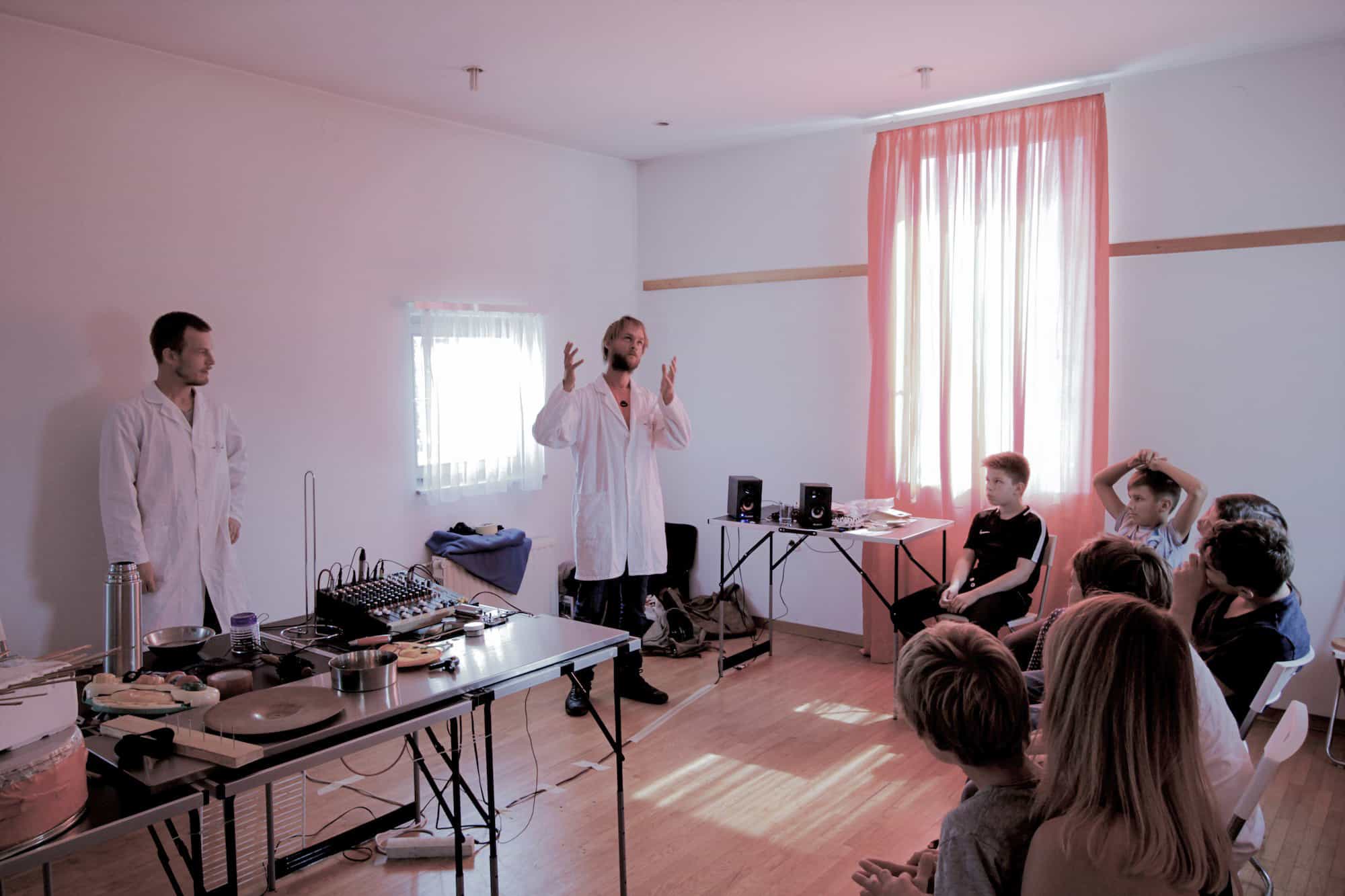
The Sound Microscope workshop is designed for children who want to explore sounds that usually remain unheard. Participants first learn basic principles of sound transmission and then test them through practical listening exercises and collaborative activities.

The mentors introduce both mechanical and digital versions of the sound microscope and demonstrate how contact microphones work. Participants build a simple mechanical device for amplifying quiet sounds and use it to discover hidden sonic details in their surroundings.

Dr. Fon & Dr. Vrenko: The Sound Microscope

Andrej Fon, Staš Vrenko

The Sound Microscope workshop is designed for children who want to explore sounds that usually remain unheard. Participants first learn basic principles of sound transmission and then test them through practical listening exercises and collaborative activities.

The mentors introduce both mechanical and digital versions of the sound microscope and demonstrate how contact microphones work. Participants build a simple mechanical device for amplifying quiet sounds and use it to discover hidden sonic details in their surroundings.

Andrej Fon

A Slovenian musician, multi-instrumentalist, author, and pedagogue. His practice spans improvised, experimental, folk, and authorial music, and includes educational workshop work with different age groups.

Staš Vrenko

A media artist, musician, and designer of electronic instruments. His artistic practice connects sound research, technology, kinetics, and performativity across solo and collaborative projects.

Kolofon / Colophon

Workshop creators and mentors: Andrej Fon, Staš Vrenko
Educational content coordinator: Irena Pivka
Technical director: Brane Zorman
Technical support: RogLab (laser cutter)
Production: Cona, 2019

The workshop is part of KONS: A Platform for Contemporary Research-based Art. The investment is co-financed by the Republic of Slovenia and the European Union through the European Regional Development Fund.

Fotografija / Image

Foto: Cona Archive

Brane Zorman: The Tree Spirits | Touch

Cona Zavod za procesiranje sodobne umetnosti Ljubljana

Concert, Exhibition, Music, Visual arts

Event registration

Ambisonic sound event and multi-channel sound installation

The Tree Spirits| Touch sound work reflects on the life of a tree, speculating on its acoustic component, and explores the interaction of an individual part of a plant with the colony of organisms and the forest biotic community. The sound recordings give voice to the existence of a tree in its annual and life cycles which begin and end in silence. The silence anticipating the springtime resurgence of sap flow, and the silence of destruction caused by climate change, drought, and fires. Brane Zorman is one of the three winners of Palma Ars Acoustica EBU competition 2022. You can read more about the conceptualization of work in the pdf notebook (link here) or buy printed verison of the booklet (here).

The artist zeros in on the touch; touch as an expression of genuine concern and awareness of the coexistence with plants, and a destructive touch of environmental devastation. The sounds of touching a tree trunk, branches rubbing against each other, the crushing of loose bark, the foliage, the rustling of trees in the wind, water drenching the roots – an acoustic journey through the physical existence of a tree. All the way to branch breaking, tree falling and a fire, a warning of the upcoming drought which is always a hard blow to a forest habitat.

Live Sound Event

Brane Zorman performs a live adaptation of Spirit of Trees | Touch, a work that evolved over two years in different phases and intensities. The performance employs spatial ambisonic technology and Silent Disco equipment, consisting of multiple micro FM transmitters and short-range headphones operating on various frequencies. The sound immerses the listener from all directions, creating an intense sonic experience where tones blend, shift, and reshape within a 360° spherical space. The ambisonic system allows the artist to manipulate spatial layers of sound while simultaneously transmitting them through conventional stereo headphones. Listening becomes a multi-dimensional experience, dissolving the boundaries between the audience and the sonic environment.

Art Installation

The installation demonstrates, investigates, and records the changes in the electrical conductivity, which are the result of the intensive drying process of the individual tree cookies (sliced portions of a tree trunk), converting the parameters – through heat, electrical and oscillation sensors, and converters – in the visual and acoustic forms. The cookies dry up and crack. They are colonised by microbes, mould, and fungi, and in the process of decomposition change their forms. Symbolically, these newly formed tree structures confront us with the shortage of water and moisture. The composition with the recorded and processed tree sounds, produced both within the organism as well as when touched by a human or the environment, builds an emotional and dramatic narrative charged with the natural and amplified sounds comingling and entwining. A dynamic 8-channel installation pulls the listener in the very centre of a sound happening.

The Tree Spirits | Touch

Brane Zorman

Ambisonic sound event and multi-channel sound installation

The Tree Spirits| Touch sound work reflects on the life of a tree, speculating on its acoustic component, and explores the interaction of an individual part of a plant with the colony of organisms and the forest biotic community. The sound recordings give voice to the existence of a tree in its annual and life cycles which begin and end in silence. The silence anticipating the springtime resurgence of sap flow, and the silence of destruction caused by climate change, drought, and fires. Brane Zorman is one of the three winners of Palma Ars Acoustica EBU competition 2022. You can read more about the conceptualization of work in the pdf notebook (link here) or buy printed verison of the booklet (here).

The artist zeros in on the touch; touch as an expression of genuine concern and awareness of the coexistence with plants, and a destructive touch of environmental devastation. The sounds of touching a tree trunk, branches rubbing against each other, the crushing of loose bark, the foliage, the rustling of trees in the wind, water drenching the roots – an acoustic journey through the physical existence of a tree. All the way to branch breaking, tree falling and a fire, a warning of the upcoming drought which is always a hard blow to a forest habitat.

Live Sound Event

Brane Zorman performs a live adaptation of Spirit of Trees | Touch, a work that evolved over two years in different phases and intensities. The performance employs spatial ambisonic technology and Silent Disco equipment, consisting of multiple micro FM transmitters and short-range headphones operating on various frequencies. The sound immerses the listener from all directions, creating an intense sonic experience where tones blend, shift, and reshape within a 360° spherical space. The ambisonic system allows the artist to manipulate spatial layers of sound while simultaneously transmitting them through conventional stereo headphones. Listening becomes a multi-dimensional experience, dissolving the boundaries between the audience and the sonic environment.

Art Installation

The installation demonstrates, investigates, and records the changes in the electrical conductivity, which are the result of the intensive drying process of the individual tree cookies (sliced portions of a tree trunk), converting the parameters – through heat, electrical and oscillation sensors, and converters – in the visual and acoustic forms. The cookies dry up and crack. They are colonised by microbes, mould, and fungi, and in the process of decomposition change their forms. Symbolically, these newly formed tree structures confront us with the shortage of water and moisture. The composition with the recorded and processed tree sounds, produced both within the organism as well as when touched by a human or the environment, builds an emotional and dramatic narrative charged with the natural and amplified sounds comingling and entwining. A dynamic 8-channel installation pulls the listener in the very centre of a sound happening.

Brane Zorman

Composer, sound and intermedia artist, sound manipulator, producer and curator. Besides composing for the theatre, intermedia and dance, he is focused on developing different strategies, techniques, dynamic and interactive models in his work relating to sound and space, recording and reinterpreting soundscapes and creating electronic and acoustic sound sculptures using sophisticated tools.

Kolofon / Colophon

Artist: Brane Zorman
Consulting: Valentina Cvetkovič, Boris Semenič
Curated by: Irena Pivka
Vibration sensor design: Gregor Krpič
Fieldwork (Trzin): Morales d.o.o., Rok Rudigaj, Boštjan Divjak
Translation and editing: Melita Silič
Cover photo: Brane Zorman, Irena Pivka
Event photo: Sunčan Stone
Organisation: Irena Pivka
Public relations: Matej Tomažin
Production: Cona, zavod za procesiranje sodobne umetnosti, 2021
Locations: Steklenik, galerija za zvok, bioakustiko in umetnost, MGLC, Švicarija, Program Ars, Festival IZIS
Partners: MGLC Švicarija
Thanks: Zavod Kersnikova 4

Fotografija / Image

Foto: Matej Tomažin

Brane Zorman: The Tree Spirits | Touch

Cona Zavod za procesiranje sodobne umetnosti Ljubljana

Exhibition, Concert, Music, Visual arts

Event registration

Ambisonic sound event and multi-channel sound installation

The Tree Spirits| Touch sound work reflects on the life of a tree, speculating on its acoustic component, and explores the interaction of an individual part of a plant with the colony of organisms and the forest biotic community. The sound recordings give voice to the existence of a tree in its annual and life cycles which begin and end in silence. The silence anticipating the springtime resurgence of sap flow, and the silence of destruction caused by climate change, drought, and fires. Brane Zorman is one of the three winners of Palma Ars Acoustica EBU competition 2022. You can read more about the conceptualization of work in the pdf notebook (link here) or buy printed verison of the booklet (here).

The artist zeros in on the touch; touch as an expression of genuine concern and awareness of the coexistence with plants, and a destructive touch of environmental devastation. The sounds of touching a tree trunk, branches rubbing against each other, the crushing of loose bark, the foliage, the rustling of trees in the wind, water drenching the roots – an acoustic journey through the physical existence of a tree. All the way to branch breaking, tree falling and a fire, a warning of the upcoming drought which is always a hard blow to a forest habitat.

Live Sound Event

Brane Zorman performs a live adaptation of Spirit of Trees | Touch, a work that evolved over two years in different phases and intensities. The performance employs spatial ambisonic technology and Silent Disco equipment, consisting of multiple micro FM transmitters and short-range headphones operating on various frequencies. The sound immerses the listener from all directions, creating an intense sonic experience where tones blend, shift, and reshape within a 360° spherical space. The ambisonic system allows the artist to manipulate spatial layers of sound while simultaneously transmitting them through conventional stereo headphones. Listening becomes a multi-dimensional experience, dissolving the boundaries between the audience and the sonic environment.

Art Installation

The installation demonstrates, investigates, and records the changes in the electrical conductivity, which are the result of the intensive drying process of the individual tree cookies (sliced portions of a tree trunk), converting the parameters – through heat, electrical and oscillation sensors, and converters – in the visual and acoustic forms. The cookies dry up and crack. They are colonised by microbes, mould, and fungi, and in the process of decomposition change their forms. Symbolically, these newly formed tree structures confront us with the shortage of water and moisture. The composition with the recorded and processed tree sounds, produced both within the organism as well as when touched by a human or the environment, builds an emotional and dramatic narrative charged with the natural and amplified sounds comingling and entwining. A dynamic 8-channel installation pulls the listener in the very centre of a sound happening.

The Tree Spirits | Touch

Brane Zorman

Ambisonic sound event and multi-channel sound installation

The Tree Spirits| Touch sound work reflects on the life of a tree, speculating on its acoustic component, and explores the interaction of an individual part of a plant with the colony of organisms and the forest biotic community. The sound recordings give voice to the existence of a tree in its annual and life cycles which begin and end in silence. The silence anticipating the springtime resurgence of sap flow, and the silence of destruction caused by climate change, drought, and fires. Brane Zorman is one of the three winners of Palma Ars Acoustica EBU competition 2022. You can read more about the conceptualization of work in the pdf notebook (link here) or buy printed verison of the booklet (here).

The artist zeros in on the touch; touch as an expression of genuine concern and awareness of the coexistence with plants, and a destructive touch of environmental devastation. The sounds of touching a tree trunk, branches rubbing against each other, the crushing of loose bark, the foliage, the rustling of trees in the wind, water drenching the roots – an acoustic journey through the physical existence of a tree. All the way to branch breaking, tree falling and a fire, a warning of the upcoming drought which is always a hard blow to a forest habitat.

Live Sound Event

Brane Zorman performs a live adaptation of Spirit of Trees | Touch, a work that evolved over two years in different phases and intensities. The performance employs spatial ambisonic technology and Silent Disco equipment, consisting of multiple micro FM transmitters and short-range headphones operating on various frequencies. The sound immerses the listener from all directions, creating an intense sonic experience where tones blend, shift, and reshape within a 360° spherical space. The ambisonic system allows the artist to manipulate spatial layers of sound while simultaneously transmitting them through conventional stereo headphones. Listening becomes a multi-dimensional experience, dissolving the boundaries between the audience and the sonic environment.

Art Installation

The installation demonstrates, investigates, and records the changes in the electrical conductivity, which are the result of the intensive drying process of the individual tree cookies (sliced portions of a tree trunk), converting the parameters – through heat, electrical and oscillation sensors, and converters – in the visual and acoustic forms. The cookies dry up and crack. They are colonised by microbes, mould, and fungi, and in the process of decomposition change their forms. Symbolically, these newly formed tree structures confront us with the shortage of water and moisture. The composition with the recorded and processed tree sounds, produced both within the organism as well as when touched by a human or the environment, builds an emotional and dramatic narrative charged with the natural and amplified sounds comingling and entwining. A dynamic 8-channel installation pulls the listener in the very centre of a sound happening.

Brane Zorman

Composer, sound and intermedia artist, sound manipulator, producer and curator. Besides composing for the theatre, intermedia and dance, he is focused on developing different strategies, techniques, dynamic and interactive models in his work relating to sound and space, recording and reinterpreting soundscapes and creating electronic and acoustic sound sculptures using sophisticated tools.

Kolofon / Colophon

Artist: Brane Zorman
Consulting: Valentina Cvetkovič, Boris Semenič
Curated by: Irena Pivka
Vibration sensor design: Gregor Krpič
Fieldwork (Trzin): Morales d.o.o., Rok Rudigaj, Boštjan Divjak
Translation and editing: Melita Silič
Cover photo: Brane Zorman, Irena Pivka
Event photo: Sunčan Stone
Organisation: Irena Pivka
Public relations: Matej Tomažin
Production: Cona, zavod za procesiranje sodobne umetnosti, 2021
Locations: Steklenik, galerija za zvok, bioakustiko in umetnost, MGLC, Švicarija, Program Ars, Festival IZIS
Partners: MGLC Švicarija
Thanks: Zavod Kersnikova 4

Fotografija / Image

Foto: Matej Tomažin

David Rothenberg: Interspecies sound events with nightingales

Cona Zavod za procesiranje sodobne umetnosti Ljubljana

Concert, Music

Event registration

Cikli / Cycles

David Rothenberg: Lecture on interspecies sound communication

Cona Zavod za procesiranje sodobne umetnosti Ljubljana

Peripatetic lecture, Education

Event registration

Cikli / Cycles

David Rothenberg: Interspecies sound events with nightingales

Cona Zavod za procesiranje sodobne umetnosti Ljubljana

Concert, Music

Event registration

Cikli / Cycles

David Rothenberg: Lecture on interspecies sound communication

Cona Zavod za procesiranje sodobne umetnosti Ljubljana

Peripatetic lecture, Education

Event registration

Cikli / Cycles

Marko Batista: Vitreous Sky

Cona Zavod za procesiranje sodobne umetnosti Ljubljana

Concert, Exhibition, Music, Visual arts

The multi-channel sound installation Vitreous Sky by intermedia artist Marko Batista continues his exploration of contemporary post-fact society in relation to technological progress and the interconnectedness of society, nature and technology within the framework of ecocritical discourse, environmental policies and current humanist concepts such as nature, the Anthropocene and the capitalist colonial matrix.

The work builds upon Batista’s earlier projects, particularly Fluid Particles of Volcanic Ash, in which the indirect presence of humanity is revealed through devastated landscapes and traces of (post)humanoid existence. At the core of the exhibition are two precisely crafted interactive hybrid visual-sound objects, prototypes of a dystopian habitat of the future, addressing the project on both symbolic and practical levels.

The installation consists of a visual and a sonic component. The visual part is formed by a two-part mimetic installation with a post-natural environment produced using 3D printing, establishing a dialogue between urban and rural habitats. The sonic structure is based on the electrolysis of toxic compounds, which generate sound through processes of self-oscillation and extraction within an expanded electronic system. By attributing agency to matter itself, the work remains open-ended and allows space for unpredictability.

Vitreous Sky

Marko Batista

The multi-channel sound installation Vitreous Sky by intermedia artist Marko Batista continues his exploration of contemporary post-fact society in relation to technological progress and the interconnectedness of society, nature and technology within the framework of ecocritical discourse, environmental policies and current humanist concepts such as nature, the Anthropocene and the capitalist colonial matrix.

The work builds upon Batista’s earlier projects, particularly Fluid Particles of Volcanic Ash, in which the indirect presence of humanity is revealed through devastated landscapes and traces of (post)humanoid existence. At the core of the exhibition are two precisely crafted interactive hybrid visual-sound objects, prototypes of a dystopian habitat of the future, addressing the project on both symbolic and practical levels.

The installation consists of a visual and a sonic component. The visual part is formed by a two-part mimetic installation with a post-natural environment produced using 3D printing, establishing a dialogue between urban and rural habitats. The sonic structure is based on the electrolysis of toxic compounds, which generate sound through processes of self-oscillation and extraction within an expanded electronic system. By attributing agency to matter itself, the work remains open-ended and allows space for unpredictability.

Marko Batista

Intermedia artist, sound researcher, video experimentalist and audiovisual performer. He graduated from the Academy of Fine Arts and Design in Ljubljana and completed his master’s degree at Central Saint Martins in London. His practice operates at the intersection of art and science, focusing on soundscapes, hybrid spaces, data-driven processes and the politics of contemporary media art. He has exhibited internationally and collaborated with numerous institutions and festivals.

Kolofon / Colophon

Artist: Marko Batista
Text: Jasmina Založnik
Technical assistance: Boštjan Čadež, Brane Ždralo, Boris Šaletić
Curated by: Irena Pivka, Brane Zorman
Organisation: Irena Pivka, Ana Mizerit
Public relations: Matej Tomažin, Mateja Lavrič

Production: Cona for Steklenik Gallery, 2022
Co-organisation: Museum of Contemporary Art Metelkova
Venue: Steklenik Gallery hosted at the Museum of Contemporary Art Metelkova

Fotografija / Image

Foto: Jaka Babnik

Marko Batista: Vitreous Sky

Cona Zavod za procesiranje sodobne umetnosti Ljubljana

Exhibition, Concert, Music, Visual arts

The multi-channel sound installation Vitreous Sky by intermedia artist Marko Batista continues his exploration of contemporary post-fact society in relation to technological progress and the interconnectedness of society, nature and technology within the framework of ecocritical discourse, environmental policies and current humanist concepts such as nature, the Anthropocene and the capitalist colonial matrix.

The work builds upon Batista’s earlier projects, particularly Fluid Particles of Volcanic Ash, in which the indirect presence of humanity is revealed through devastated landscapes and traces of (post)humanoid existence. At the core of the exhibition are two precisely crafted interactive hybrid visual-sound objects, prototypes of a dystopian habitat of the future, addressing the project on both symbolic and practical levels.

The installation consists of a visual and a sonic component. The visual part is formed by a two-part mimetic installation with a post-natural environment produced using 3D printing, establishing a dialogue between urban and rural habitats. The sonic structure is based on the electrolysis of toxic compounds, which generate sound through processes of self-oscillation and extraction within an expanded electronic system. By attributing agency to matter itself, the work remains open-ended and allows space for unpredictability.

Vitreous Sky

Marko Batista

The multi-channel sound installation Vitreous Sky by intermedia artist Marko Batista continues his exploration of contemporary post-fact society in relation to technological progress and the interconnectedness of society, nature and technology within the framework of ecocritical discourse, environmental policies and current humanist concepts such as nature, the Anthropocene and the capitalist colonial matrix.

The work builds upon Batista’s earlier projects, particularly Fluid Particles of Volcanic Ash, in which the indirect presence of humanity is revealed through devastated landscapes and traces of (post)humanoid existence. At the core of the exhibition are two precisely crafted interactive hybrid visual-sound objects, prototypes of a dystopian habitat of the future, addressing the project on both symbolic and practical levels.

The installation consists of a visual and a sonic component. The visual part is formed by a two-part mimetic installation with a post-natural environment produced using 3D printing, establishing a dialogue between urban and rural habitats. The sonic structure is based on the electrolysis of toxic compounds, which generate sound through processes of self-oscillation and extraction within an expanded electronic system. By attributing agency to matter itself, the work remains open-ended and allows space for unpredictability.

Marko Batista

Intermedia artist, sound researcher, video experimentalist and audiovisual performer. He graduated from the Academy of Fine Arts and Design in Ljubljana and completed his master’s degree at Central Saint Martins in London. His practice operates at the intersection of art and science, focusing on soundscapes, hybrid spaces, data-driven processes and the politics of contemporary media art. He has exhibited internationally and collaborated with numerous institutions and festivals.

Kolofon / Colophon

Artist: Marko Batista
Text: Jasmina Založnik
Technical assistance: Boštjan Čadež, Brane Ždralo, Boris Šaletić
Curated by: Irena Pivka, Brane Zorman
Organisation: Irena Pivka, Ana Mizerit
Public relations: Matej Tomažin, Mateja Lavrič

Production: Cona for Steklenik Gallery, 2022
Co-organisation: Museum of Contemporary Art Metelkova
Venue: Steklenik Gallery hosted at the Museum of Contemporary Art Metelkova

Fotografija / Image

Foto: Jaka Babnik

parkParty

Cona Zavod za procesiranje sodobne umetnosti Ljubljana

Cultural education, Workshop, Education, Arts and cultural education

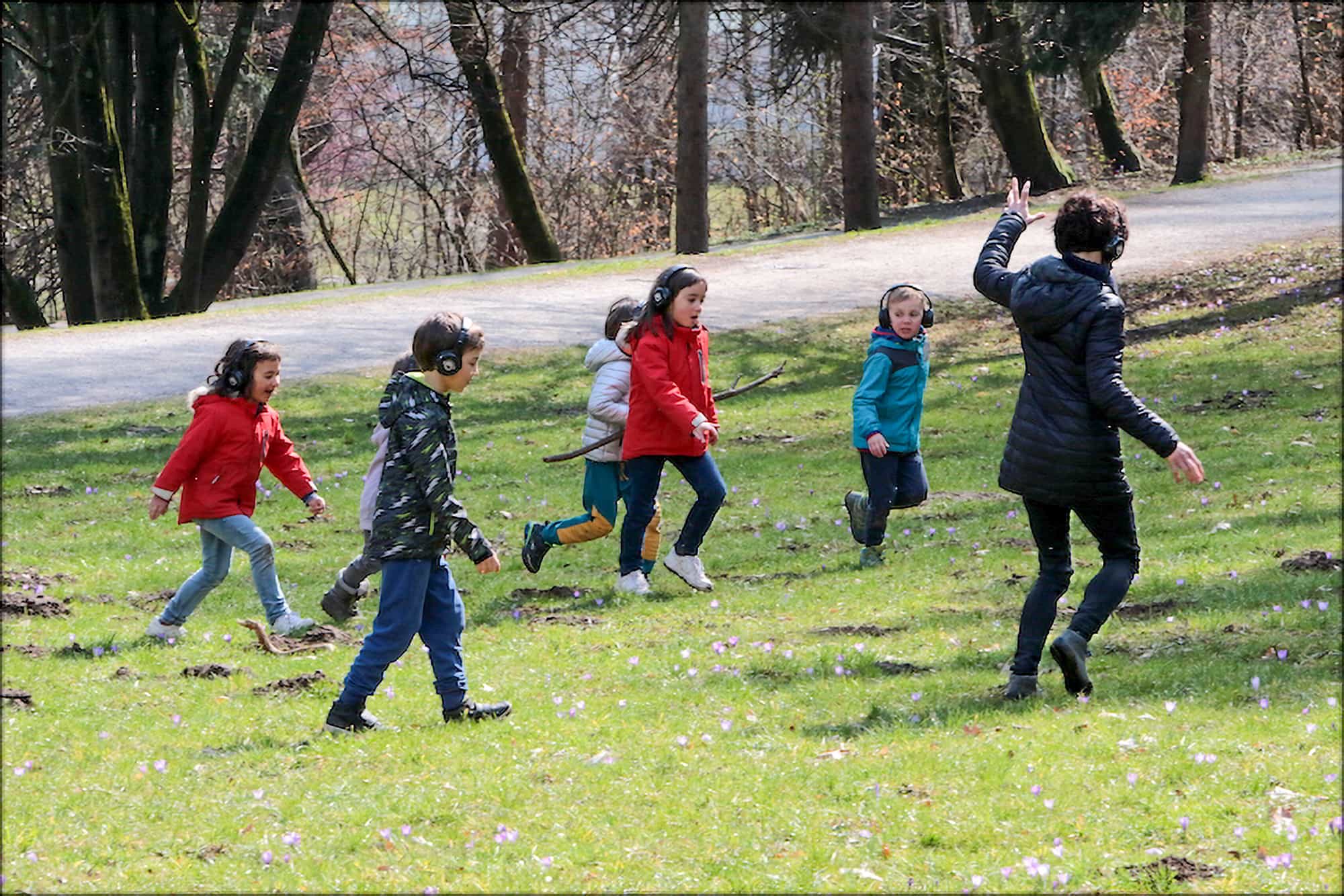
parkParty is an outdoor workshop where participants discover how contemporary artists observe and interpret nature through listening and guided movement in space. The workshop encourages community building, spatial awareness, and focused perception of sound.

The format uses a silent disco system: participants follow sound guidance through headphones while the mentor leads tasks and reflection through live microphone communication. Selected examples of sound artworks support the practical exploration process.

parkParty

Tadeja Pungerčar, Barbara Kapelj

parkParty is an outdoor workshop where participants discover how contemporary artists observe and interpret nature through listening and guided movement in space. The workshop encourages community building, spatial awareness, and focused perception of sound.

The format uses a silent disco system: participants follow sound guidance through headphones while the mentor leads tasks and reflection through live microphone communication. Selected examples of sound artworks support the practical exploration process.

Tadeja Pungerčar

A sociologist and producer active in theatre, performative arts, and cultural-art education. As a long-time programme lead of the Bobri festival, she develops projects for children and young audiences across multiple art fields.

Barbara Kapelj

An independent cultural practitioner working as a set designer for film and theatre, and as an author of original projects and texts in the independent performing arts scene.

Kolofon / Colophon

Workshop creators and mentors: Tadeja Pungerčar, Barbara Kapelj
Educational content coordinator: Irena Pivka
Technical director: Brane Zorman
Illustration: Nea Likar
Photos: Sunčan Stone
Production: Cona, Institute for Processing Contemporary Art, 2021

Part of the konS – Platform for Contemporary Research-based Art project. The investment is co-financed by the Republic of Slovenia and the European Union through the European Regional Development Fund.

Fotografija / Image

Foto: Sunčan Stone

Thomas Gorbach & The Vienna Acousmonium Day 2

Cona Zavod za procesiranje sodobne umetnosti Ljubljana

Concert, Music

Cikli / Cycles

Thomas Gorbach & The Vienna Acousmonium Day 1

Cona Zavod za procesiranje sodobne umetnosti Ljubljana

Concert, Music

Cikli / Cycles

Boštjan Perovšek: Interweaving Soundscapes

Cona Zavod za procesiranje sodobne umetnosti Ljubljana

Exhibition, Concert, Music, Visual arts

Interweaving Soundscapes is situated at the crossroads of science and art. Scientific research into animal vibrational signals, known as biotremology, is artistically compelling due to its sonic manifestation of animal activity, which through specific organisation of sound mass can also extend into the field of interspecies communication.

The exhibition presents two spiders of the species Araneus diadematus placed on a specially designed structure that forms the core of the installation. Spider webs function not only as traps but also as extensions of the spiders’ sensory systems. Vibrations transmitted through the web are inaudible to the human ear, yet the installation reveals this hidden sonic world.

The composition consists of raw recordings of insect and spider activity, later electronically processed. Most recordings were made in the studios of the Cona Institute and Boštjan Perovšek using custom-made piezo sensors. Selected recordings were produced at Tomás Saraceno’s studio and from Roland Mühlethaler’s private sound archive.

Interweaving Soundscapes

Boštjan Perovšek, Roland Mühlethaler

Interweaving Soundscapes is situated at the crossroads of science and art. Scientific research into animal vibrational signals, known as biotremology, is artistically compelling due to its sonic manifestation of animal activity, which through specific organisation of sound mass can also extend into the field of interspecies communication.

The exhibition presents two spiders of the species Araneus diadematus placed on a specially designed structure that forms the core of the installation. Spider webs function not only as traps but also as extensions of the spiders’ sensory systems. Vibrations transmitted through the web are inaudible to the human ear, yet the installation reveals this hidden sonic world.

The composition consists of raw recordings of insect and spider activity, later electronically processed. Most recordings were made in the studios of the Cona Institute and Boštjan Perovšek using custom-made piezo sensors. Selected recordings were produced at Tomás Saraceno’s studio and from Roland Mühlethaler’s private sound archive.

Boštjan Perovšek

Musician, composer and sound designer working in the field of experimental electroacoustic and bioacoustic music. His practice focuses on animal sounds, particularly insects, and extends to film, theatre, performance, multimedia installations and soundscapes for museums and galleries.

Roland Mühlethaler

An expert in vibrational communication of insects and spiders. His research centres on biotremology and the study of imperceptible communication systems in natural and urban environments.

Kolofon / Colophon

Artist: Boštjan Perovšek
Scientist: Roland Mühlethaler PhD
Spiders present at the exhibition: Araneus diadematus
Artistic design of installation: Irena Pivka
Video and photos: Miha Godec
Curation and organisation: Irena Pivka, Brane Zorman
Translation and editing: Katja Kosi
Public relations: Katarina Radaljac
Production: Cona, Institute for Contemporary Arts Processing, 2020
Venue: Steklenik, Gallery for Sound, Bioacoustics and Art

The installation was created within the project konS – Platform for Contemporary Investigative Art. The project was selected within the public call Network of Investigative Art and Culture Centres. The investment is co-financed by the Republic of Slovenia and the European Union through the European Regional Development Fund.

Fotografija / Image

Foto: Miha Godec

Katarina Radaljac: The Art of Sound Walks

Cona Zavod za procesiranje sodobne umetnosti Ljubljana

Concert, Education, Music

Event registration

The two-hour broadcast explores the meaning and breadth of sound walks – an artistic format that focuses on sensitizing our perception of the environment and questioning our involvement and influence on it.

Cikli / Cycles

The Art of Sound Walks

Katarina Radaljac

The two-hour broadcast explores the meaning and breadth of sound walks – an artistic format that focuses on sensitizing our perception of the environment and questioning our involvement and influence on it.

Katarina Radaljac

She works as a producer, curator and researcher in the field of sound art and sound walks. Her practice focuses on the development and contextualisation of sound-based practices that connect walking, listening and space, and she collaborates with international platforms dedicated to the art of walking and listening.

Kolofon / Colophon

Artist: Katarina Radaljac
Photo: Simon Law

Author of the broadcast: Katarina Radaljac
Guests: Carina Pesch, Anna Cecilie Lie, Alexander Johannes Heil, Laura Mitcheson, Stefaan van Biesen, Martin Eccles, Andrew Stuck, Geert Vermeire, Babak Fakhamzadeh, Irena Pivka
Cover photo: Simon Law
Production: 3rd programme of Radio Slovenia – programme Ars
In collaboration: Cona, Institute for Contemporary Arts Processing
Part of the festival: Sound Walk City · prelude

Sound Walk City · prelude was initiated by the walk · listen · create platform, in collaboration with the Cona Institute. The Ljubljana edition is produced by the Cona Institute, Steklenik Gallery.

Fotografija / Image

Foto: Simon Law

Ptich project: Ljubljana green bike tour

Cona Zavod za procesiranje sodobne umetnosti Ljubljana

Soundwalk, Performance, Music

Event registration

This tour presents Ljubljana from an ecological perspective and introduces places that cultivate an interdisciplinary approach to sustainability by creatively combining urban planning, geography, art, science and local initiatives.

The tour includes Steklenik, a gallery for sound, bioacoustics and art located in the east wing of the Tivoli Greenhouse, and Krater, a temporary production space that emerged from an abandoned, crater-like construction site near the city center. The Municipality of Ljubljana, together with numerous environmental NGOs and small businesses, continuously develops community-based solutions to pressing ecological issues.

Ljubljana is rich in green spaces, cycling paths, drinking fountains, urban gardens and beehives, as well as innovative artistic initiatives that connect local communities through shared public programmes and spaces. In addition to discovering these environmentally friendly urban sites, the tour also offers critical reflections, proposals for improvement and perspectives on addressing climate change in Slovenia.

Cikli / Cycles

Green Tour by Bike

Project Ptich

This tour presents Ljubljana from an ecological perspective and introduces places that cultivate an interdisciplinary approach to sustainability by creatively combining urban planning, geography, art, science and local initiatives.

The tour includes Steklenik, a gallery for sound, bioacoustics and art located in the east wing of the Tivoli Greenhouse, and Krater, a temporary production space that emerged from an abandoned, crater-like construction site near the city center. The Municipality of Ljubljana, together with numerous environmental NGOs and small businesses, continuously develops community-based solutions to pressing ecological issues.

Ljubljana is rich in green spaces, cycling paths, drinking fountains, urban gardens and beehives, as well as innovative artistic initiatives that connect local communities through shared public programmes and spaces. In addition to discovering these environmentally friendly urban sites, the tour also offers critical reflections, proposals for improvement and perspectives on addressing climate change in Slovenia.

Project Ptich

A collective platform that addresses issues of sustainable development, ecology and coexistence in urban space through artistic, research and educational practices. Their work is grounded in connecting local initiatives, community-based practices and interdisciplinary approaches, using participatory formats such as walks, tours and public events to reflect on contemporary environmental challenges.

Kolofon / Colophon

Artist: Project Ptich
Photo: project Ptich

Cover photo: project Ptich
Production: Urbana Vrana Institute, 2021
In collaboration: Cona, Institute for Contemporary Arts Processing
Part of the festival: Sound Walk City · prelude

Sound Walk City · prelude was initiated by the walk · listen · create platform in collaboration with the Cona Institute. The Ljubljana edition of the festival is produced by the Cona Institute, Steklenik Gallery.

Fotografija / Image

Foto: projekt Ptich

Anne Cecille Lie: (dis)solutions II – variation soundwalk

Cona Zavod za procesiranje sodobne umetnosti Ljubljana

Concert, Exhibition, Music, Visual arts

Event registration

The 8-channel sound composition (dis)solutions II reflects on proximity between bodies through water. Our bodies are a myriad of things, composed of equal amounts of human cells and microorganisms, with 70% being water in constant exchange. Our cells change according to our surroundings, and in the quantum world we may even exist in several places at once. We are not stable.

The sound piece opens with a quote by Astrida Neimanis: “Everyone both lives in and is a drain.” In her work Bodies of Water, Neimanis writes: “As bodies of water, we leak and seethe, our borders always vulnerable to rupture and renegotiation,” connecting human bodies with worlds beyond the human.

Sound, omnipresent and ephemeral, physical yet intangible, powerfully represents this complex mesh of relations. It undulates through us and ricochets off our skin. We are in constant negotiation with other bodies, also through sound waves. The composition guides the listener through these encounters, from planetary to watery and microscopic scales.

The composition includes field recordings, hydrophone, electromagnetic and ultrasound recordings, as well as sounds of deep-sea hydrothermal vents, electromagnetic waves, rowing, underground sewer systems, rain, rivers and wind.

Cikli / Cycles

(dis)solutions II

Anne Cecilie Lie

The 8-channel sound composition (dis)solutions II reflects on proximity between bodies through water. Our bodies are a myriad of things, composed of equal amounts of human cells and microorganisms, with 70% being water in constant exchange. Our cells change according to our surroundings, and in the quantum world we may even exist in several places at once. We are not stable.

The sound piece opens with a quote by Astrida Neimanis: “Everyone both lives in and is a drain.” In her work Bodies of Water, Neimanis writes: “As bodies of water, we leak and seethe, our borders always vulnerable to rupture and renegotiation,” connecting human bodies with worlds beyond the human.

Sound, omnipresent and ephemeral, physical yet intangible, powerfully represents this complex mesh of relations. It undulates through us and ricochets off our skin. We are in constant negotiation with other bodies, also through sound waves. The composition guides the listener through these encounters, from planetary to watery and microscopic scales.

The composition includes field recordings, hydrophone, electromagnetic and ultrasound recordings, as well as sounds of deep-sea hydrothermal vents, electromagnetic waves, rowing, underground sewer systems, rain, rivers and wind.

Anne Cecilie Lie

Artist and scenographer based in Oslo, Norway. Her practice spans sound, sculpture, bio-art, installations, video and text. She often develops projects in collaboration with other artists and through scientific research, working with educational institutions and local communities. In 2019, she received the first prize at the Sound Walk September festival.

Kolofon / Colophon

Artist: Anne Cecilie Lie
Photo: Anne Cecilie Lie

Artist: Anne Cecilie Lie
Organization: Irena Pivka, Katarina Radaljac
Curator: Brane Zorman
Public relations: Katarina Radaljac
Translation and editing: Melita Silič
Cover photo: Anne Cecilie Lie
Production: Cona, Institute for Contemporary Arts Processing, 2021
Venues: Steklenik, Gallery for Sound, Bioacoustics and Art, Tivoli Park
Partner: Studio Notam

The exhibition is part of the project Acoustic Commons, co-funded by the Creative Europe Programme of the European Union.

Fotografija / Image

Foto: Anne Cecilie Lie

Anja Podreka: Mapping of Memories

Cona Zavod za procesiranje sodobne umetnosti Ljubljana

Soundwalk, Performance, Music

Event registration

The project explores the river as a water body that constantly flows “through place and time of human history”, leaving behind traces that become an inevitable part of the environment and a proof of coexistence between nature and humans.

Through the soundwalk, participants learn about the notion of coexistence while discovering the history and ethnography of the river, created jointly by water and human activity. The river shapes life, defines our living spaces, delivers and takes away goods – it is a body of water travelling through space and time.

Exploring rivers through people’s narratives reveals recurring problems and challenges while suggesting possible ways of cohabiting with rivers and living alongside them. Every water body coexists with humans and vice versa; people live with rivers that have sustained their lives. Over time, these roles have shifted and transformed into manipulative exploitation of resources and destruction of habitats.

The project is based on interviews with local residents and experts on the Sava River, research into the city’s development around it and an exploration of the Majdičev log area. The many layers of stories reflect the intertwinement of people and environment that shaped and witnessed the river’s transformation throughout the history of Kranj and the Sava Island.

Cikli / Cycles

Mapping Memories – Sava, Majdičev log

Anja Podreka

The project explores the river as a water body that constantly flows “through place and time of human history”, leaving behind traces that become an inevitable part of the environment and a proof of coexistence between nature and humans.

Through the soundwalk, participants learn about the notion of coexistence while discovering the history and ethnography of the river, created jointly by water and human activity. The river shapes life, defines our living spaces, delivers and takes away goods – it is a body of water travelling through space and time.

Exploring rivers through people’s narratives reveals recurring problems and challenges while suggesting possible ways of cohabiting with rivers and living alongside them. Every water body coexists with humans and vice versa; people live with rivers that have sustained their lives. Over time, these roles have shifted and transformed into manipulative exploitation of resources and destruction of habitats.

The project is based on interviews with local residents and experts on the Sava River, research into the city’s development around it and an exploration of the Majdičev log area. The many layers of stories reflect the intertwinement of people and environment that shaped and witnessed the river’s transformation throughout the history of Kranj and the Sava Island.

Anja Podreka

Holding a degree in art education and a master’s degree in scenography, and working as an art teacher, she is the author of a series of soundwalks focusing on rivers. She has created soundwalks along the Drava, Krka and Sava rivers, portraying landscapes through the interweaving of past and present stories. Her artworks addressing water and her water paintings have been awarded and exhibited in leading national and international galleries.

Kolofon / Colophon

Artist: Anja Podreka
Photo: Maša Pirc

Artist: Anja Podreka
Translation and editing: Melita Silič
Cover photo: Maša Pirc
Production: Institute Carnica, project BIEN 2021
In collaboration: Cona, Institute for Contemporary Arts Processing
Part of the festival: Sound Walk City · prelude

Sound Walk City · prelude was initiated by the walk · listen · create platform, in collaboration with the Cona Institute. The Ljubljana edition is produced by the Cona Institute, Steklenik Gallery.

Fotografija / Image

Foto: Maša Pirc / Layerjeva hiša

JSON · SL