Walking the Walking Performances
PAST EVENTS
 16 Sep 2022
 Gathering point: City Hall (walk from the City Hall to Cukrarna)
 Free
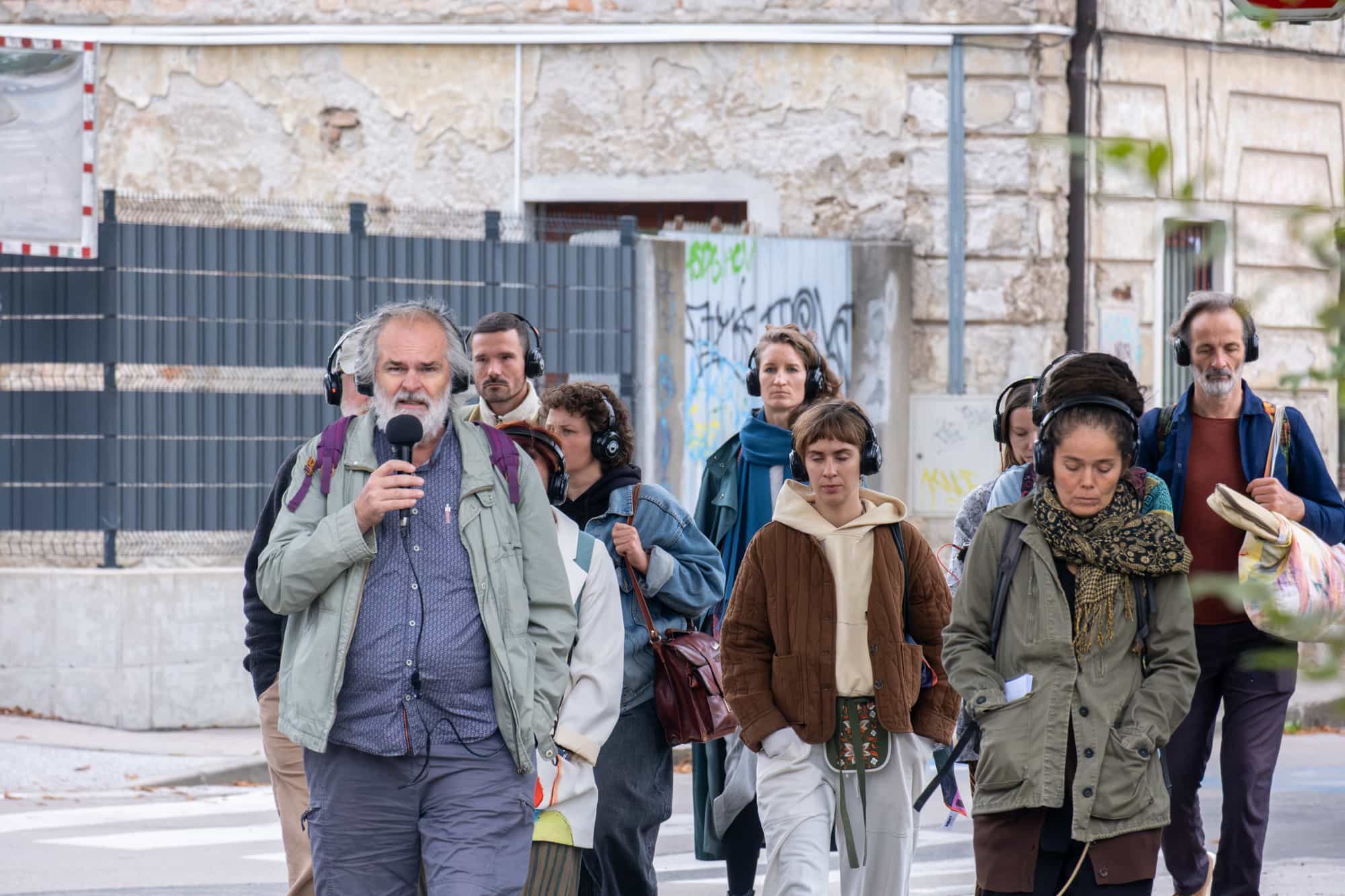
FreeThis walking lecture reflects on the meaning, purpose and sense of walking as an artistic practice. It draws on Honoré de Balzac’s The Theory of Walking, which questions the taken-for-granted nature of human walking and calls for its critical examination.
The focus is on walking as a specific bodily technique, as understood in anthropology, and on selected examples of walking performances – performative events conceived as walks by performers or spectators, who thereby become co-performers and participants. Thought develops through movement, following the model of the ancient Greek Peripatetics, with an emphasis on embodied experience, space and time.


Matjaž Rušt
This walking lecture reflects on the meaning, purpose and sense of walking as an artistic practice. It draws on Honoré de Balzac’s The Theory of Walking, which questions the taken-for-granted nature of human walking and calls for its critical examination.
The focus is on walking as a specific bodily technique, as understood in anthropology, and on selected examples of walking performances – performative events conceived as walks by performers or spectators, who thereby become co-performers and participants. Thought develops through movement, following the model of the ancient Greek Peripatetics, with an emphasis on embodied experience, space and time.
Associate professor at the Academy of Theatre, Radio, Film and Television at the University of Ljubljana, where he teaches theatre history. He is the author of Teorije sodobnega gledališča in performansa (2009), Umetnost v času vladavine prava in kapitala (2016) and Gledališče upora (2021).
Photography: Matjaž Rušt