The story opens perspectives on the architecture of Edvard Ravnikar and his collaborators in the construction of Cankarjev dom.
The authors incorporated numerous quotes and reflections by architects, as well as politicians and cultural figures connected with the building of Cankarjev dom. These are interwoven with poetry and drama by selected artists. The subtle and semantically multilayered soundwalk outlines the period of construction and the architecture of the building itself in the context of the present, offering a deeper understanding of its historical and cultural background.
The audio narrative also touches upon Ravnikar’s wider creative oeuvre, from the design of Republic Square as a demanding and long-term spatial intervention to his pedagogical work at the School of Architecture in Ljubljana. In his characteristic understanding of urban space, Ravnikar involved numerous architects and students who, in dialogue with politics and the broader professional field, laid the foundations for high-quality spatial design in a modernist Mediterranean spirit.
The story opens perspectives on the architecture of Edvard Ravnikar and his collaborators in the construction of Cankarjev dom.
The authors incorporated numerous quotes and reflections by architects, as well as politicians and cultural figures connected with the building of Cankarjev dom. These are interwoven with poetry and drama by selected artists. The subtle and semantically multilayered soundwalk outlines the period of construction and the architecture of the building itself in the context of the present, offering a deeper understanding of its historical and cultural background.
The audio narrative also touches upon Ravnikar’s wider creative oeuvre, from the design of Republic Square as a demanding and long-term spatial intervention to his pedagogical work at the School of Architecture in Ljubljana. In his characteristic understanding of urban space, Ravnikar involved numerous architects and students who, in dialogue with politics and the broader professional field, laid the foundations for high-quality spatial design in a modernist Mediterranean spirit.
Irena Pivka
Curator and author of sound-based works operating at the intersection of art, space and research practices. Her projects frequently take the form of soundwalks and contextual narratives addressing social, architectural and environmental themes.
Brane Zorman
Intermedia artist, composer and sound designer whose work encompasses sound compositions, spatial sound installations and research into the relationship between sound, architecture and listening.
Kolofon / Colophon
Concept and text: Irena Pivka Concept and sound composition: Brane Zorman Voice interpretation: Nada Vodušek, Robert Vrtovšek, Toni Cahunek, Jure Longika, Nataša Živkovič Expert review of the text: dr. Bogo Zupančič, dr. Miloš Kosec Expert review of technical descriptions: Karmen Klučar Project manager: Saša Globačnik (Cankarjev dom) Proofreading: Melita Silič Design: Edin Alibešter (Cankarjev dom) Production: Cankarjev dom, September 2023 (on the occasion of the year of Edvard Ravnikar), represented by Uršula Cetinski, General Director
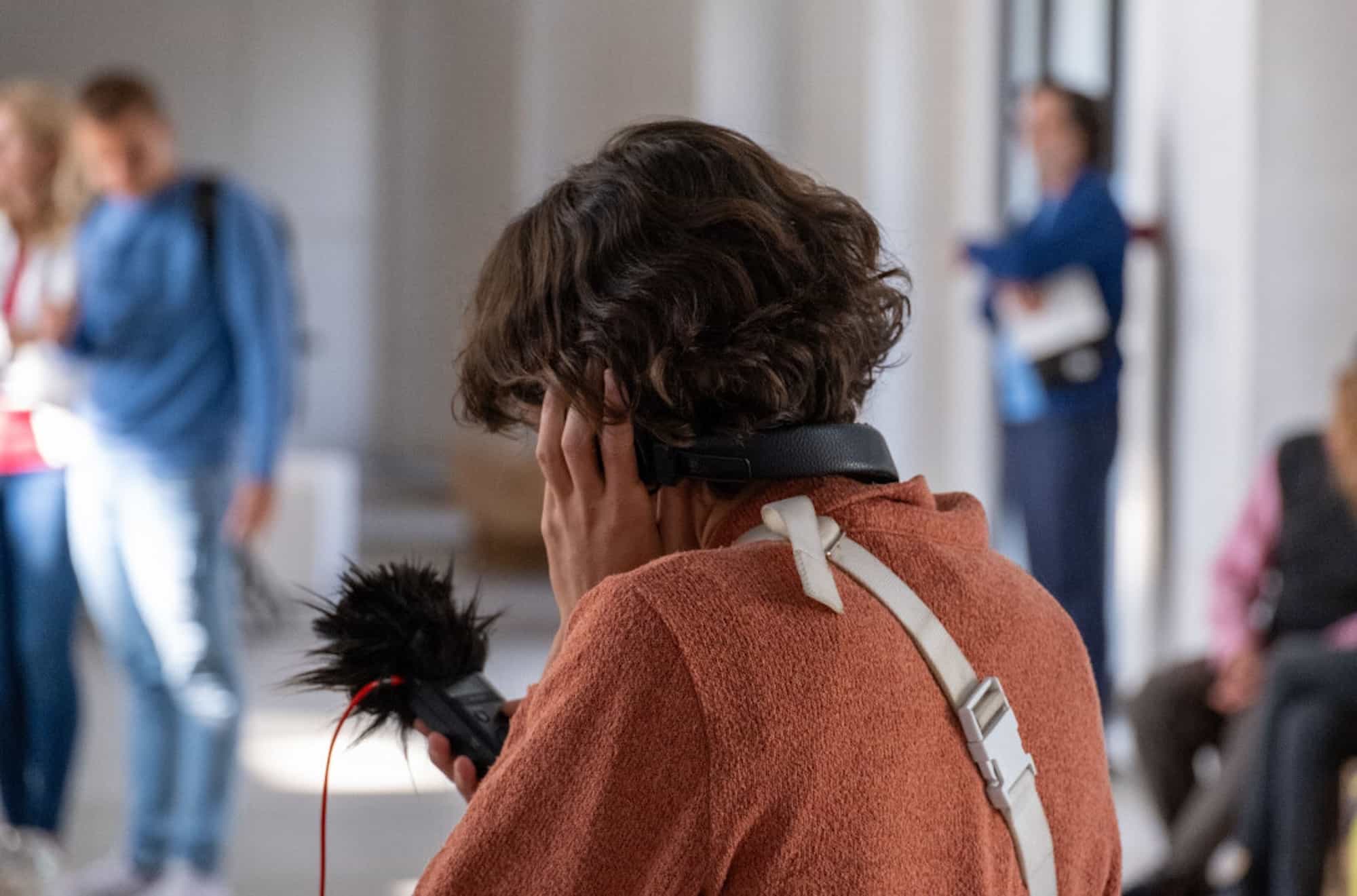
Echoing the Youth Palace is a sound workshop developed by Mladi zmaji in collaboration with the Cona Institute. The programme offers hands-on work with sound, from equipment basics and production foundations to field recording and collaborative editing.
Through soundwalking, recording, and composing, participants explore the acoustic landscape of the emerging Youth Palace centre. The resulting sound composition was used in the documentary Palača Cukrarna and later presented in an exhibition context.
Irena Pivka, Brane Zorman, Rajko Muršič, Jure Anžiček
Echoing the Youth Palace is a sound workshop developed by Mladi zmaji in collaboration with the Cona Institute. The programme offers hands-on work with sound, from equipment basics and production foundations to field recording and collaborative editing.
Through soundwalking, recording, and composing, participants explore the acoustic landscape of the emerging Youth Palace centre. The resulting sound composition was used in the documentary Palača Cukrarna and later presented in an exhibition context.
Irena Pivka
An artist and producer exploring the intersections of place, sound, and digital tools, with a focus on sound-geolocation practices.
Brane Zorman
A composer and intermedia artist researching sound through new technologies for theatre and intermedia projects.
Rajko Muršič
A professor of ethnology and cultural anthropology researching sound, music, and subcultures and their social significance.
Jure Anžiček
A music producer and sound designer specialised in Reaper software, active in film, theatre, and audio production.
Kolofon / Colophon
Project lead: Nika Rupnik Workshop mentors: Irena Pivka, Brane Zorman, Rajko Muršič, Jure Anžiček Location: ČMC Šiška and fieldwork in public spaces in Ljubljana Production: Mladi zmaji and Cona, 2025
The workshop result was used as the sound base for the film Palača Cukrarna (Kinodvor, 13 June 2025) and presented in the exhibition format Dragon Front: A Space for Youth Breakthroughs (Historical Atrium of the City Hall, 8 October–13 November 2025).
Echoing the Youth Palace is a sound workshop developed by Mladi zmaji in collaboration with the Cona Institute. The programme offers hands-on work with sound, from equipment basics and production foundations to field recording and collaborative editing.
Through soundwalking, recording, and composing, participants explore the acoustic landscape of the emerging Youth Palace centre. The resulting sound composition was used in the documentary Palača Cukrarna and later presented in an exhibition context.
Irena Pivka, Brane Zorman, Rajko Muršič, Jure Anžiček
Echoing the Youth Palace is a sound workshop developed by Mladi zmaji in collaboration with the Cona Institute. The programme offers hands-on work with sound, from equipment basics and production foundations to field recording and collaborative editing.
Through soundwalking, recording, and composing, participants explore the acoustic landscape of the emerging Youth Palace centre. The resulting sound composition was used in the documentary Palača Cukrarna and later presented in an exhibition context.
Irena Pivka
An artist and producer exploring the intersections of place, sound, and digital tools, with a focus on sound-geolocation practices.
Brane Zorman
A composer and intermedia artist researching sound through new technologies for theatre and intermedia projects.
Rajko Muršič
A professor of ethnology and cultural anthropology researching sound, music, and subcultures and their social significance.
Jure Anžiček
A music producer and sound designer specialised in Reaper software, active in film, theatre, and audio production.
Kolofon / Colophon
Project lead: Nika Rupnik Workshop mentors: Irena Pivka, Brane Zorman, Rajko Muršič, Jure Anžiček Location: ČMC Šiška and fieldwork in public spaces in Ljubljana Production: Mladi zmaji and Cona, 2025
The workshop result was used as the sound base for the film Palača Cukrarna (Kinodvor, 13 June 2025) and presented in the exhibition format Dragon Front: A Space for Youth Breakthroughs (Historical Atrium of the City Hall, 8 October–13 November 2025).
Echoing the Youth Palace is a sound workshop developed by Mladi zmaji in collaboration with the Cona Institute. The programme offers hands-on work with sound, from equipment basics and production foundations to field recording and collaborative editing.
Through soundwalking, recording, and composing, participants explore the acoustic landscape of the emerging Youth Palace centre. The resulting sound composition was used in the documentary Palača Cukrarna and later presented in an exhibition context.
Irena Pivka, Brane Zorman, Rajko Muršič, Jure Anžiček
Echoing the Youth Palace is a sound workshop developed by Mladi zmaji in collaboration with the Cona Institute. The programme offers hands-on work with sound, from equipment basics and production foundations to field recording and collaborative editing.
Through soundwalking, recording, and composing, participants explore the acoustic landscape of the emerging Youth Palace centre. The resulting sound composition was used in the documentary Palača Cukrarna and later presented in an exhibition context.
Irena Pivka
An artist and producer exploring the intersections of place, sound, and digital tools, with a focus on sound-geolocation practices.
Brane Zorman
A composer and intermedia artist researching sound through new technologies for theatre and intermedia projects.
Rajko Muršič
A professor of ethnology and cultural anthropology researching sound, music, and subcultures and their social significance.
Jure Anžiček
A music producer and sound designer specialised in Reaper software, active in film, theatre, and audio production.
Kolofon / Colophon
Project lead: Nika Rupnik Workshop mentors: Irena Pivka, Brane Zorman, Rajko Muršič, Jure Anžiček Location: ČMC Šiška and fieldwork in public spaces in Ljubljana Production: Mladi zmaji and Cona, 2025
The workshop result was used as the sound base for the film Palača Cukrarna (Kinodvor, 13 June 2025) and presented in the exhibition format Dragon Front: A Space for Youth Breakthroughs (Historical Atrium of the City Hall, 8 October–13 November 2025).
Echoing the Youth Palace is a sound workshop developed by Mladi zmaji in collaboration with the Cona Institute. The programme offers hands-on work with sound, from equipment basics and production foundations to field recording and collaborative editing.
Through soundwalking, recording, and composing, participants explore the acoustic landscape of the emerging Youth Palace centre. The resulting sound composition was used in the documentary Palača Cukrarna and later presented in an exhibition context.
Irena Pivka, Brane Zorman, Rajko Muršič, Jure Anžiček
Echoing the Youth Palace is a sound workshop developed by Mladi zmaji in collaboration with the Cona Institute. The programme offers hands-on work with sound, from equipment basics and production foundations to field recording and collaborative editing.
Through soundwalking, recording, and composing, participants explore the acoustic landscape of the emerging Youth Palace centre. The resulting sound composition was used in the documentary Palača Cukrarna and later presented in an exhibition context.
Irena Pivka
An artist and producer exploring the intersections of place, sound, and digital tools, with a focus on sound-geolocation practices.
Brane Zorman
A composer and intermedia artist researching sound through new technologies for theatre and intermedia projects.
Rajko Muršič
A professor of ethnology and cultural anthropology researching sound, music, and subcultures and their social significance.
Jure Anžiček
A music producer and sound designer specialised in Reaper software, active in film, theatre, and audio production.
Kolofon / Colophon
Project lead: Nika Rupnik Workshop mentors: Irena Pivka, Brane Zorman, Rajko Muršič, Jure Anžiček Location: ČMC Šiška and fieldwork in public spaces in Ljubljana Production: Mladi zmaji and Cona, 2025
The workshop result was used as the sound base for the film Palača Cukrarna (Kinodvor, 13 June 2025) and presented in the exhibition format Dragon Front: A Space for Youth Breakthroughs (Historical Atrium of the City Hall, 8 October–13 November 2025).
Echoing the Youth Palace is a sound workshop developed by Mladi zmaji in collaboration with the Cona Institute. The programme offers hands-on work with sound, from equipment basics and production foundations to field recording and collaborative editing.
Through soundwalking, recording, and composing, participants explore the acoustic landscape of the emerging Youth Palace centre. The resulting sound composition was used in the documentary Palača Cukrarna and later presented in an exhibition context.
Irena Pivka, Brane Zorman, Rajko Muršič, Jure Anžiček
Echoing the Youth Palace is a sound workshop developed by Mladi zmaji in collaboration with the Cona Institute. The programme offers hands-on work with sound, from equipment basics and production foundations to field recording and collaborative editing.
Through soundwalking, recording, and composing, participants explore the acoustic landscape of the emerging Youth Palace centre. The resulting sound composition was used in the documentary Palača Cukrarna and later presented in an exhibition context.
Irena Pivka
An artist and producer exploring the intersections of place, sound, and digital tools, with a focus on sound-geolocation practices.
Brane Zorman
A composer and intermedia artist researching sound through new technologies for theatre and intermedia projects.
Rajko Muršič
A professor of ethnology and cultural anthropology researching sound, music, and subcultures and their social significance.
Jure Anžiček
A music producer and sound designer specialised in Reaper software, active in film, theatre, and audio production.
Kolofon / Colophon
Project lead: Nika Rupnik Workshop mentors: Irena Pivka, Brane Zorman, Rajko Muršič, Jure Anžiček Location: ČMC Šiška and fieldwork in public spaces in Ljubljana Production: Mladi zmaji and Cona, 2025
The workshop result was used as the sound base for the film Palača Cukrarna (Kinodvor, 13 June 2025) and presented in the exhibition format Dragon Front: A Space for Youth Breakthroughs (Historical Atrium of the City Hall, 8 October–13 November 2025).
Echoing the Youth Palace is a sound workshop developed by Mladi zmaji in collaboration with the Cona Institute. The programme offers hands-on work with sound, from equipment basics and production foundations to field recording and collaborative editing.
Through soundwalking, recording, and composing, participants explore the acoustic landscape of the emerging Youth Palace centre. The resulting sound composition was used in the documentary Palača Cukrarna and later presented in an exhibition context.
Irena Pivka, Brane Zorman, Rajko Muršič, Jure Anžiček
Echoing the Youth Palace is a sound workshop developed by Mladi zmaji in collaboration with the Cona Institute. The programme offers hands-on work with sound, from equipment basics and production foundations to field recording and collaborative editing.
Through soundwalking, recording, and composing, participants explore the acoustic landscape of the emerging Youth Palace centre. The resulting sound composition was used in the documentary Palača Cukrarna and later presented in an exhibition context.
Irena Pivka
An artist and producer exploring the intersections of place, sound, and digital tools, with a focus on sound-geolocation practices.
Brane Zorman
A composer and intermedia artist researching sound through new technologies for theatre and intermedia projects.
Rajko Muršič
A professor of ethnology and cultural anthropology researching sound, music, and subcultures and their social significance.
Jure Anžiček
A music producer and sound designer specialised in Reaper software, active in film, theatre, and audio production.
Kolofon / Colophon
Project lead: Nika Rupnik Workshop mentors: Irena Pivka, Brane Zorman, Rajko Muršič, Jure Anžiček Location: ČMC Šiška and fieldwork in public spaces in Ljubljana Production: Mladi zmaji and Cona, 2025
The workshop result was used as the sound base for the film Palača Cukrarna (Kinodvor, 13 June 2025) and presented in the exhibition format Dragon Front: A Space for Youth Breakthroughs (Historical Atrium of the City Hall, 8 October–13 November 2025).
Echoing the Youth Palace is a sound workshop developed by Mladi zmaji in collaboration with the Cona Institute. The programme offers hands-on work with sound, from equipment basics and production foundations to field recording and collaborative editing.
Through soundwalking, recording, and composing, participants explore the acoustic landscape of the emerging Youth Palace centre. The resulting sound composition was used in the documentary Palača Cukrarna and later presented in an exhibition context.
Irena Pivka, Brane Zorman, Rajko Muršič, Jure Anžiček
Echoing the Youth Palace is a sound workshop developed by Mladi zmaji in collaboration with the Cona Institute. The programme offers hands-on work with sound, from equipment basics and production foundations to field recording and collaborative editing.
Through soundwalking, recording, and composing, participants explore the acoustic landscape of the emerging Youth Palace centre. The resulting sound composition was used in the documentary Palača Cukrarna and later presented in an exhibition context.
Irena Pivka
An artist and producer exploring the intersections of place, sound, and digital tools, with a focus on sound-geolocation practices.
Brane Zorman
A composer and intermedia artist researching sound through new technologies for theatre and intermedia projects.
Rajko Muršič
A professor of ethnology and cultural anthropology researching sound, music, and subcultures and their social significance.
Jure Anžiček
A music producer and sound designer specialised in Reaper software, active in film, theatre, and audio production.
Kolofon / Colophon
Project lead: Nika Rupnik Workshop mentors: Irena Pivka, Brane Zorman, Rajko Muršič, Jure Anžiček Location: ČMC Šiška and fieldwork in public spaces in Ljubljana Production: Mladi zmaji and Cona, 2025
The workshop result was used as the sound base for the film Palača Cukrarna (Kinodvor, 13 June 2025) and presented in the exhibition format Dragon Front: A Space for Youth Breakthroughs (Historical Atrium of the City Hall, 8 October–13 November 2025).
Echoing the Youth Palace is a sound workshop developed by Mladi zmaji in collaboration with the Cona Institute. The programme offers hands-on work with sound, from equipment basics and production foundations to field recording and collaborative editing.
Through soundwalking, recording, and composing, participants explore the acoustic landscape of the emerging Youth Palace centre. The resulting sound composition was used in the documentary Palača Cukrarna and later presented in an exhibition context.
Irena Pivka, Brane Zorman, Rajko Muršič, Jure Anžiček
Echoing the Youth Palace is a sound workshop developed by Mladi zmaji in collaboration with the Cona Institute. The programme offers hands-on work with sound, from equipment basics and production foundations to field recording and collaborative editing.
Through soundwalking, recording, and composing, participants explore the acoustic landscape of the emerging Youth Palace centre. The resulting sound composition was used in the documentary Palača Cukrarna and later presented in an exhibition context.
Irena Pivka
An artist and producer exploring the intersections of place, sound, and digital tools, with a focus on sound-geolocation practices.
Brane Zorman
A composer and intermedia artist researching sound through new technologies for theatre and intermedia projects.
Rajko Muršič
A professor of ethnology and cultural anthropology researching sound, music, and subcultures and their social significance.
Jure Anžiček
A music producer and sound designer specialised in Reaper software, active in film, theatre, and audio production.
Kolofon / Colophon
Project lead: Nika Rupnik Workshop mentors: Irena Pivka, Brane Zorman, Rajko Muršič, Jure Anžiček Location: ČMC Šiška and fieldwork in public spaces in Ljubljana Production: Mladi zmaji and Cona, 2025
The workshop result was used as the sound base for the film Palača Cukrarna (Kinodvor, 13 June 2025) and presented in the exhibition format Dragon Front: A Space for Youth Breakthroughs (Historical Atrium of the City Hall, 8 October–13 November 2025).
Echoing the Youth Palace is a sound workshop developed by Mladi zmaji in collaboration with the Cona Institute. The programme offers hands-on work with sound, from equipment basics and production foundations to field recording and collaborative editing.
Through soundwalking, recording, and composing, participants explore the acoustic landscape of the emerging Youth Palace centre. The resulting sound composition was used in the documentary Palača Cukrarna and later presented in an exhibition context.
Irena Pivka, Brane Zorman, Rajko Muršič, Jure Anžiček
Echoing the Youth Palace is a sound workshop developed by Mladi zmaji in collaboration with the Cona Institute. The programme offers hands-on work with sound, from equipment basics and production foundations to field recording and collaborative editing.
Through soundwalking, recording, and composing, participants explore the acoustic landscape of the emerging Youth Palace centre. The resulting sound composition was used in the documentary Palača Cukrarna and later presented in an exhibition context.
Irena Pivka
An artist and producer exploring the intersections of place, sound, and digital tools, with a focus on sound-geolocation practices.
Brane Zorman
A composer and intermedia artist researching sound through new technologies for theatre and intermedia projects.
Rajko Muršič
A professor of ethnology and cultural anthropology researching sound, music, and subcultures and their social significance.
Jure Anžiček
A music producer and sound designer specialised in Reaper software, active in film, theatre, and audio production.
Kolofon / Colophon
Project lead: Nika Rupnik Workshop mentors: Irena Pivka, Brane Zorman, Rajko Muršič, Jure Anžiček Location: ČMC Šiška and fieldwork in public spaces in Ljubljana Production: Mladi zmaji and Cona, 2025
The workshop result was used as the sound base for the film Palača Cukrarna (Kinodvor, 13 June 2025) and presented in the exhibition format Dragon Front: A Space for Youth Breakthroughs (Historical Atrium of the City Hall, 8 October–13 November 2025).
Echoing the Youth Palace is a sound workshop developed by Mladi zmaji in collaboration with the Cona Institute. The programme offers hands-on work with sound, from equipment basics and production foundations to field recording and collaborative editing.
Through soundwalking, recording, and composing, participants explore the acoustic landscape of the emerging Youth Palace centre. The resulting sound composition was used in the documentary Palača Cukrarna and later presented in an exhibition context.
Irena Pivka, Brane Zorman, Rajko Muršič, Jure Anžiček
Echoing the Youth Palace is a sound workshop developed by Mladi zmaji in collaboration with the Cona Institute. The programme offers hands-on work with sound, from equipment basics and production foundations to field recording and collaborative editing.
Through soundwalking, recording, and composing, participants explore the acoustic landscape of the emerging Youth Palace centre. The resulting sound composition was used in the documentary Palača Cukrarna and later presented in an exhibition context.
Irena Pivka
An artist and producer exploring the intersections of place, sound, and digital tools, with a focus on sound-geolocation practices.
Brane Zorman
A composer and intermedia artist researching sound through new technologies for theatre and intermedia projects.
Rajko Muršič
A professor of ethnology and cultural anthropology researching sound, music, and subcultures and their social significance.
Jure Anžiček
A music producer and sound designer specialised in Reaper software, active in film, theatre, and audio production.
Kolofon / Colophon
Project lead: Nika Rupnik Workshop mentors: Irena Pivka, Brane Zorman, Rajko Muršič, Jure Anžiček Location: ČMC Šiška and fieldwork in public spaces in Ljubljana Production: Mladi zmaji and Cona, 2025
The workshop result was used as the sound base for the film Palača Cukrarna (Kinodvor, 13 June 2025) and presented in the exhibition format Dragon Front: A Space for Youth Breakthroughs (Historical Atrium of the City Hall, 8 October–13 November 2025).
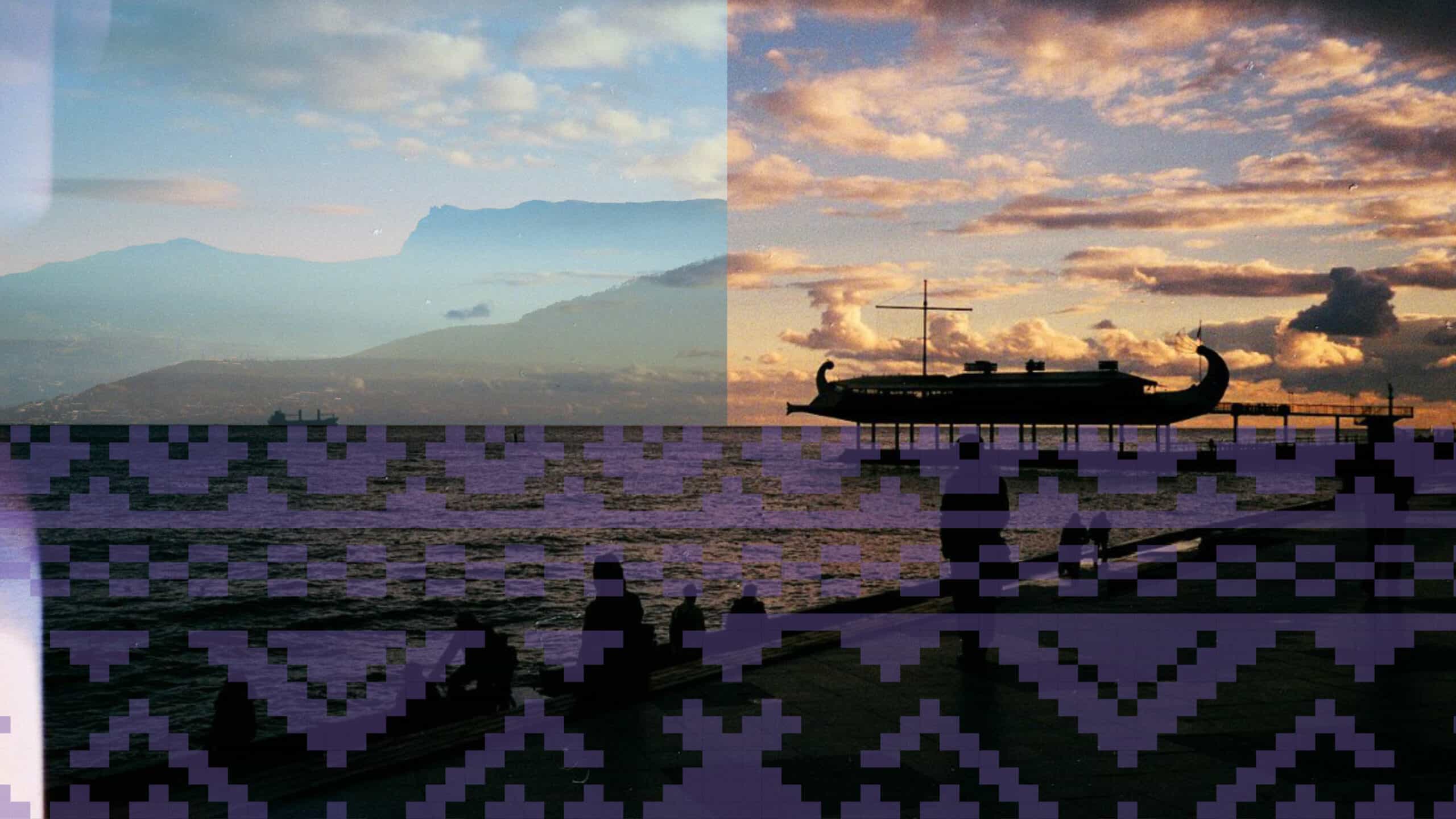
The soundwalk weaves together personal memories, dreamlike landscapes and the brutal reality of the war in Ukraine. Conceived as an audio walk through an urban park, it alternates between realistic and surreal worlds – telling the real stories through the mindscape of an injured Ukrainian soldier. Dedicated to the Park Rastoče knjige, through multilingual narration (Slovenian, Ukrainian), VRTATYS’ sound walk brings to the audience diverse literature resources – Ukrainian baroque poetry by Hryhorii Skovoroda, Slovenian modernist prose by Ivan Cankar, an authentic Crimeantatar poem by Alie Kendzhe-Ali, as well as personal narrations and sound environments from people who are currently in Ukraine and on occupied Ukrainian territories. The project highlights the tensions between home and exile, roots and transplantation, past and future. It merges an artistic approach with documentary precision and poetic sensitivity.
The soundwalk weaves together personal memories, dreamlike landscapes and the brutal reality of the war in Ukraine. Conceived as an audio walk through an urban park, it alternates between realistic and surreal worlds – telling the real stories through the mindscape of an injured Ukrainian soldier. Dedicated to the Park Rastoče knjige, through multilingual narration (Slovenian, Ukrainian), VRTATYS’ sound walk brings to the audience diverse literature resources – Ukrainian baroque poetry by Hryhorii Skovoroda, Slovenian modernist prose by Ivan Cankar, an authentic Crimeantatar poem by Alie Kendzhe-Ali, as well as personal narrations and sound environments from people who are currently in Ukraine and on occupied Ukrainian territories. The project highlights the tensions between home and exile, roots and transplantation, past and future. It merges an artistic approach with documentary precision and poetic sensitivity.
Tetiana Khoroshun
A composer, sound artist and performer from Ukraine. She explores themes of memory, space and time through acoustic and electroacoustic music, as well as theatrical and documentary performances.
Felisa Ko [Maiia Kovalenko]
Also known as Maiia Kovalenko, is a writer and a linguist working in Slavic languages and English, exploring the inner world of individuals. Felisa is working with several kinds of texts, including short stories, novels and more.
Kolofon / Colophon
Concept and composition: Tetiana Khoroshun Writing and dramaturgy: Felisa Ko Narration in Slovene: Felisa Ko, Neža Dvorščak, Irena Pivka, Peter Podgoršek, Marko Rafolt Narration in Ukrainian: Tetiana Khoroshun, Valeriia Chudentsova, Andrii Anisimov, Artem Makshayev, Alla Zahaikevych, Anastasiia Alyoshina, Margarita Cherenkof Photography: Aleksandr Lis, Katya Schigol Mentors: Irena Pivka, Brane Zorman Design and event photography: Matej Tomažin
The text of the soundwalk includes excerpts and poems by Hryhorii Skovoroda, Ivan Cankar, Alie Kendzhe-Ali, Anastasiia Alyoshina, Alla Zahaikevych and Margarita Cherenkof.
This project is supported by “Culture Helps / Культура допомагає” – a project implemented by Insha Osvita (UA) and zusa (DE) and co-funded by the European Union under a dedicated call for proposals to support Ukrainian displaced people and the Ukrainian Cultural and Creative Sectors.
The speculative story of the soundwalk performance garden GOround points to the problematic relationship between people and plants, which is geared to mainly benefit people. The colonialism itself and the human-mediated dispersal of plants capitalize on the subjection and exploitation of nature. It is vital to radically change this attitude if we want to deal effectively with the existential threat of ecological crisis and contemplate a brighter scenario for the future. To become more familiar with the world of plants, garden GOroundgoes into the temporal dimension. Through the prism of the journeys of these two utterly different temporalities of humans and plants, seemingly offering no possible point of encounter, it speculates on the development of a future solidarity-based coexistence of humans and plants. Plants, the most populous species on the planet, live at their own pace in their own time, walking the paths we cannot access. garden GOround will take us along the paths of a possible future scenario for our overstressed, noisy planet mirrored through the development of local greenways. Can we learn from plants to build a more solidarity-oriented future?
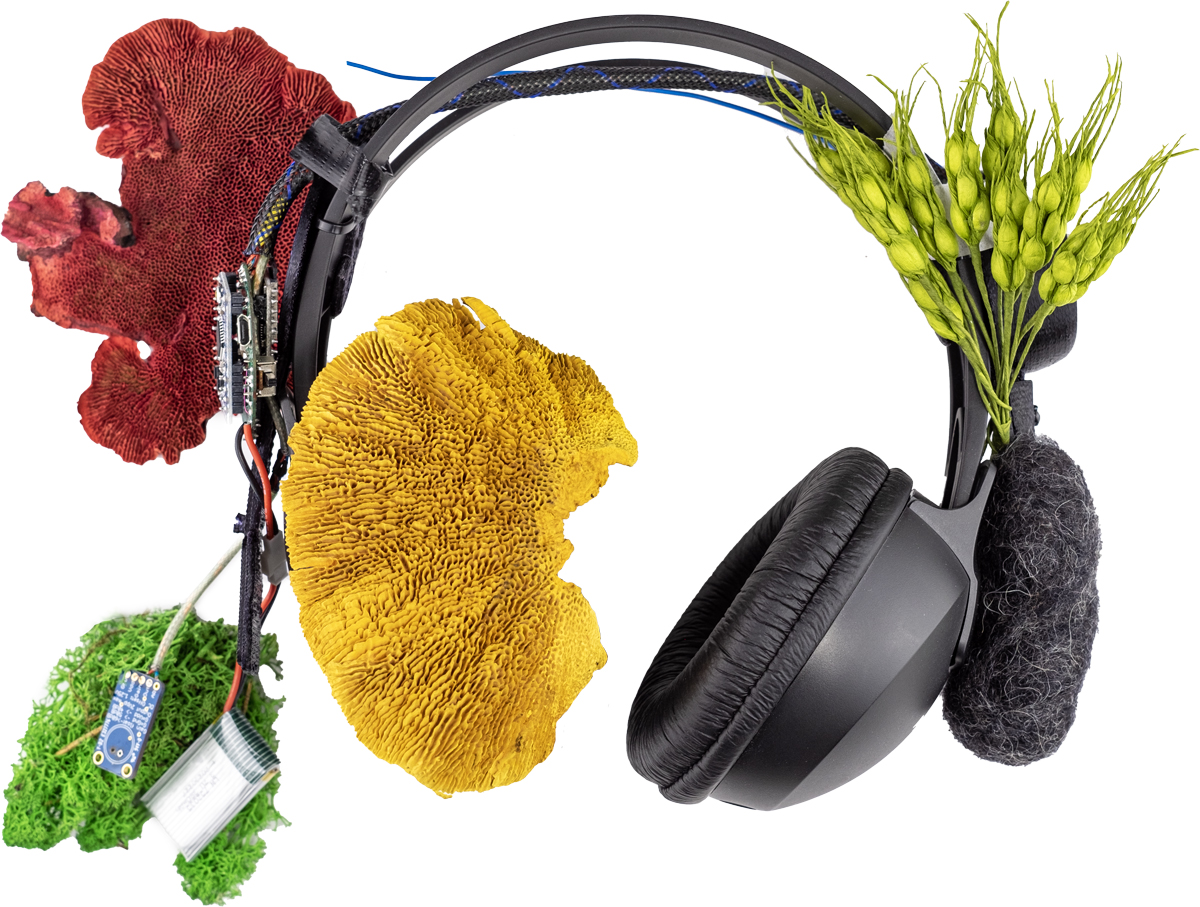
The audience experiences the soundwalk through specially developed headphones used as a tool to speculate the world and the sonic landscape of the future. The world is getting too loud and harmful for our sensitive ears, which have failed to adapt to aggressive frequencies. To survive outdoors, we will need headphones that will both mute and sharpen the sound image and, at the same time, take us into the acoustic narrative.
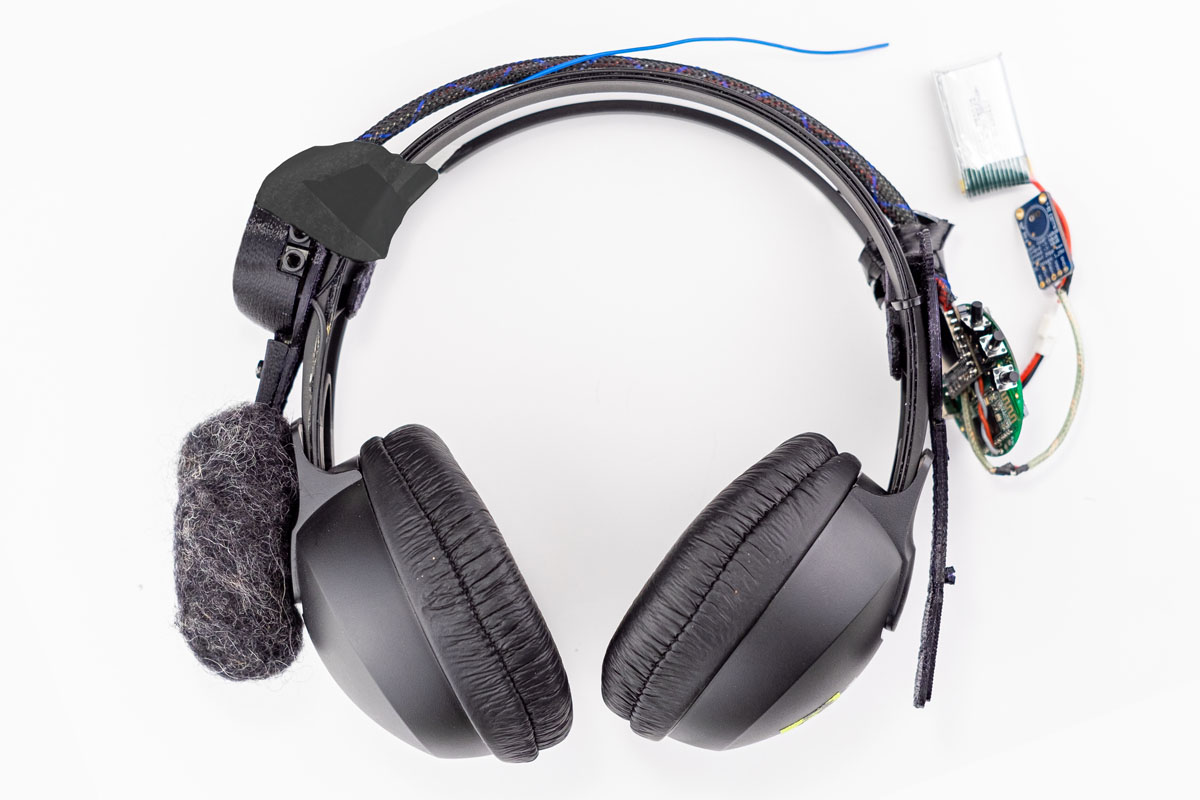
The soundwalk is broadcast on an AR (augmented reality) headset, the result of an innovativein-depth collaboration between the artist and hardware and software developers. The AR headset allows for simultaneous amplified, binaural ambient listening and audio co-composition. They also include an FM receiver module and an EMS sensor input.
The soundwalk path connects the Orangerie Park in Strasbourg and the Tivoli Park in Ljubljana, both designed during the reign of Napoleon. The featured photograph was taken in a disrupted avenue locked today between a road and a railway. It is part of a larger avenue complex in the Tivoli Park, designed by the French at the time of the Illyrian Provinces. The vocalist, dressed in a Slovene folk costume, wears original AR headphones and listens to the landscape.
A testimony form one of the participants of the AR soundwalk:
“Many thanks to the artists and the Apollonia team for this very inspiring “Sound Walk” in the Parc de l’Orangerie, so beautiful in this early spring. It was like being a little weightless. 45 minutes, with the boundaries between reality and fiction seemingly blurred.”
The speculative story of the soundwalk performance garden GOround points to the problematic relationship between people and plants, which is geared to mainly benefit people. The colonialism itself and the human-mediated dispersal of plants capitalize on the subjection and exploitation of nature. It is vital to radically change this attitude if we want to deal effectively with the existential threat of ecological crisis and contemplate a brighter scenario for the future. To become more familiar with the world of plants, garden GOroundgoes into the temporal dimension. Through the prism of the journeys of these two utterly different temporalities of humans and plants, seemingly offering no possible point of encounter, it speculates on the development of a future solidarity-based coexistence of humans and plants. Plants, the most populous species on the planet, live at their own pace in their own time, walking the paths we cannot access. garden GOround will take us along the paths of a possible future scenario for our overstressed, noisy planet mirrored through the development of local greenways. Can we learn from plants to build a more solidarity-oriented future?
The audience experiences the soundwalk through specially developed headphones used as a tool to speculate the world and the sonic landscape of the future. The world is getting too loud and harmful for our sensitive ears, which have failed to adapt to aggressive frequencies. To survive outdoors, we will need headphones that will both mute and sharpen the sound image and, at the same time, take us into the acoustic narrative.
The soundwalk is broadcast on an AR (augmented reality) headset, the result of an innovativein-depth collaboration between the artist and hardware and software developers. The AR headset allows for simultaneous amplified, binaural ambient listening and audio co-composition. They also include an FM receiver module and an EMS sensor input.
The soundwalk path connects the Orangerie Park in Strasbourg and the Tivoli Park in Ljubljana, both designed during the reign of Napoleon. The featured photograph was taken in a disrupted avenue locked today between a road and a railway. It is part of a larger avenue complex in the Tivoli Park, designed by the French at the time of the Illyrian Provinces. The vocalist, dressed in a Slovene folk costume, wears original AR headphones and listens to the landscape.
A testimony form one of the participants of the AR soundwalk:
“Many thanks to the artists and the Apollonia team for this very inspiring “Sound Walk” in the Parc de l’Orangerie, so beautiful in this early spring. It was like being a little weightless. 45 minutes, with the boundaries between reality and fiction seemingly blurred.”
AUTHOR-DESIGNED AR TECHNOLOGY
The audience experiences the sound work through specially developed author-designed AR headphones, which function as an artistic-technological interface between the listener, the space, and the composition. The headphones are conceived as a speculative tool that reflects on future auditory landscapes and possible modes of orientation within acoustically overloaded environments. They are based on the premise that contemporary sonic space is increasingly shaped by noise, frequency saturation, and aggressive acoustic pressures, as a result of which listening is becoming ever more a matter of perception, protection, and selection.
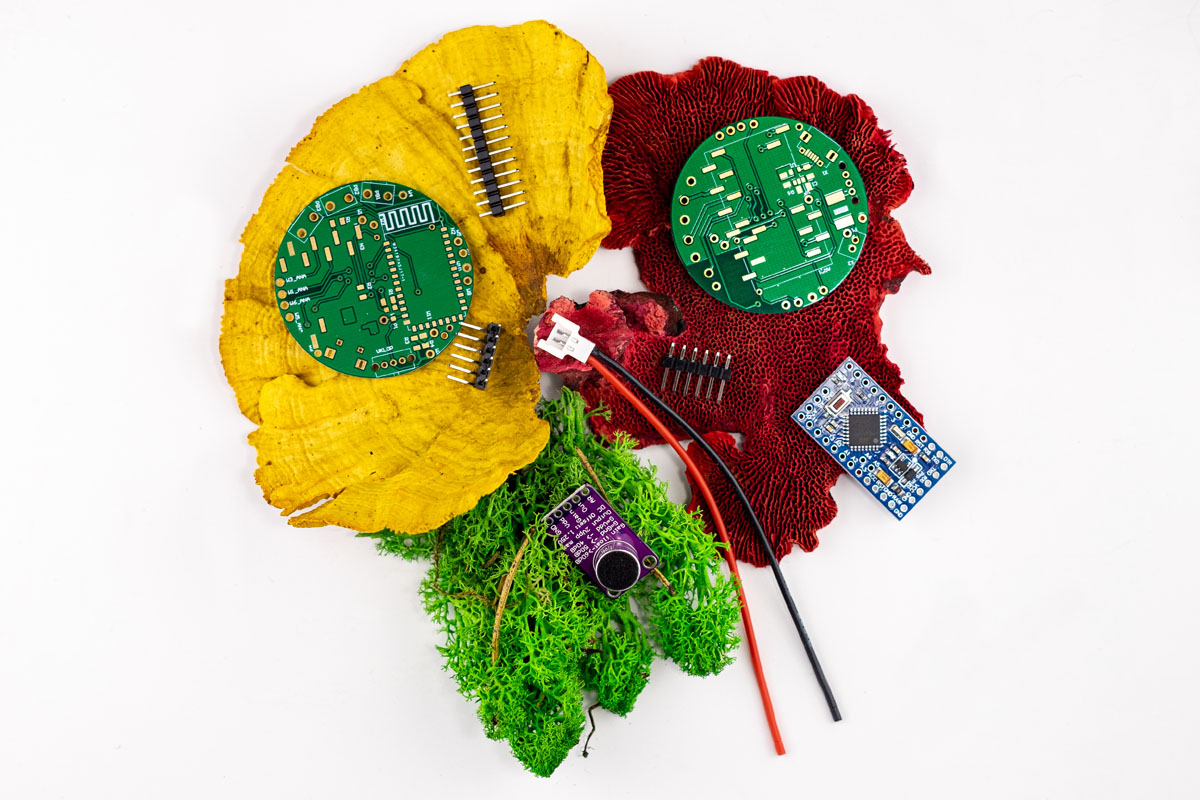
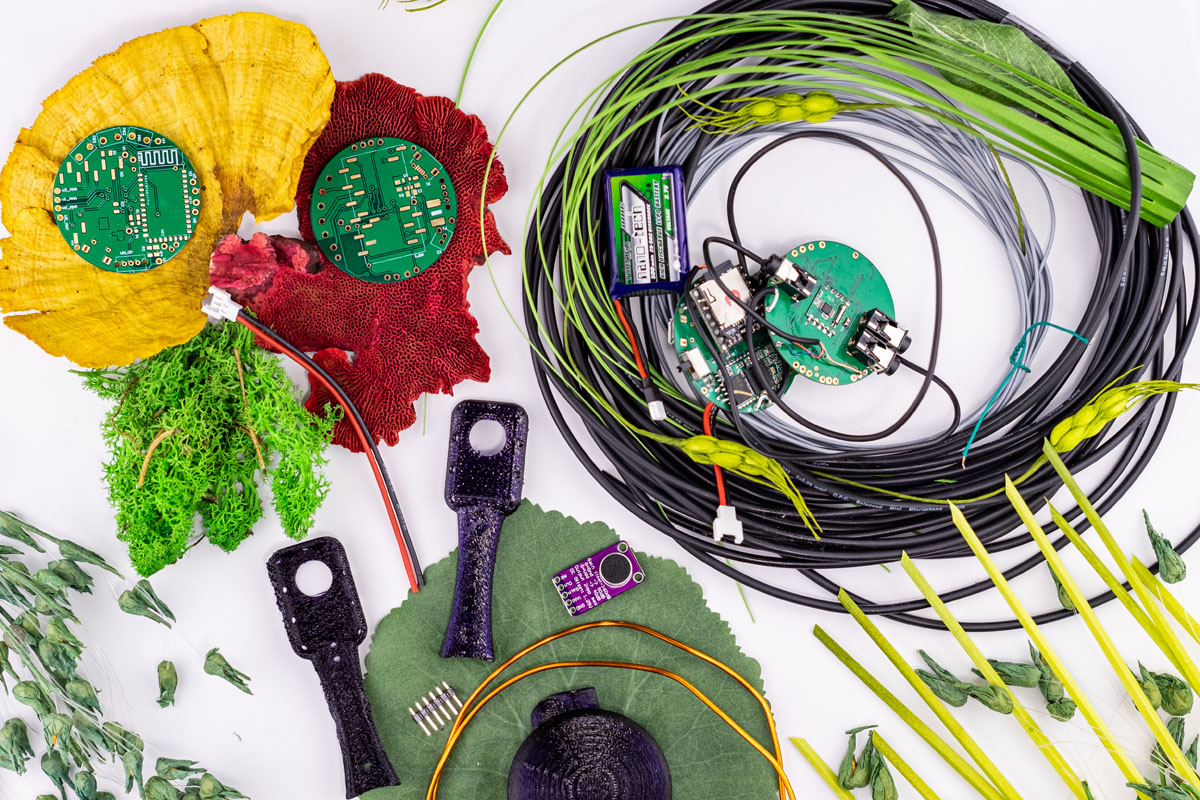
The AR headphones are the result of an in-depth collaboration between the artists and hardware and software developers. Their design enables the simultaneous binaural listening of the immediate surroundings and the playback of a sound composition, thereby creating a layered and dynamic sonic situation in which real acoustic space interweaves with an artificially generated or transmitted sonic narrative. A key feature of the system is that it does not exclude the surrounding environment, but rather acoustically modulates, filters, and accentuates it, so that listening is not separated from space, but remains actively embedded within it.
The headphones include an FM receiver module, which enables the wireless transmission and reception of audio signals, as well as an input for an EMS sensor, through which the system can also be connected to biometric or bodily impulses. The device therefore functions not merely as a playback unit, but as an expanded listening apparatus that combines environmental perception, technological mediation, and compositional layering into a unified listening experience. In this sense, the work addresses not only the future of sound, but also the future of listening as a technologically supported, situated, and selective practice.
Irena Pivka
An artist and producer. She works in the areas of new media, sound and performance arts. In recent years, she has been focusing her artistic expressions on the preparations of sound-walk performances, co-authored by Brane Zorman, which, by means of transmission tools and sound pictures, through walking and listening establish space anew and reflect social reality.
Brane Zorman
A composer, sound and radio artist. His work explores the possibilities of processing, presenting, perceiving, understanding, positioning and reinterpreting sound, space and ecology. By employing analogue and digital technologies and techniques, his work traverses the fields of music, multimedia, and visual space, using both sophisticated and simple tools, strategies, methods, and interactive interpretation models, soundscapes, evolving electronic and acoustic sound sculptures.
Kolofon / Colophon
Concept, text and headphones design: Irena Pivka Sound composition and editing, sensorial headset concept: Brane Zorman Vocal: Alja Petric Voices: Lučka Počkaj, Alja Petric, Toni Cahunek (Slovene)Jana Wilcoxen, Alja Petric, Toni Cahunek (English)Nataša Živkovič, Suzana Koncut, Loup Abramovici (French) Proofreading, English translation: Melita Silič English editing and proofreading: Jana Wilcoxen French translation: Anne-Cécile Lamy-Joswiak French editing: Suzana KoncutPhotography, design: Matej Tomažin Illustration: Jovana DjukićHardware and software development and testing, android application: Brane Ždralo PCB printing, electronics assembling: Zdravko Janšovec Electronics assembling: Ivan Kvasič 3D printing: Cveto Kunešević, 3Dimension Headphones assembling: Staš VrenkoProduced by CONA, 2023
VITAL creates an innovative ecosystem that respects the environment and, through art, participates in the fight against global warming and air pollution.
VITAL is co-funded by the Creative Europe programme by the three-year “Strasbourg European Capital” Contract and supported by the Ministry of Public Administration of the Republic of Slovenia and the City of Ljubljana, Departmen of Culture.
Text sources:
Gray, Ros and Sheikh, Shela (ed.). “The Wretched Earth: Botanical Conflicts and Artistic Interventions”. Third Text32(2–3).Kunst, Bojana. “Rastlinsko življenje in prostori umetnosti: o nedostopnem in vzajemnem”. Ana Mizerit (ed.). Zasilni izhod [Exhibition catalogue]. Ljubljana: Moderna galerija, 2022.Thorsen, Line Marie (ed.). Moving Plants. Rønnebæksholm, Næstved: Narayana Press, 2017.Sagan, Dorion. “The Human is More than Human: Interspecies Communities and the New “Facts of Life”.” Theorizing the Contemporary. Fieldsights, 18 Nov 2011.Raja, Vicente. “Moving the Green: Plant Behavior in the Human World“. EuropeNow 45, Nov 2021.Sidebottom, Kay. “Education for a More-Than-Human World”. EuropeNow 45, Nov 2021.Marder, Michael. “Resist Like a Plant! On the Vegetal Life of Political Movements“. Peace Studies Journal 5(1), Jan 2012.Brkič, Vanja. “Mestni park Tivoli: Tivolski drevoredi so bili Ljubljančanom od nekdaj v ponos“. Dnevnik, 10 Oct 2015.Strasbourg Park, https://data.strasbourg.eu/explore/dataset/lieux_arbres-remarquables/table/
The speculative story of the soundwalk performance garden GOround points to the problematic relationship between people and plants, which is geared to mainly benefit people. The colonialism itself and the human-mediated dispersal of plants capitalize on the subjection and exploitation of nature. It is vital to radically change this attitude if we want to deal effectively with the existential threat of ecological crisis and contemplate a brighter scenario for the future. To become more familiar with the world of plants, garden GOroundgoes into the temporal dimension. Through the prism of the journeys of these two utterly different temporalities of humans and plants, seemingly offering no possible point of encounter, it speculates on the development of a future solidarity-based coexistence of humans and plants. Plants, the most populous species on the planet, live at their own pace in their own time, walking the paths we cannot access. garden GOround will take us along the paths of a possible future scenario for our overstressed, noisy planet mirrored through the development of local greenways. Can we learn from plants to build a more solidarity-oriented future?
The audience experiences the soundwalk through specially developed headphones used as a tool to speculate the world and the sonic landscape of the future. The world is getting too loud and harmful for our sensitive ears, which have failed to adapt to aggressive frequencies. To survive outdoors, we will need headphones that will both mute and sharpen the sound image and, at the same time, take us into the acoustic narrative.
The soundwalk is broadcast on an AR (augmented reality) headset, the result of an innovativein-depth collaboration between the artist and hardware and software developers. The AR headset allows for simultaneous amplified, binaural ambient listening and audio co-composition. They also include an FM receiver module and an EMS sensor input.
The soundwalk path connects the Orangerie Park in Strasbourg and the Tivoli Park in Ljubljana, both designed during the reign of Napoleon. The featured photograph was taken in a disrupted avenue locked today between a road and a railway. It is part of a larger avenue complex in the Tivoli Park, designed by the French at the time of the Illyrian Provinces. The vocalist, dressed in a Slovene folk costume, wears original AR headphones and listens to the landscape.
A testimony form one of the participants of the AR soundwalk:
“Many thanks to the artists and the Apollonia team for this very inspiring “Sound Walk” in the Parc de l’Orangerie, so beautiful in this early spring. It was like being a little weightless. 45 minutes, with the boundaries between reality and fiction seemingly blurred.”
The speculative story of the soundwalk performance garden GOround points to the problematic relationship between people and plants, which is geared to mainly benefit people. The colonialism itself and the human-mediated dispersal of plants capitalize on the subjection and exploitation of nature. It is vital to radically change this attitude if we want to deal effectively with the existential threat of ecological crisis and contemplate a brighter scenario for the future. To become more familiar with the world of plants, garden GOroundgoes into the temporal dimension. Through the prism of the journeys of these two utterly different temporalities of humans and plants, seemingly offering no possible point of encounter, it speculates on the development of a future solidarity-based coexistence of humans and plants. Plants, the most populous species on the planet, live at their own pace in their own time, walking the paths we cannot access. garden GOround will take us along the paths of a possible future scenario for our overstressed, noisy planet mirrored through the development of local greenways. Can we learn from plants to build a more solidarity-oriented future?
The audience experiences the soundwalk through specially developed headphones used as a tool to speculate the world and the sonic landscape of the future. The world is getting too loud and harmful for our sensitive ears, which have failed to adapt to aggressive frequencies. To survive outdoors, we will need headphones that will both mute and sharpen the sound image and, at the same time, take us into the acoustic narrative.
The soundwalk is broadcast on an AR (augmented reality) headset, the result of an innovativein-depth collaboration between the artist and hardware and software developers. The AR headset allows for simultaneous amplified, binaural ambient listening and audio co-composition. They also include an FM receiver module and an EMS sensor input.
The soundwalk path connects the Orangerie Park in Strasbourg and the Tivoli Park in Ljubljana, both designed during the reign of Napoleon. The featured photograph was taken in a disrupted avenue locked today between a road and a railway. It is part of a larger avenue complex in the Tivoli Park, designed by the French at the time of the Illyrian Provinces. The vocalist, dressed in a Slovene folk costume, wears original AR headphones and listens to the landscape.
A testimony form one of the participants of the AR soundwalk:
“Many thanks to the artists and the Apollonia team for this very inspiring “Sound Walk” in the Parc de l’Orangerie, so beautiful in this early spring. It was like being a little weightless. 45 minutes, with the boundaries between reality and fiction seemingly blurred.”
AUTHOR-DESIGNED AR TECHNOLOGY
The audience experiences the sound work through specially developed author-designed AR headphones, which function as an artistic-technological interface between the listener, the space, and the composition. The headphones are conceived as a speculative tool that reflects on future auditory landscapes and possible modes of orientation within acoustically overloaded environments. They are based on the premise that contemporary sonic space is increasingly shaped by noise, frequency saturation, and aggressive acoustic pressures, as a result of which listening is becoming ever more a matter of perception, protection, and selection.
The AR headphones are the result of an in-depth collaboration between the artists and hardware and software developers. Their design enables the simultaneous binaural listening of the immediate surroundings and the playback of a sound composition, thereby creating a layered and dynamic sonic situation in which real acoustic space interweaves with an artificially generated or transmitted sonic narrative. A key feature of the system is that it does not exclude the surrounding environment, but rather acoustically modulates, filters, and accentuates it, so that listening is not separated from space, but remains actively embedded within it.
The headphones include an FM receiver module, which enables the wireless transmission and reception of audio signals, as well as an input for an EMS sensor, through which the system can also be connected to biometric or bodily impulses. The device therefore functions not merely as a playback unit, but as an expanded listening apparatus that combines environmental perception, technological mediation, and compositional layering into a unified listening experience. In this sense, the work addresses not only the future of sound, but also the future of listening as a technologically supported, situated, and selective practice.
Irena Pivka
An artist and producer. She works in the areas of new media, sound and performance arts. In recent years, she has been focusing her artistic expressions on the preparations of sound-walk performances, co-authored by Brane Zorman, which, by means of transmission tools and sound pictures, through walking and listening establish space anew and reflect social reality.
Brane Zorman
A composer, sound and radio artist. His work explores the possibilities of processing, presenting, perceiving, understanding, positioning and reinterpreting sound, space and ecology. By employing analogue and digital technologies and techniques, his work traverses the fields of music, multimedia, and visual space, using both sophisticated and simple tools, strategies, methods, and interactive interpretation models, soundscapes, evolving electronic and acoustic sound sculptures.
Kolofon / Colophon
Concept, text and headphones design: Irena Pivka Sound composition and editing, sensorial headset concept: Brane Zorman Vocal: Alja Petric Voices: Lučka Počkaj, Alja Petric, Toni Cahunek (Slovene)Jana Wilcoxen, Alja Petric, Toni Cahunek (English)Nataša Živkovič, Suzana Koncut, Loup Abramovici (French) Proofreading, English translation: Melita Silič English editing and proofreading: Jana Wilcoxen French translation: Anne-Cécile Lamy-Joswiak French editing: Suzana KoncutPhotography, design: Matej Tomažin Illustration: Jovana DjukićHardware and software development and testing, android application: Brane Ždralo PCB printing, electronics assembling: Zdravko Janšovec Electronics assembling: Ivan Kvasič 3D printing: Cveto Kunešević, 3Dimension Headphones assembling: Staš VrenkoProduced by CONA, 2023
VITAL creates an innovative ecosystem that respects the environment and, through art, participates in the fight against global warming and air pollution.
VITAL is co-funded by the Creative Europe programme by the three-year “Strasbourg European Capital” Contract and supported by the Ministry of Public Administration of the Republic of Slovenia and the City of Ljubljana, Departmen of Culture.
Text sources:
Gray, Ros and Sheikh, Shela (ed.). “The Wretched Earth: Botanical Conflicts and Artistic Interventions”. Third Text32(2–3).Kunst, Bojana. “Rastlinsko življenje in prostori umetnosti: o nedostopnem in vzajemnem”. Ana Mizerit (ed.). Zasilni izhod [Exhibition catalogue]. Ljubljana: Moderna galerija, 2022.Thorsen, Line Marie (ed.). Moving Plants. Rønnebæksholm, Næstved: Narayana Press, 2017.Sagan, Dorion. “The Human is More than Human: Interspecies Communities and the New “Facts of Life”.” Theorizing the Contemporary. Fieldsights, 18 Nov 2011.Raja, Vicente. “Moving the Green: Plant Behavior in the Human World“. EuropeNow 45, Nov 2021.Sidebottom, Kay. “Education for a More-Than-Human World”. EuropeNow 45, Nov 2021.Marder, Michael. “Resist Like a Plant! On the Vegetal Life of Political Movements“. Peace Studies Journal 5(1), Jan 2012.Brkič, Vanja. “Mestni park Tivoli: Tivolski drevoredi so bili Ljubljančanom od nekdaj v ponos“. Dnevnik, 10 Oct 2015.Strasbourg Park, https://data.strasbourg.eu/explore/dataset/lieux_arbres-remarquables/table/
The story opens perspectives on the architecture of Edvard Ravnikar and his collaborators in the construction of Cankarjev dom.
The authors incorporated numerous quotes and reflections by architects, as well as politicians and cultural figures connected with the building of Cankarjev dom. These are interwoven with poetry and drama by selected artists. The subtle and semantically multilayered soundwalk outlines the period of construction and the architecture of the building itself in the context of the present, offering a deeper understanding of its historical and cultural background.
The audio narrative also touches upon Ravnikar’s wider creative oeuvre, from the design of Republic Square as a demanding and long-term spatial intervention to his pedagogical work at the School of Architecture in Ljubljana. In his characteristic understanding of urban space, Ravnikar involved numerous architects and students who, in dialogue with politics and the broader professional field, laid the foundations for high-quality spatial design in a modernist Mediterranean spirit.
The story opens perspectives on the architecture of Edvard Ravnikar and his collaborators in the construction of Cankarjev dom.
The authors incorporated numerous quotes and reflections by architects, as well as politicians and cultural figures connected with the building of Cankarjev dom. These are interwoven with poetry and drama by selected artists. The subtle and semantically multilayered soundwalk outlines the period of construction and the architecture of the building itself in the context of the present, offering a deeper understanding of its historical and cultural background.
The audio narrative also touches upon Ravnikar’s wider creative oeuvre, from the design of Republic Square as a demanding and long-term spatial intervention to his pedagogical work at the School of Architecture in Ljubljana. In his characteristic understanding of urban space, Ravnikar involved numerous architects and students who, in dialogue with politics and the broader professional field, laid the foundations for high-quality spatial design in a modernist Mediterranean spirit.
Irena Pivka
Curator and author of sound-based works operating at the intersection of art, space and research practices. Her projects frequently take the form of soundwalks and contextual narratives addressing social, architectural and environmental themes.
Brane Zorman
Intermedia artist, composer and sound designer whose work encompasses sound compositions, spatial sound installations and research into the relationship between sound, architecture and listening.
Kolofon / Colophon
Concept and text: Irena Pivka Concept and sound composition: Brane Zorman Voice interpretation: Nada Vodušek, Robert Vrtovšek, Toni Cahunek, Jure Longika, Nataša Živkovič Expert review of the text: dr. Bogo Zupančič, dr. Miloš Kosec Expert review of technical descriptions: Karmen Klučar Project manager: Saša Globačnik (Cankarjev dom) Proofreading: Melita Silič Design: Edin Alibešter (Cankarjev dom) Production: Cankarjev dom, September 2023 (on the occasion of the year of Edvard Ravnikar), represented by Uršula Cetinski, General Director
The speculative story of the soundwalk performance garden GOround points to the problematic relationship between people and plants, which is geared to mainly benefit people. The colonialism itself and the human-mediated dispersal of plants capitalize on the subjection and exploitation of nature. It is vital to radically change this attitude if we want to deal effectively with the existential threat of ecological crisis and contemplate a brighter scenario for the future. To become more familiar with the world of plants, garden GOroundgoes into the temporal dimension. Through the prism of the journeys of these two utterly different temporalities of humans and plants, seemingly offering no possible point of encounter, it speculates on the development of a future solidarity-based coexistence of humans and plants. Plants, the most populous species on the planet, live at their own pace in their own time, walking the paths we cannot access. garden GOround will take us along the paths of a possible future scenario for our overstressed, noisy planet mirrored through the development of local greenways. Can we learn from plants to build a more solidarity-oriented future?
The audience experiences the soundwalk through specially developed headphones used as a tool to speculate the world and the sonic landscape of the future. The world is getting too loud and harmful for our sensitive ears, which have failed to adapt to aggressive frequencies. To survive outdoors, we will need headphones that will both mute and sharpen the sound image and, at the same time, take us into the acoustic narrative.
The soundwalk is broadcast on an AR (augmented reality) headset, the result of an innovativein-depth collaboration between the artist and hardware and software developers. The AR headset allows for simultaneous amplified, binaural ambient listening and audio co-composition. They also include an FM receiver module and an EMS sensor input.
The soundwalk path connects the Orangerie Park in Strasbourg and the Tivoli Park in Ljubljana, both designed during the reign of Napoleon. The featured photograph was taken in a disrupted avenue locked today between a road and a railway. It is part of a larger avenue complex in the Tivoli Park, designed by the French at the time of the Illyrian Provinces. The vocalist, dressed in a Slovene folk costume, wears original AR headphones and listens to the landscape.
A testimony form one of the participants of the AR soundwalk:
“Many thanks to the artists and the Apollonia team for this very inspiring “Sound Walk” in the Parc de l’Orangerie, so beautiful in this early spring. It was like being a little weightless. 45 minutes, with the boundaries between reality and fiction seemingly blurred.”
The speculative story of the soundwalk performance garden GOround points to the problematic relationship between people and plants, which is geared to mainly benefit people. The colonialism itself and the human-mediated dispersal of plants capitalize on the subjection and exploitation of nature. It is vital to radically change this attitude if we want to deal effectively with the existential threat of ecological crisis and contemplate a brighter scenario for the future. To become more familiar with the world of plants, garden GOroundgoes into the temporal dimension. Through the prism of the journeys of these two utterly different temporalities of humans and plants, seemingly offering no possible point of encounter, it speculates on the development of a future solidarity-based coexistence of humans and plants. Plants, the most populous species on the planet, live at their own pace in their own time, walking the paths we cannot access. garden GOround will take us along the paths of a possible future scenario for our overstressed, noisy planet mirrored through the development of local greenways. Can we learn from plants to build a more solidarity-oriented future?
The audience experiences the soundwalk through specially developed headphones used as a tool to speculate the world and the sonic landscape of the future. The world is getting too loud and harmful for our sensitive ears, which have failed to adapt to aggressive frequencies. To survive outdoors, we will need headphones that will both mute and sharpen the sound image and, at the same time, take us into the acoustic narrative.
The soundwalk is broadcast on an AR (augmented reality) headset, the result of an innovativein-depth collaboration between the artist and hardware and software developers. The AR headset allows for simultaneous amplified, binaural ambient listening and audio co-composition. They also include an FM receiver module and an EMS sensor input.
The soundwalk path connects the Orangerie Park in Strasbourg and the Tivoli Park in Ljubljana, both designed during the reign of Napoleon. The featured photograph was taken in a disrupted avenue locked today between a road and a railway. It is part of a larger avenue complex in the Tivoli Park, designed by the French at the time of the Illyrian Provinces. The vocalist, dressed in a Slovene folk costume, wears original AR headphones and listens to the landscape.
A testimony form one of the participants of the AR soundwalk:
“Many thanks to the artists and the Apollonia team for this very inspiring “Sound Walk” in the Parc de l’Orangerie, so beautiful in this early spring. It was like being a little weightless. 45 minutes, with the boundaries between reality and fiction seemingly blurred.”
AUTHOR-DESIGNED AR TECHNOLOGY
The audience experiences the sound work through specially developed author-designed AR headphones, which function as an artistic-technological interface between the listener, the space, and the composition. The headphones are conceived as a speculative tool that reflects on future auditory landscapes and possible modes of orientation within acoustically overloaded environments. They are based on the premise that contemporary sonic space is increasingly shaped by noise, frequency saturation, and aggressive acoustic pressures, as a result of which listening is becoming ever more a matter of perception, protection, and selection.
The AR headphones are the result of an in-depth collaboration between the artists and hardware and software developers. Their design enables the simultaneous binaural listening of the immediate surroundings and the playback of a sound composition, thereby creating a layered and dynamic sonic situation in which real acoustic space interweaves with an artificially generated or transmitted sonic narrative. A key feature of the system is that it does not exclude the surrounding environment, but rather acoustically modulates, filters, and accentuates it, so that listening is not separated from space, but remains actively embedded within it.
The headphones include an FM receiver module, which enables the wireless transmission and reception of audio signals, as well as an input for an EMS sensor, through which the system can also be connected to biometric or bodily impulses. The device therefore functions not merely as a playback unit, but as an expanded listening apparatus that combines environmental perception, technological mediation, and compositional layering into a unified listening experience. In this sense, the work addresses not only the future of sound, but also the future of listening as a technologically supported, situated, and selective practice.
Irena Pivka
An artist and producer. She works in the areas of new media, sound and performance arts. In recent years, she has been focusing her artistic expressions on the preparations of sound-walk performances, co-authored by Brane Zorman, which, by means of transmission tools and sound pictures, through walking and listening establish space anew and reflect social reality.
Brane Zorman
A composer, sound and radio artist. His work explores the possibilities of processing, presenting, perceiving, understanding, positioning and reinterpreting sound, space and ecology. By employing analogue and digital technologies and techniques, his work traverses the fields of music, multimedia, and visual space, using both sophisticated and simple tools, strategies, methods, and interactive interpretation models, soundscapes, evolving electronic and acoustic sound sculptures.
Kolofon / Colophon
Concept, text and headphones design: Irena Pivka Sound composition and editing, sensorial headset concept: Brane Zorman Vocal: Alja Petric Voices: Lučka Počkaj, Alja Petric, Toni Cahunek (Slovene)Jana Wilcoxen, Alja Petric, Toni Cahunek (English)Nataša Živkovič, Suzana Koncut, Loup Abramovici (French) Proofreading, English translation: Melita Silič English editing and proofreading: Jana Wilcoxen French translation: Anne-Cécile Lamy-Joswiak French editing: Suzana KoncutPhotography, design: Matej Tomažin Illustration: Jovana DjukićHardware and software development and testing, android application: Brane Ždralo PCB printing, electronics assembling: Zdravko Janšovec Electronics assembling: Ivan Kvasič 3D printing: Cveto Kunešević, 3Dimension Headphones assembling: Staš VrenkoProduced by CONA, 2023
VITAL creates an innovative ecosystem that respects the environment and, through art, participates in the fight against global warming and air pollution.
VITAL is co-funded by the Creative Europe programme by the three-year “Strasbourg European Capital” Contract and supported by the Ministry of Public Administration of the Republic of Slovenia and the City of Ljubljana, Departmen of Culture.
Text sources:
Gray, Ros and Sheikh, Shela (ed.). “The Wretched Earth: Botanical Conflicts and Artistic Interventions”. Third Text32(2–3).Kunst, Bojana. “Rastlinsko življenje in prostori umetnosti: o nedostopnem in vzajemnem”. Ana Mizerit (ed.). Zasilni izhod [Exhibition catalogue]. Ljubljana: Moderna galerija, 2022.Thorsen, Line Marie (ed.). Moving Plants. Rønnebæksholm, Næstved: Narayana Press, 2017.Sagan, Dorion. “The Human is More than Human: Interspecies Communities and the New “Facts of Life”.” Theorizing the Contemporary. Fieldsights, 18 Nov 2011.Raja, Vicente. “Moving the Green: Plant Behavior in the Human World“. EuropeNow 45, Nov 2021.Sidebottom, Kay. “Education for a More-Than-Human World”. EuropeNow 45, Nov 2021.Marder, Michael. “Resist Like a Plant! On the Vegetal Life of Political Movements“. Peace Studies Journal 5(1), Jan 2012.Brkič, Vanja. “Mestni park Tivoli: Tivolski drevoredi so bili Ljubljančanom od nekdaj v ponos“. Dnevnik, 10 Oct 2015.Strasbourg Park, https://data.strasbourg.eu/explore/dataset/lieux_arbres-remarquables/table/
The speculative story of the soundwalk performance garden GOround points to the problematic relationship between people and plants, which is geared to mainly benefit people. The colonialism itself and the human-mediated dispersal of plants capitalize on the subjection and exploitation of nature. It is vital to radically change this attitude if we want to deal effectively with the existential threat of ecological crisis and contemplate a brighter scenario for the future. To become more familiar with the world of plants, garden GOroundgoes into the temporal dimension. Through the prism of the journeys of these two utterly different temporalities of humans and plants, seemingly offering no possible point of encounter, it speculates on the development of a future solidarity-based coexistence of humans and plants. Plants, the most populous species on the planet, live at their own pace in their own time, walking the paths we cannot access. garden GOround will take us along the paths of a possible future scenario for our overstressed, noisy planet mirrored through the development of local greenways. Can we learn from plants to build a more solidarity-oriented future?
The audience experiences the soundwalk through specially developed headphones used as a tool to speculate the world and the sonic landscape of the future. The world is getting too loud and harmful for our sensitive ears, which have failed to adapt to aggressive frequencies. To survive outdoors, we will need headphones that will both mute and sharpen the sound image and, at the same time, take us into the acoustic narrative.
The soundwalk is broadcast on an AR (augmented reality) headset, the result of an innovativein-depth collaboration between the artist and hardware and software developers. The AR headset allows for simultaneous amplified, binaural ambient listening and audio co-composition. They also include an FM receiver module and an EMS sensor input.
The soundwalk path connects the Orangerie Park in Strasbourg and the Tivoli Park in Ljubljana, both designed during the reign of Napoleon. The featured photograph was taken in a disrupted avenue locked today between a road and a railway. It is part of a larger avenue complex in the Tivoli Park, designed by the French at the time of the Illyrian Provinces. The vocalist, dressed in a Slovene folk costume, wears original AR headphones and listens to the landscape.
A testimony form one of the participants of the AR soundwalk:
“Many thanks to the artists and the Apollonia team for this very inspiring “Sound Walk” in the Parc de l’Orangerie, so beautiful in this early spring. It was like being a little weightless. 45 minutes, with the boundaries between reality and fiction seemingly blurred.”
The speculative story of the soundwalk performance garden GOround points to the problematic relationship between people and plants, which is geared to mainly benefit people. The colonialism itself and the human-mediated dispersal of plants capitalize on the subjection and exploitation of nature. It is vital to radically change this attitude if we want to deal effectively with the existential threat of ecological crisis and contemplate a brighter scenario for the future. To become more familiar with the world of plants, garden GOroundgoes into the temporal dimension. Through the prism of the journeys of these two utterly different temporalities of humans and plants, seemingly offering no possible point of encounter, it speculates on the development of a future solidarity-based coexistence of humans and plants. Plants, the most populous species on the planet, live at their own pace in their own time, walking the paths we cannot access. garden GOround will take us along the paths of a possible future scenario for our overstressed, noisy planet mirrored through the development of local greenways. Can we learn from plants to build a more solidarity-oriented future?
The audience experiences the soundwalk through specially developed headphones used as a tool to speculate the world and the sonic landscape of the future. The world is getting too loud and harmful for our sensitive ears, which have failed to adapt to aggressive frequencies. To survive outdoors, we will need headphones that will both mute and sharpen the sound image and, at the same time, take us into the acoustic narrative.
The soundwalk is broadcast on an AR (augmented reality) headset, the result of an innovativein-depth collaboration between the artist and hardware and software developers. The AR headset allows for simultaneous amplified, binaural ambient listening and audio co-composition. They also include an FM receiver module and an EMS sensor input.
The soundwalk path connects the Orangerie Park in Strasbourg and the Tivoli Park in Ljubljana, both designed during the reign of Napoleon. The featured photograph was taken in a disrupted avenue locked today between a road and a railway. It is part of a larger avenue complex in the Tivoli Park, designed by the French at the time of the Illyrian Provinces. The vocalist, dressed in a Slovene folk costume, wears original AR headphones and listens to the landscape.
A testimony form one of the participants of the AR soundwalk:
“Many thanks to the artists and the Apollonia team for this very inspiring “Sound Walk” in the Parc de l’Orangerie, so beautiful in this early spring. It was like being a little weightless. 45 minutes, with the boundaries between reality and fiction seemingly blurred.”
AUTHOR-DESIGNED AR TECHNOLOGY
The audience experiences the sound work through specially developed author-designed AR headphones, which function as an artistic-technological interface between the listener, the space, and the composition. The headphones are conceived as a speculative tool that reflects on future auditory landscapes and possible modes of orientation within acoustically overloaded environments. They are based on the premise that contemporary sonic space is increasingly shaped by noise, frequency saturation, and aggressive acoustic pressures, as a result of which listening is becoming ever more a matter of perception, protection, and selection.
The AR headphones are the result of an in-depth collaboration between the artists and hardware and software developers. Their design enables the simultaneous binaural listening of the immediate surroundings and the playback of a sound composition, thereby creating a layered and dynamic sonic situation in which real acoustic space interweaves with an artificially generated or transmitted sonic narrative. A key feature of the system is that it does not exclude the surrounding environment, but rather acoustically modulates, filters, and accentuates it, so that listening is not separated from space, but remains actively embedded within it.
The headphones include an FM receiver module, which enables the wireless transmission and reception of audio signals, as well as an input for an EMS sensor, through which the system can also be connected to biometric or bodily impulses. The device therefore functions not merely as a playback unit, but as an expanded listening apparatus that combines environmental perception, technological mediation, and compositional layering into a unified listening experience. In this sense, the work addresses not only the future of sound, but also the future of listening as a technologically supported, situated, and selective practice.
Irena Pivka
An artist and producer. She works in the areas of new media, sound and performance arts. In recent years, she has been focusing her artistic expressions on the preparations of sound-walk performances, co-authored by Brane Zorman, which, by means of transmission tools and sound pictures, through walking and listening establish space anew and reflect social reality.
Brane Zorman
A composer, sound and radio artist. His work explores the possibilities of processing, presenting, perceiving, understanding, positioning and reinterpreting sound, space and ecology. By employing analogue and digital technologies and techniques, his work traverses the fields of music, multimedia, and visual space, using both sophisticated and simple tools, strategies, methods, and interactive interpretation models, soundscapes, evolving electronic and acoustic sound sculptures.
Kolofon / Colophon
Concept, text and headphones design: Irena Pivka Sound composition and editing, sensorial headset concept: Brane Zorman Vocal: Alja Petric Voices: Lučka Počkaj, Alja Petric, Toni Cahunek (Slovene)Jana Wilcoxen, Alja Petric, Toni Cahunek (English)Nataša Živkovič, Suzana Koncut, Loup Abramovici (French) Proofreading, English translation: Melita Silič English editing and proofreading: Jana Wilcoxen French translation: Anne-Cécile Lamy-Joswiak French editing: Suzana KoncutPhotography, design: Matej Tomažin Illustration: Jovana DjukićHardware and software development and testing, android application: Brane Ždralo PCB printing, electronics assembling: Zdravko Janšovec Electronics assembling: Ivan Kvasič 3D printing: Cveto Kunešević, 3Dimension Headphones assembling: Staš VrenkoProduced by CONA, 2023
VITAL creates an innovative ecosystem that respects the environment and, through art, participates in the fight against global warming and air pollution.
VITAL is co-funded by the Creative Europe programme by the three-year “Strasbourg European Capital” Contract and supported by the Ministry of Public Administration of the Republic of Slovenia and the City of Ljubljana, Departmen of Culture.
Text sources:
Gray, Ros and Sheikh, Shela (ed.). “The Wretched Earth: Botanical Conflicts and Artistic Interventions”. Third Text32(2–3).Kunst, Bojana. “Rastlinsko življenje in prostori umetnosti: o nedostopnem in vzajemnem”. Ana Mizerit (ed.). Zasilni izhod [Exhibition catalogue]. Ljubljana: Moderna galerija, 2022.Thorsen, Line Marie (ed.). Moving Plants. Rønnebæksholm, Næstved: Narayana Press, 2017.Sagan, Dorion. “The Human is More than Human: Interspecies Communities and the New “Facts of Life”.” Theorizing the Contemporary. Fieldsights, 18 Nov 2011.Raja, Vicente. “Moving the Green: Plant Behavior in the Human World“. EuropeNow 45, Nov 2021.Sidebottom, Kay. “Education for a More-Than-Human World”. EuropeNow 45, Nov 2021.Marder, Michael. “Resist Like a Plant! On the Vegetal Life of Political Movements“. Peace Studies Journal 5(1), Jan 2012.Brkič, Vanja. “Mestni park Tivoli: Tivolski drevoredi so bili Ljubljančanom od nekdaj v ponos“. Dnevnik, 10 Oct 2015.Strasbourg Park, https://data.strasbourg.eu/explore/dataset/lieux_arbres-remarquables/table/
The speculative story of the soundwalk performance garden GOround points to the problematic relationship between people and plants, which is geared to mainly benefit people. The colonialism itself and the human-mediated dispersal of plants capitalize on the subjection and exploitation of nature. It is vital to radically change this attitude if we want to deal effectively with the existential threat of ecological crisis and contemplate a brighter scenario for the future. To become more familiar with the world of plants, garden GOroundgoes into the temporal dimension. Through the prism of the journeys of these two utterly different temporalities of humans and plants, seemingly offering no possible point of encounter, it speculates on the development of a future solidarity-based coexistence of humans and plants. Plants, the most populous species on the planet, live at their own pace in their own time, walking the paths we cannot access. garden GOround will take us along the paths of a possible future scenario for our overstressed, noisy planet mirrored through the development of local greenways. Can we learn from plants to build a more solidarity-oriented future?
The audience experiences the soundwalk through specially developed headphones used as a tool to speculate the world and the sonic landscape of the future. The world is getting too loud and harmful for our sensitive ears, which have failed to adapt to aggressive frequencies. To survive outdoors, we will need headphones that will both mute and sharpen the sound image and, at the same time, take us into the acoustic narrative.
The soundwalk is broadcast on an AR (augmented reality) headset, the result of an innovativein-depth collaboration between the artist and hardware and software developers. The AR headset allows for simultaneous amplified, binaural ambient listening and audio co-composition. They also include an FM receiver module and an EMS sensor input.
The soundwalk path connects the Orangerie Park in Strasbourg and the Tivoli Park in Ljubljana, both designed during the reign of Napoleon. The featured photograph was taken in a disrupted avenue locked today between a road and a railway. It is part of a larger avenue complex in the Tivoli Park, designed by the French at the time of the Illyrian Provinces. The vocalist, dressed in a Slovene folk costume, wears original AR headphones and listens to the landscape.
A testimony form one of the participants of the AR soundwalk:
“Many thanks to the artists and the Apollonia team for this very inspiring “Sound Walk” in the Parc de l’Orangerie, so beautiful in this early spring. It was like being a little weightless. 45 minutes, with the boundaries between reality and fiction seemingly blurred.”
The speculative story of the soundwalk performance garden GOround points to the problematic relationship between people and plants, which is geared to mainly benefit people. The colonialism itself and the human-mediated dispersal of plants capitalize on the subjection and exploitation of nature. It is vital to radically change this attitude if we want to deal effectively with the existential threat of ecological crisis and contemplate a brighter scenario for the future. To become more familiar with the world of plants, garden GOroundgoes into the temporal dimension. Through the prism of the journeys of these two utterly different temporalities of humans and plants, seemingly offering no possible point of encounter, it speculates on the development of a future solidarity-based coexistence of humans and plants. Plants, the most populous species on the planet, live at their own pace in their own time, walking the paths we cannot access. garden GOround will take us along the paths of a possible future scenario for our overstressed, noisy planet mirrored through the development of local greenways. Can we learn from plants to build a more solidarity-oriented future?
The audience experiences the soundwalk through specially developed headphones used as a tool to speculate the world and the sonic landscape of the future. The world is getting too loud and harmful for our sensitive ears, which have failed to adapt to aggressive frequencies. To survive outdoors, we will need headphones that will both mute and sharpen the sound image and, at the same time, take us into the acoustic narrative.
The soundwalk is broadcast on an AR (augmented reality) headset, the result of an innovativein-depth collaboration between the artist and hardware and software developers. The AR headset allows for simultaneous amplified, binaural ambient listening and audio co-composition. They also include an FM receiver module and an EMS sensor input.
The soundwalk path connects the Orangerie Park in Strasbourg and the Tivoli Park in Ljubljana, both designed during the reign of Napoleon. The featured photograph was taken in a disrupted avenue locked today between a road and a railway. It is part of a larger avenue complex in the Tivoli Park, designed by the French at the time of the Illyrian Provinces. The vocalist, dressed in a Slovene folk costume, wears original AR headphones and listens to the landscape.
A testimony form one of the participants of the AR soundwalk:
“Many thanks to the artists and the Apollonia team for this very inspiring “Sound Walk” in the Parc de l’Orangerie, so beautiful in this early spring. It was like being a little weightless. 45 minutes, with the boundaries between reality and fiction seemingly blurred.”
AUTHOR-DESIGNED AR TECHNOLOGY
The audience experiences the sound work through specially developed author-designed AR headphones, which function as an artistic-technological interface between the listener, the space, and the composition. The headphones are conceived as a speculative tool that reflects on future auditory landscapes and possible modes of orientation within acoustically overloaded environments. They are based on the premise that contemporary sonic space is increasingly shaped by noise, frequency saturation, and aggressive acoustic pressures, as a result of which listening is becoming ever more a matter of perception, protection, and selection.
The AR headphones are the result of an in-depth collaboration between the artists and hardware and software developers. Their design enables the simultaneous binaural listening of the immediate surroundings and the playback of a sound composition, thereby creating a layered and dynamic sonic situation in which real acoustic space interweaves with an artificially generated or transmitted sonic narrative. A key feature of the system is that it does not exclude the surrounding environment, but rather acoustically modulates, filters, and accentuates it, so that listening is not separated from space, but remains actively embedded within it.
The headphones include an FM receiver module, which enables the wireless transmission and reception of audio signals, as well as an input for an EMS sensor, through which the system can also be connected to biometric or bodily impulses. The device therefore functions not merely as a playback unit, but as an expanded listening apparatus that combines environmental perception, technological mediation, and compositional layering into a unified listening experience. In this sense, the work addresses not only the future of sound, but also the future of listening as a technologically supported, situated, and selective practice.
Irena Pivka
An artist and producer. She works in the areas of new media, sound and performance arts. In recent years, she has been focusing her artistic expressions on the preparations of sound-walk performances, co-authored by Brane Zorman, which, by means of transmission tools and sound pictures, through walking and listening establish space anew and reflect social reality.
Brane Zorman
A composer, sound and radio artist. His work explores the possibilities of processing, presenting, perceiving, understanding, positioning and reinterpreting sound, space and ecology. By employing analogue and digital technologies and techniques, his work traverses the fields of music, multimedia, and visual space, using both sophisticated and simple tools, strategies, methods, and interactive interpretation models, soundscapes, evolving electronic and acoustic sound sculptures.
Kolofon / Colophon
Concept, text and headphones design: Irena Pivka Sound composition and editing, sensorial headset concept: Brane Zorman Vocal: Alja Petric Voices: Lučka Počkaj, Alja Petric, Toni Cahunek (Slovene)Jana Wilcoxen, Alja Petric, Toni Cahunek (English)Nataša Živkovič, Suzana Koncut, Loup Abramovici (French) Proofreading, English translation: Melita Silič English editing and proofreading: Jana Wilcoxen French translation: Anne-Cécile Lamy-Joswiak French editing: Suzana KoncutPhotography, design: Matej Tomažin Illustration: Jovana DjukićHardware and software development and testing, android application: Brane Ždralo PCB printing, electronics assembling: Zdravko Janšovec Electronics assembling: Ivan Kvasič 3D printing: Cveto Kunešević, 3Dimension Headphones assembling: Staš VrenkoProduced by CONA, 2023
VITAL creates an innovative ecosystem that respects the environment and, through art, participates in the fight against global warming and air pollution.
VITAL is co-funded by the Creative Europe programme by the three-year “Strasbourg European Capital” Contract and supported by the Ministry of Public Administration of the Republic of Slovenia and the City of Ljubljana, Departmen of Culture.
Text sources:
Gray, Ros and Sheikh, Shela (ed.). “The Wretched Earth: Botanical Conflicts and Artistic Interventions”. Third Text32(2–3).Kunst, Bojana. “Rastlinsko življenje in prostori umetnosti: o nedostopnem in vzajemnem”. Ana Mizerit (ed.). Zasilni izhod [Exhibition catalogue]. Ljubljana: Moderna galerija, 2022.Thorsen, Line Marie (ed.). Moving Plants. Rønnebæksholm, Næstved: Narayana Press, 2017.Sagan, Dorion. “The Human is More than Human: Interspecies Communities and the New “Facts of Life”.” Theorizing the Contemporary. Fieldsights, 18 Nov 2011.Raja, Vicente. “Moving the Green: Plant Behavior in the Human World“. EuropeNow 45, Nov 2021.Sidebottom, Kay. “Education for a More-Than-Human World”. EuropeNow 45, Nov 2021.Marder, Michael. “Resist Like a Plant! On the Vegetal Life of Political Movements“. Peace Studies Journal 5(1), Jan 2012.Brkič, Vanja. “Mestni park Tivoli: Tivolski drevoredi so bili Ljubljančanom od nekdaj v ponos“. Dnevnik, 10 Oct 2015.Strasbourg Park, https://data.strasbourg.eu/explore/dataset/lieux_arbres-remarquables/table/
The speculative story of the soundwalk performance garden GOround points to the problematic relationship between people and plants, which is geared to mainly benefit people. The colonialism itself and the human-mediated dispersal of plants capitalize on the subjection and exploitation of nature. It is vital to radically change this attitude if we want to deal effectively with the existential threat of ecological crisis and contemplate a brighter scenario for the future. To become more familiar with the world of plants, garden GOroundgoes into the temporal dimension. Through the prism of the journeys of these two utterly different temporalities of humans and plants, seemingly offering no possible point of encounter, it speculates on the development of a future solidarity-based coexistence of humans and plants. Plants, the most populous species on the planet, live at their own pace in their own time, walking the paths we cannot access. garden GOround will take us along the paths of a possible future scenario for our overstressed, noisy planet mirrored through the development of local greenways. Can we learn from plants to build a more solidarity-oriented future?
The audience experiences the soundwalk through specially developed headphones used as a tool to speculate the world and the sonic landscape of the future. The world is getting too loud and harmful for our sensitive ears, which have failed to adapt to aggressive frequencies. To survive outdoors, we will need headphones that will both mute and sharpen the sound image and, at the same time, take us into the acoustic narrative.
The soundwalk is broadcast on an AR (augmented reality) headset, the result of an innovativein-depth collaboration between the artist and hardware and software developers. The AR headset allows for simultaneous amplified, binaural ambient listening and audio co-composition. They also include an FM receiver module and an EMS sensor input.
The soundwalk path connects the Orangerie Park in Strasbourg and the Tivoli Park in Ljubljana, both designed during the reign of Napoleon. The featured photograph was taken in a disrupted avenue locked today between a road and a railway. It is part of a larger avenue complex in the Tivoli Park, designed by the French at the time of the Illyrian Provinces. The vocalist, dressed in a Slovene folk costume, wears original AR headphones and listens to the landscape.
A testimony form one of the participants of the AR soundwalk:
“Many thanks to the artists and the Apollonia team for this very inspiring “Sound Walk” in the Parc de l’Orangerie, so beautiful in this early spring. It was like being a little weightless. 45 minutes, with the boundaries between reality and fiction seemingly blurred.”
The speculative story of the soundwalk performance garden GOround points to the problematic relationship between people and plants, which is geared to mainly benefit people. The colonialism itself and the human-mediated dispersal of plants capitalize on the subjection and exploitation of nature. It is vital to radically change this attitude if we want to deal effectively with the existential threat of ecological crisis and contemplate a brighter scenario for the future. To become more familiar with the world of plants, garden GOroundgoes into the temporal dimension. Through the prism of the journeys of these two utterly different temporalities of humans and plants, seemingly offering no possible point of encounter, it speculates on the development of a future solidarity-based coexistence of humans and plants. Plants, the most populous species on the planet, live at their own pace in their own time, walking the paths we cannot access. garden GOround will take us along the paths of a possible future scenario for our overstressed, noisy planet mirrored through the development of local greenways. Can we learn from plants to build a more solidarity-oriented future?
The audience experiences the soundwalk through specially developed headphones used as a tool to speculate the world and the sonic landscape of the future. The world is getting too loud and harmful for our sensitive ears, which have failed to adapt to aggressive frequencies. To survive outdoors, we will need headphones that will both mute and sharpen the sound image and, at the same time, take us into the acoustic narrative.
The soundwalk is broadcast on an AR (augmented reality) headset, the result of an innovativein-depth collaboration between the artist and hardware and software developers. The AR headset allows for simultaneous amplified, binaural ambient listening and audio co-composition. They also include an FM receiver module and an EMS sensor input.
The soundwalk path connects the Orangerie Park in Strasbourg and the Tivoli Park in Ljubljana, both designed during the reign of Napoleon. The featured photograph was taken in a disrupted avenue locked today between a road and a railway. It is part of a larger avenue complex in the Tivoli Park, designed by the French at the time of the Illyrian Provinces. The vocalist, dressed in a Slovene folk costume, wears original AR headphones and listens to the landscape.
A testimony form one of the participants of the AR soundwalk:
“Many thanks to the artists and the Apollonia team for this very inspiring “Sound Walk” in the Parc de l’Orangerie, so beautiful in this early spring. It was like being a little weightless. 45 minutes, with the boundaries between reality and fiction seemingly blurred.”
AUTHOR-DESIGNED AR TECHNOLOGY
The audience experiences the sound work through specially developed author-designed AR headphones, which function as an artistic-technological interface between the listener, the space, and the composition. The headphones are conceived as a speculative tool that reflects on future auditory landscapes and possible modes of orientation within acoustically overloaded environments. They are based on the premise that contemporary sonic space is increasingly shaped by noise, frequency saturation, and aggressive acoustic pressures, as a result of which listening is becoming ever more a matter of perception, protection, and selection.
The AR headphones are the result of an in-depth collaboration between the artists and hardware and software developers. Their design enables the simultaneous binaural listening of the immediate surroundings and the playback of a sound composition, thereby creating a layered and dynamic sonic situation in which real acoustic space interweaves with an artificially generated or transmitted sonic narrative. A key feature of the system is that it does not exclude the surrounding environment, but rather acoustically modulates, filters, and accentuates it, so that listening is not separated from space, but remains actively embedded within it.
The headphones include an FM receiver module, which enables the wireless transmission and reception of audio signals, as well as an input for an EMS sensor, through which the system can also be connected to biometric or bodily impulses. The device therefore functions not merely as a playback unit, but as an expanded listening apparatus that combines environmental perception, technological mediation, and compositional layering into a unified listening experience. In this sense, the work addresses not only the future of sound, but also the future of listening as a technologically supported, situated, and selective practice.
Irena Pivka
An artist and producer. She works in the areas of new media, sound and performance arts. In recent years, she has been focusing her artistic expressions on the preparations of sound-walk performances, co-authored by Brane Zorman, which, by means of transmission tools and sound pictures, through walking and listening establish space anew and reflect social reality.
Brane Zorman
A composer, sound and radio artist. His work explores the possibilities of processing, presenting, perceiving, understanding, positioning and reinterpreting sound, space and ecology. By employing analogue and digital technologies and techniques, his work traverses the fields of music, multimedia, and visual space, using both sophisticated and simple tools, strategies, methods, and interactive interpretation models, soundscapes, evolving electronic and acoustic sound sculptures.
Kolofon / Colophon
Concept, text and headphones design: Irena Pivka Sound composition and editing, sensorial headset concept: Brane Zorman Vocal: Alja Petric Voices: Lučka Počkaj, Alja Petric, Toni Cahunek (Slovene)Jana Wilcoxen, Alja Petric, Toni Cahunek (English)Nataša Živkovič, Suzana Koncut, Loup Abramovici (French) Proofreading, English translation: Melita Silič English editing and proofreading: Jana Wilcoxen French translation: Anne-Cécile Lamy-Joswiak French editing: Suzana KoncutPhotography, design: Matej Tomažin Illustration: Jovana DjukićHardware and software development and testing, android application: Brane Ždralo PCB printing, electronics assembling: Zdravko Janšovec Electronics assembling: Ivan Kvasič 3D printing: Cveto Kunešević, 3Dimension Headphones assembling: Staš VrenkoProduced by CONA, 2023
VITAL creates an innovative ecosystem that respects the environment and, through art, participates in the fight against global warming and air pollution.
VITAL is co-funded by the Creative Europe programme by the three-year “Strasbourg European Capital” Contract and supported by the Ministry of Public Administration of the Republic of Slovenia and the City of Ljubljana, Departmen of Culture.
Text sources:
Gray, Ros and Sheikh, Shela (ed.). “The Wretched Earth: Botanical Conflicts and Artistic Interventions”. Third Text32(2–3).Kunst, Bojana. “Rastlinsko življenje in prostori umetnosti: o nedostopnem in vzajemnem”. Ana Mizerit (ed.). Zasilni izhod [Exhibition catalogue]. Ljubljana: Moderna galerija, 2022.Thorsen, Line Marie (ed.). Moving Plants. Rønnebæksholm, Næstved: Narayana Press, 2017.Sagan, Dorion. “The Human is More than Human: Interspecies Communities and the New “Facts of Life”.” Theorizing the Contemporary. Fieldsights, 18 Nov 2011.Raja, Vicente. “Moving the Green: Plant Behavior in the Human World“. EuropeNow 45, Nov 2021.Sidebottom, Kay. “Education for a More-Than-Human World”. EuropeNow 45, Nov 2021.Marder, Michael. “Resist Like a Plant! On the Vegetal Life of Political Movements“. Peace Studies Journal 5(1), Jan 2012.Brkič, Vanja. “Mestni park Tivoli: Tivolski drevoredi so bili Ljubljančanom od nekdaj v ponos“. Dnevnik, 10 Oct 2015.Strasbourg Park, https://data.strasbourg.eu/explore/dataset/lieux_arbres-remarquables/table/
The Memodrom soundwalk is a compost of memories of the most beautiful city in the world. It unexpectedly guides you through a spiral of memory in which the city by the river becomes a labyrinth, and sound triggers situations that surface from oblivion.
Memodrom creates a parallel experience of the city in which public infrastructure does not serve as functional space. It merely exists only as a backdrop for the actions within the sound space. Instead of an immersive experience, we create an emersive experience. Memodrom idolises your right to forget.
In less than an hour, it exposes you to the sonic memories of generations who have experienced Ljubljana through older sound carriers. Using the “file” reproduction method, we will collectively revive these memories – from evergreen music hits to public figures overlooked by history to the city’s supposedly most invasive inhabitants.
Would you like to set aside one of your memories, too? Memodrom awaits your call.
The Memodrom soundwalk is a compost of memories of the most beautiful city in the world. It unexpectedly guides you through a spiral of memory in which the city by the river becomes a labyrinth, and sound triggers situations that surface from oblivion.
Memodrom creates a parallel experience of the city in which public infrastructure does not serve as functional space. It merely exists only as a backdrop for the actions within the sound space. Instead of an immersive experience, we create an emersive experience. Memodrom idolises your right to forget.
In less than an hour, it exposes you to the sonic memories of generations who have experienced Ljubljana through older sound carriers. Using the “file” reproduction method, we will collectively revive these memories – from evergreen music hits to public figures overlooked by history to the city’s supposedly most invasive inhabitants.
Would you like to set aside one of your memories, too? Memodrom awaits your call.
Augenmas [Dare Pejič]
A non-professional author, lyricist, and producer. Action+drama, his first original work, was selected as the best radio play on Radio Študent. With occasional forays into sound experimentation (as a member of the sound collective Theremidi Orchestra) and a short career as a music selector, he has remained faithful to the medium of text in various genres. His interest in soundwalks draws from media archaeology.
beepblip [Ida Hiršenfelder]
A sound artist and archivist. She makes immersive bleepy psychogeographical soundscapes with analogue electronics, DIY and modular synths, field recordings and computer manipulations. She is interested in bioacoustics, experimental music and sound spatialisation. She was a member of the Theremidi Orchestra (2011–2017) and is currently a member of the Jata C group for bioacoustics and sound ecologies. She studied Sonology at the Royal Conservatory in The Hague.
Kolofon / Colophon
Concept: Augenmas Screenplay and direction: Augenmas & beepblip Composition and field recording: beepblipDramaturgy: Jasmina Založnik Text review: Primož Jesenko Vocal interpretation: Lina Akif and Blaž Šef
Original music used: Avgust Danilov, Moj mili kraj (1918); Jani Golob, Moja dežela (1986); Brane Zorman, Don’t Take Our Freedom To Us! (2020), and for the purpose of satire, the arrangement of the music Majde Sepe, Šuštarski most(1969), Mešani Pevski Zbor Don Bosko Celje, Slovenska zemlja, Jakob Aljaž (2017) and Magnifico, Ko enkrat bom umrl(1995). We also used sound samples from the Freesound.org portal of the following creators with different CC licenses: joedeshon, bruno.auzet, Harris85, soundslikewillem, tjandrasounds, cabled_mess, OGsoundFX, Nox_Sound, CyrileneRossouw, Robinhood76, hugobeaumont, Bertrof, thgurdy, 13FPanská_Tolar_David, PierrotDu25, Osiruswaltz.
The reduced ticket price applies to secondary school students, university students, pensioners, and self-employed professionals in the cultural sector.
Ljubljana is increasingly losing touch with its cultural identity, the essential component of which is also the city’s architecture. It is crucial to keep this component alive, fostering a personal connection between people and their history.
Green Atrium of the City is a sonic exploration of an abandoned space in the middle of the city, where a green landscape is growing. A soundwalk combining art and architecture draws inspiration from a historic building designed by Jože Plečnik, begun in 1925, weaving memories of the past into the present. The Central Stadium in Bežigrad has been closed to the public since 2008. Once a public space, it is now falling into disrepair, its significance increasingly waning. Through sonority and historicization, we want to bring the inhabitants and visitors of Ljubljana closer to the degraded space of the stadium, which has been distorted from different angles by the decay of time. In its silent decay, the stadium is suspended in a timeless void, inviting ideas for its revival. Echoes of falling debris, sticks, branches, and glass scratch the texture of the air, reminding us of a once vibrant place.
The soundwalk acts as a musical intervention, breathing temporary meaning into Plečnik Stadium and reviving its resonant core. It prompts deep reflection on the preservation of cultural heritage and foregrounds the more sensory perception of space. The soundwalk focuses on the complex sound structure and acoustic characteristics of Plečnik Stadium and its environment, which, with its resonant body, acts as an instrument – the stadium not only as a space but as a live sonic entity.
Ljubljana is increasingly losing touch with its cultural identity, the essential component of which is also the city’s architecture. It is crucial to keep this component alive, fostering a personal connection between people and their history.
Green Atrium of the City is a sonic exploration of an abandoned space in the middle of the city, where a green landscape is growing. A soundwalk combining art and architecture draws inspiration from a historic building designed by Jože Plečnik, begun in 1925, weaving memories of the past into the present. The Central Stadium in Bežigrad has been closed to the public since 2008. Once a public space, it is now falling into disrepair, its significance increasingly waning. Through sonority and historicization, we want to bring the inhabitants and visitors of Ljubljana closer to the degraded space of the stadium, which has been distorted from different angles by the decay of time. In its silent decay, the stadium is suspended in a timeless void, inviting ideas for its revival. Echoes of falling debris, sticks, branches, and glass scratch the texture of the air, reminding us of a once vibrant place.
The soundwalk acts as a musical intervention, breathing temporary meaning into Plečnik Stadium and reviving its resonant core. It prompts deep reflection on the preservation of cultural heritage and foregrounds the more sensory perception of space. The soundwalk focuses on the complex sound structure and acoustic characteristics of Plečnik Stadium and its environment, which, with its resonant body, acts as an instrument – the stadium not only as a space but as a live sonic entity.
Nika van Berkel
Graduated from the Faculty of Architecture at the University of Ljubljana in 2015. Shortly after, she moved from Slovenia to the Netherlands, where she works and lives. Her work explores the boundaries between architecture, landscape, sound, and art.
Karmen Ponikvar
A Slovene sound artist and researcher in electronic and electroacoustic music. She is currently studying sound at the Institute of Sonology in The Hague, the Netherlands, where she studies sound's spatiality and texture.
Kolofon / Colophon
Conceptual design, field recording and composition: Nika van Berkel, Karmen Ponikvar Theoretical text: Milos Kosec Accompanying words in the soundwalk: Zala Velkavrh, Karmen Stariha Voice interpretation: Nataša Živkovič Event photo: Matej Tomažin Special thanks: Irena Pivka, Brane Zorman Production: Cona, 2024 Coproduction of premiere event: Museum of Architecture and Design